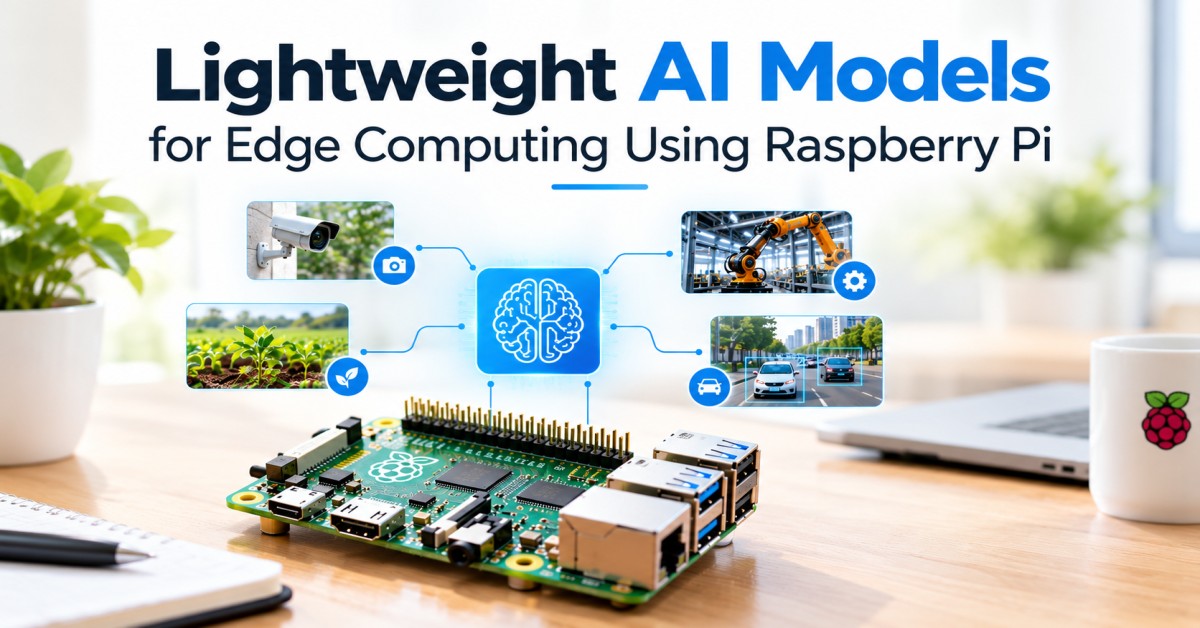

Artificial Intelligence (AI) and edge computing are changing the way smart devices collect, process, and analyze data. Many applications require quick results without sending all the collected information to cloud servers. Lightweight AI models help solve this problem by running machine learning tasks on small devices with limited computing resources.
Raspberry Pi is a compact and affordable computer that can be used to develop AI and edge computing projects. By combining Raspberry Pi with lightweight AI models, students and developers can build applications for object detection, smart surveillance, agriculture monitoring, and industrial automation. These projects provide practical experience in artificial intelligence, machine learning, embedded systems, and the Internet of Things (IoT).
What Is Edge Computing?
Edge computing is a technology that processes data close to the device where it is collected. Instead of sending every piece of data to a remote cloud server, an edge device can analyze information locally and generate results.
czEdge computing offers several benefits, including reduced network usage, faster responses, and improved control over data. It is useful for applications that require real-time processing or need to continue working when internet connectivity is limited.
What Are Lightweight AI Models?
Lightweight AI models are machine learning models designed to use fewer computing resources while performing specific tasks. They generally require less memory, processing power, and storage than larger models.
Lightweight AI models can perform tasks such as image classification, object detection, sensor data analysis, and basic anomaly detection. Developers can also optimize suitable models through quantization and other techniques to reduce resource requirements.
However, model selection is important because reducing the model size can sometimes affect accuracy. The best model depends on the application, hardware configuration, and required processing speed.
Why Use Raspberry Pi for Edge AI Projects?
The following benefits make Raspberry Pi useful for developing edge AI applications.
- Affordable Development: Raspberry Pi provides a relatively low-cost platform for students to learn about AI and embedded systems.
- Compact Hardware: Its small size makes it suitable for portable devices and space-limited installations.
- Local Data Processing: AI models can analyze data directly on the device without depending on a cloud server for every prediction.
- Hardware Connectivity: Cameras, sensors, displays, and other compatible components can be connected for practical applications.
- Flexible Software Support: Developers can use Python and supported machine learning frameworks to create AI applications.
- Learning Opportunities: Students can explore computer vision, deep learning, IoT, and real-time data processing through hands-on projects.
Popular Lightweight AI Models for Raspberry Pi
Several model architectures and deployment tools can help developers build efficient AI applications on Raspberry Pi.
1. TensorFlow Lite
TensorFlow Lite, now commonly referred to as LiteRT in current Google documentation, supports machine learning inference on devices with limited computing resources. It can run compatible models optimized for mobile and edge applications.
Students can use it for image classification, simple object recognition, and other supported machine learning tasks. Quantized models may reduce memory usage and improve performance on suitable hardware.
2. MobileNet
MobileNet is a family of lightweight neural network architectures designed for efficient computer vision tasks. It uses techniques such as depthwise separable convolutions to reduce computational requirements.
On Raspberry Pi, MobileNet models can be explored for image classification and related vision applications. They are useful when developers need a balance between model size, speed, and accuracy.
3. YOLO Small Models
YOLO is a family of object detection models designed to identify objects and their locations in images or video frames. Smaller variants, such as supported nano or small models, can be considered for edge applications.
These models can be used for detecting people, vehicles, animals, or agricultural pests. However, real-time performance depends on the specific model version, input resolution, hardware, and inference configuration.
4. EfficientNet-Lite
EfficientNet-Lite models are designed for efficient image classification on devices with limited computing resources. They can be useful for projects that classify images into categories.

Applications of Edge AI Using Raspberry Pi
1. Real-Time Object Detection
Object detection is one of the common applications of AI on Raspberry Pi. A connected camera captures images or video, and an AI model identifies objects in the captured frames.
Using a compact object detection model can help reduce computing requirements. Developers should measure processing speed and accuracy to determine whether the system meets their project goals.
2. AI-Based Surveillance System
A Raspberry Pi-based surveillance project can use a camera and lightweight AI model to identify selected objects. For example, the system can detect a person entering a monitored area and generate a local alert.
Unlike a system that continuously uploads video, local processing can reduce network traffic and help keep footage on the device. Developers should also consider privacy, secure storage, and appropriate access controls.
3. Agricultural Monitoring
Edge AI can support smart agriculture by analyzing images collected from crop fields or controlled growing environments.
A Raspberry Pi connected to a camera can run a trained model to identify visible signs of pest damage or classify plant images. For example, a rice pest detection project could use an appropriately trained model to recognize selected pest categories.
The model must be trained and tested with suitable agricultural images. Its results should be validated before being used to make important crop management decisions.
4. Industrial Monitoring
Industrial applications often require continuous monitoring of equipment and operating conditions. Raspberry Pi can collect readings from compatible sensors and process the data locally.
A lightweight machine learning model can be used to identify unusual sensor patterns or flag readings that may require further inspection. This can help students understand predictive maintenance and anomaly detection.
5. Smart Home Automation
Raspberry Pi can also support smart home projects that combine AI with sensors and connected devices. A camera-based application might recognize selected objects, while sensor-based systems can analyze temperature or motion data.

How to Build a Lightweight Edge AI Project Using Raspberry Pi
Students can follow these steps to develop a basic edge AI application.
1. Select a Project Idea: Choose an application such as object detection, crop monitoring, or smart surveillance.
2. Choose the Hardware: Select a compatible Raspberry Pi, power supply, camera, and any required sensors.
3. Prepare the Software: Install a suitable operating system and the Python libraries or inference runtime required by the chosen model.
4. Select an AI Model: Choose a lightweight model that supports the required task and can run on the available hardware.
5. Connect the Camera or Sensors: Configure the input devices and check that the Raspberry Pi can collect data correctly.
6. Run Local Inference: Process the captured images or sensor readings on the Raspberry Pi and display or store the results.
7. Test the Application: Measure accuracy, processing speed, memory usage, and power consumption under realistic conditions.
Challenges of Running AI Models on Raspberry Pi
Although Raspberry Pi is useful for edge computing projects, developers may face several challenges.
- Limited Computing Resources: Complex AI models may run slowly because of limited CPU and memory resources.
- Model Accuracy: Smaller models may not provide the same accuracy as larger models in every situation.
- Hardware Compatibility: Some models and acceleration methods require specific software versions or supported hardware.
- Power Requirements: Cameras and connected components can increase the total power consumption of the project.
Future Scope of Edge AI Projects
Edge AI continues to develop as compact hardware, efficient machine learning models, and specialized accelerators become more accessible. Raspberry Pi projects can help students explore these developments through practical experimentation.
Combining edge computing with IoT can create systems that collect data, analyze it locally, and communicate selected results to other devices or cloud platforms. This approach can be useful when applications require timely decisions and efficient use of network resources.
Conclusion
Lightweight AI models make it possible to explore artificial intelligence on compact devices such as Raspberry Pi. Tools and architectures such as LiteRT, MobileNet, EfficientNet-Lite, and smaller YOLO models provide different options for building edge computing applications.
Looking for AI and edge computing
projects? Explore engineering project ideas with Takeoff Projects
to
discover practical topics that match your interests and technical skills
What are lightweight AI models for Raspberry Pi?
Lightweight AI models are machine learning models designed to use less memory, processing power, and storage.
2. What are the best AI models for edge computing using Raspberry Pi?
Popular options include MobileNet, EfficientNet-Lite, smaller YOLO models, and TensorFlow Lite (LiteRT), depending on the project requirements.
3. What are Raspberry Pi Edge AI projects?
Raspberry Pi Edge AI projects use artificial intelligence to process data directly on the device. Examples include object detection, smart surveillance, agricultural monitoring, and smart home automation.
4. Can Raspberry Pi run object detection models?
Yes, Raspberry Pi can run compatible object detection models, including smaller YOLO variants. Performance depends on the model, input resolution, and hardware configuration.
5. What are the advantages of edge computing using Raspberry Pi?
Edge computing using Raspberry Pi can reduce network usage, provide faster responses, support local data processing, and reduce dependence on cloud servers.
 Smart Traffic Monitoring System Using OpenCV
 Running Lightweight AI Models on Raspberry Pi for Edge AI
 Smart Irrigation with Embedded AI: Digital Farming
 Designing Smarter Cities: Embedded IoT Systems for Urban Innovation
 Top 5 PIC16F77A Projects for Embedded Students
 Top 7 Arduino Projects for Students
 Top 5 Node MCU Projects
 Top 5 Raspberry Pi Projects
 Top 7 ARM7 Project Ideas
 Top 5 Mechatronics Projects for ECE
 Top 5 Renewable Energy Projects Ideas
 Top 7 Biomedical Projects for Students
 Top 7 Artificial Intelligence Project Ideas
 Top 7 WSN Projects for Students
 Top 7 Machine Learning Projects for BTech & MTech
 Top 7 Image Processing Projects
 Top 7 Industrial Automation Projects
 Top 7 Deep Learning Projects for Final Year Students
 Top 7 Robotics Projects for Engineering Students
 Top 7 IoT Projects for Students
 Arduino based Projects for Final Year
 Embedded Projects for ECE
 FPGA Projects for Engineering Students
 New Deep Learning Projects Ideas & Topics
 Machine Learning Projects for Final Year CSE
 Engineering Projects on Machine Learning
 Wireless Sensor Network Projects
 Wireless Sensor Network Projects with Source Code
 Latest Bio Medical Projects for Students
 Innovative Bio Medical Project Ideas & Topics
 21+ Interesting Mini Projects on Robotics
 Engineering Student Projects on Robotics
 Innovative IoT Project Ideas for Engineering Students
 Latest Mini Projects for ECE Students 2022
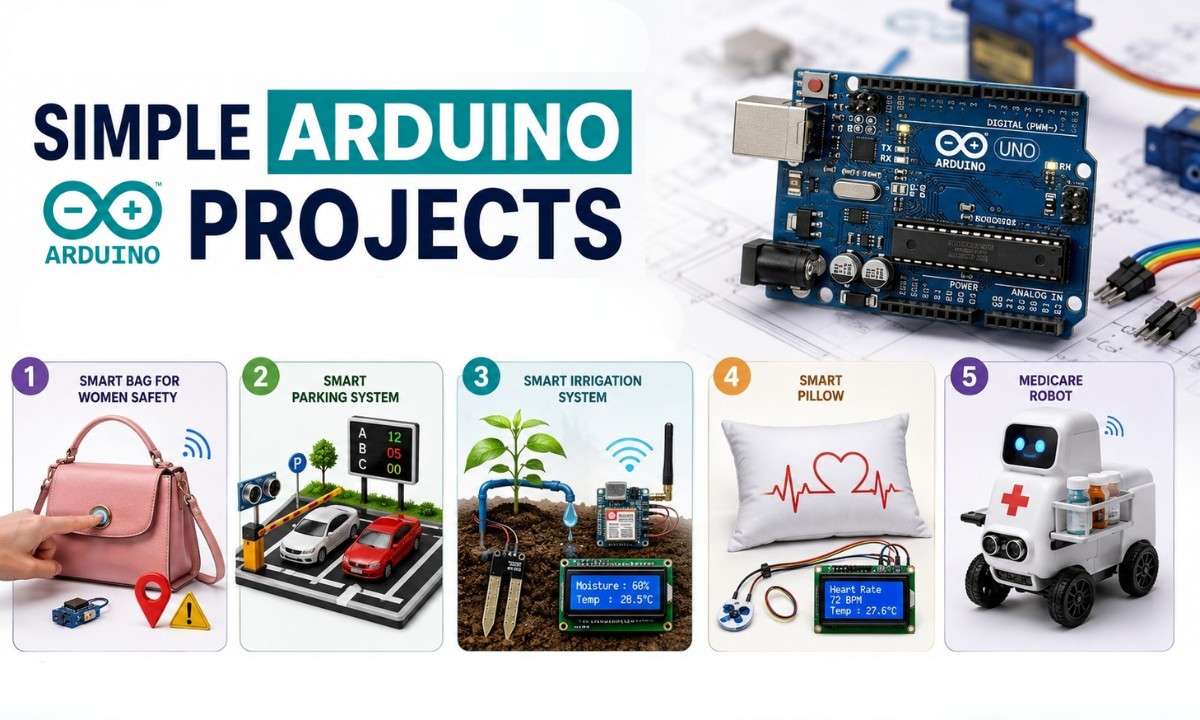 List of Simple Arduino Projects
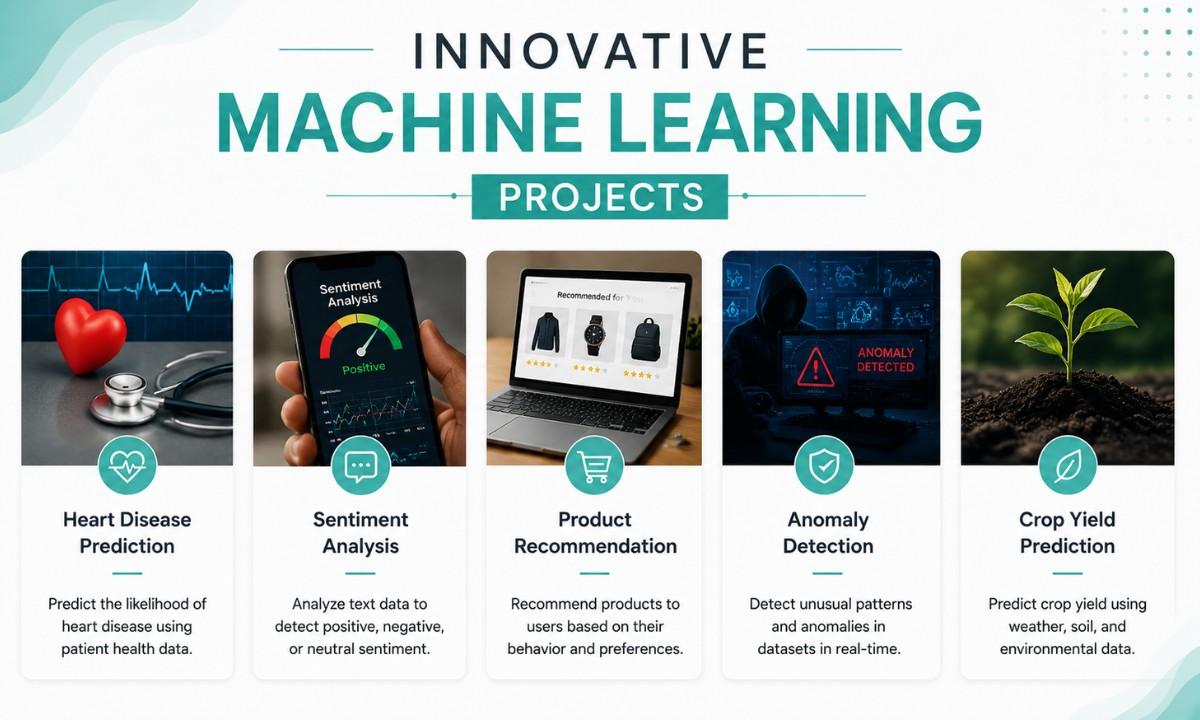 Innovative Machine Learning Projects
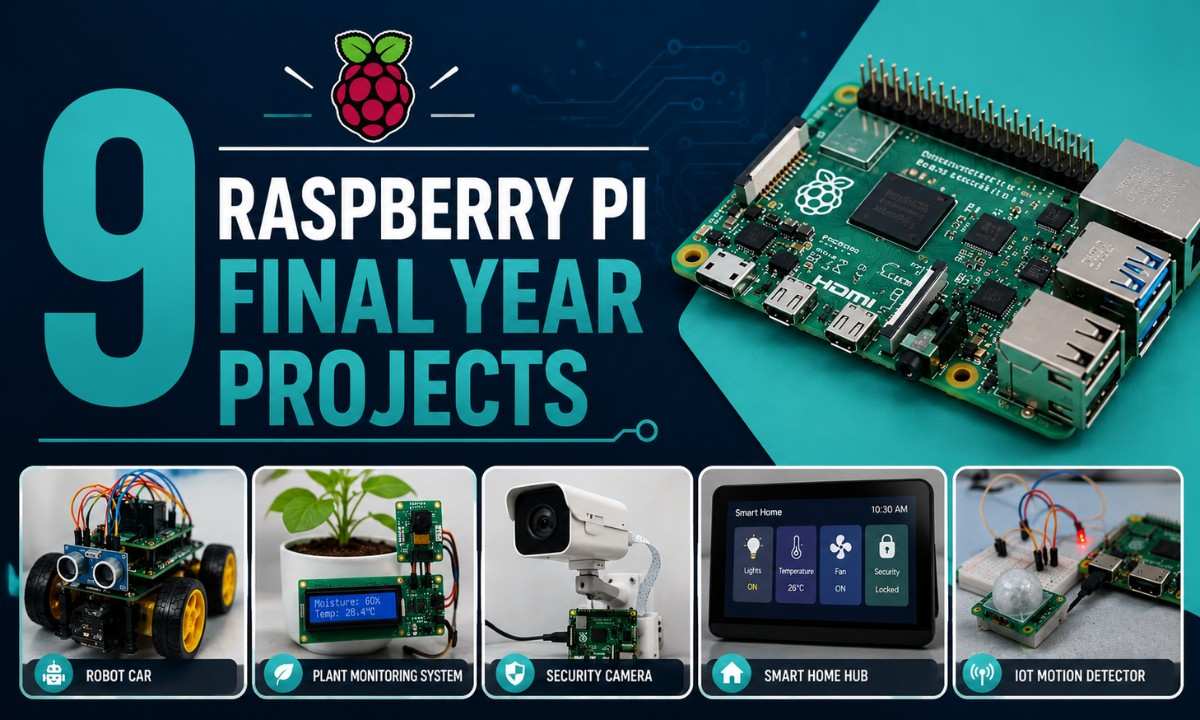 9 Raspberry Pi Final Year Projects
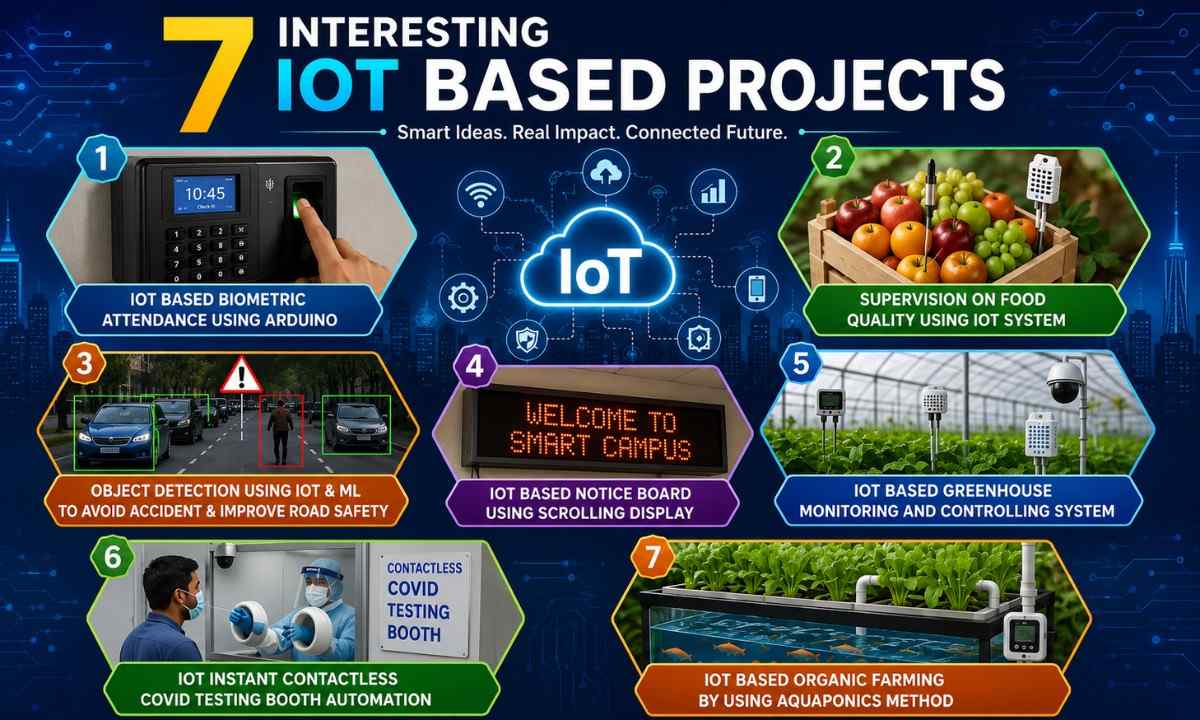 7 Interesting IoT Based Projects
 Latest Real Time Embedded Systems Projects for Final Year Students


































 Paper Publishing