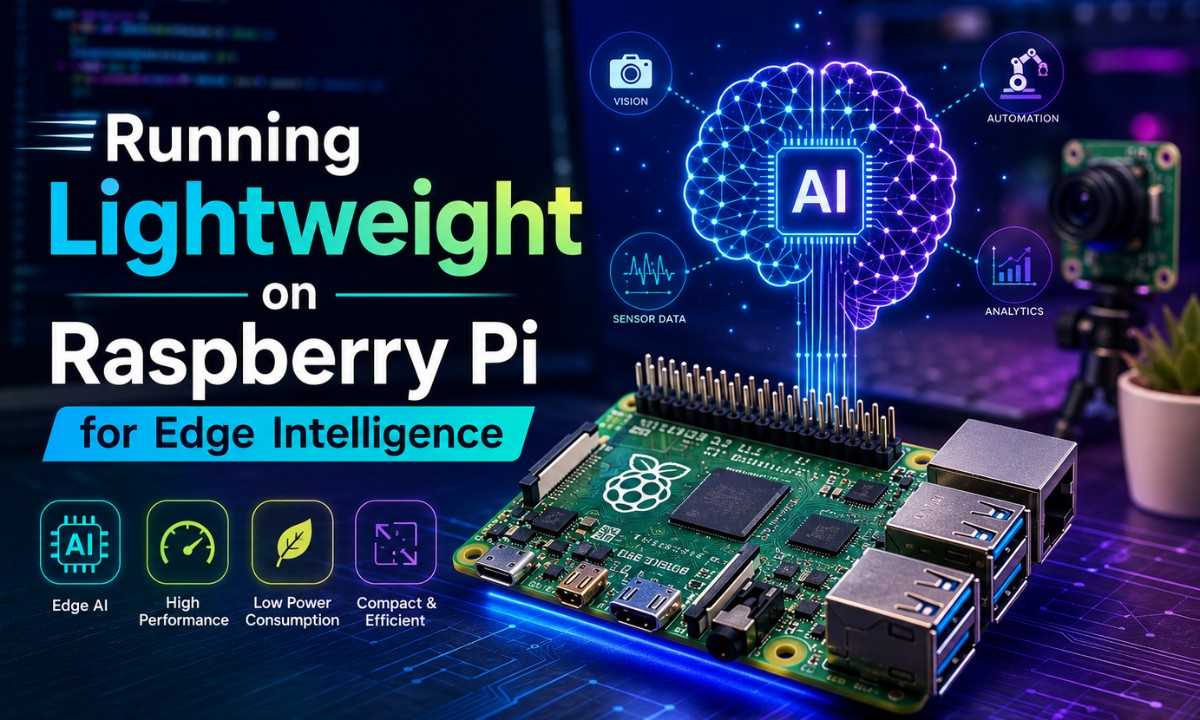

Introduction
Artificial Intelligence is increasingly moving from cloud servers to devices that can process information locally. This approach is known as Edge AI, where AI models analyze data closer to the location where it is generated. Edge AI can help reduce dependence on cloud processing, improve response time, and support applications that need local decision-making.
Raspberry Pi is a practical platform for learning and experimenting with Edge AI. Its compact design, Linux environment, camera support, GPIO connectivity, and compatibility with Python make it useful for students and developers building AI, IoT, robotics, and embedded-system projects.
For engineering students, running lightweight AI models on Raspberry Pi provides hands-on experience with AI deployment, model optimization, computer vision, and hardware integration. Takeoff Edu Group helps students explore practical engineering project ideas and understand the technologies involved in developing real-world academic projects.
In this article, we explore how lightweight AI models can run on Raspberry Pi, the technologies involved, practical applications, project ideas, and the steps students can follow to develop a Raspberry Pi-based Edge AI project.
What Is Edge AI?
Edge AI is the deployment of artificial intelligence models on or near the device where data is generated. Instead of sending every piece of data to a remote cloud server, an edge device can process information locally and produce a result.
For example, a camera connected to Raspberry Pi can capture an image and use an AI model to identify an object. The image does not necessarily have to be sent to a cloud server for every prediction.
A traditional AI workflow may look like:
Device → Internet → Cloud Server → AI Processing → Result
An Edge AI workflow can be:
Device → Local AI Processing → Result
This makes Edge AI useful for applications that require quick responses, reduced data transfer, limited internet dependency, or local processing.
Why Use Raspberry Pi for Edge AI?
Raspberry Pi is useful for Edge AI education because it allows students to combine AI software with physical hardware.
Some of its advantages include:
- Affordable and compact development platform
- Support for Python and Linux
- Camera and sensor connectivity
- GPIO support for hardware integration
- Suitable for IoT and embedded applications
- Useful for computer vision projects
- Supports lightweight AI model deployment
The limitations of Raspberry Pi are also educational. Since it has fewer computing resources than a powerful desktop or cloud server, students need to consider model size, processing speed, memory usage, and optimization.
This helps students understand an important part of real-world AI development: deploying models efficiently rather than only training them.
How Do Lightweight AI Models Work on Raspberry Pi?
Large AI models can require substantial processing power and memory. For this reason, lightweight AI models are often more suitable for Raspberry Pi-based applications.
A typical Edge AI workflow is:
Data Collection → Pre-processing → AI Model → Inference → Decision → Action
For example, in an object detection project:
- A camera captures an image.
- Raspberry Pi receives the image.
- The image is processed and prepared for the model.
- A lightweight AI model performs inference.
- The model identifies objects.
- Raspberry Pi responds according to the prediction.
The response could involve displaying information, activating an LED, saving an image, triggering an alert, or controlling another connected device.
Model Optimization
Before deploying an AI model, students may need to optimize it for the available hardware.
Common approaches include:
- Quantization – reducing numerical precision to decrease model size and computation.
- Pruning – removing less important model parameters.
- Model compression – reducing the resources required by the model.
The objective is to achieve a practical balance between accuracy, speed, memory usage, and hardware requirements.
Technologies Used for Raspberry Pi Edge AI
A Raspberry Pi Edge AI project can use several technologies depending on the application.
Python
Python is widely used for AI, machine learning, computer vision, and Raspberry Pi development. It can be used to process data, control hardware, and run AI inference.
OpenCV
OpenCV is useful for image and video processing. It can support camera-based applications and computer vision workflows.
TensorFlow Lite
TensorFlow Lite is designed for deploying machine learning models on devices with limited resources and can be useful for lightweight AI inference.
ONNX
ONNX provides a model representation that can help with deploying models across different machine learning environments.
Cameras and Sensors
A Raspberry Pi can receive information from cameras and sensors such as temperature, humidity, motion, distance, light, and other devices.
Combining these inputs with AI can create intelligent IoT and embedded-system applications.
Applications of Edge AI on Raspberry Pi
Raspberry Pi and Edge AI can be applied to several real-world and academic scenarios.
Smart Surveillance
A camera-based system can use AI to identify objects or detect predefined events and generate local alerts.
Smart Agriculture
Sensors and cameras can collect information about environmental conditions and crops. AI can help analyze patterns and support intelligent monitoring.
Traffic Monitoring
A camera can be used with an AI model to detect or count vehicles and analyze traffic-related information.
Smart Parking
Edge AI can help identify whether parking spaces are occupied using camera-based analysis.
Robotics
Robots can use AI for object recognition, environmental analysis, and decision-making.
Industrial Monitoring
AI models can analyze sensor or visual information to identify unusual patterns in an educational industrial-monitoring prototype.
Waste Classification
Computer vision models can classify different types of waste and support smart waste-management systems.
These examples demonstrate how Edge AI can connect artificial intelligence with physical systems.
Raspberry Pi Edge AI Project Ideas for Engineering Students
For engineering students, a useful project should address a clear problem and have measurable outcomes. Some possible project ideas include:
|
Project Idea |
Application |
|
AI-Based Object Detection |
Computer Vision |
|
Smart Parking System |
Object Detection |
|
AI Traffic Monitoring |
Vehicle Detection |
|
Smart Agriculture |
Sensor and AI Analysis |
|
Waste Classification |
Image Classification |
|
Smart Surveillance |
Visual Monitoring |
|
Industrial Monitoring |
Anomaly Detection |
|
Intelligent Robot |
Object Recognition |
Students looking for more project concepts can explore Raspberry Pi Projects for Engineering Students to identify project ideas suitable for their engineering branch and technical interests.
How to Build a Raspberry Pi Edge AI Project
Students can follow a simple development process.
1. Select a Problem
Start with a real-world problem that can benefit from AI-based analysis.
2. Identify the Data
Determine whether the project requires images, video, audio, or sensor data.
3. Select an AI Model
Choose a model that matches the project's accuracy and performance requirements.
4. Train the Model
Training can generally be performed using a more powerful computer or suitable computing environment.
5. Optimize the Model
Reduce unnecessary computational requirements before deployment.
6. Deploy on Raspberry Pi
Install the required libraries and transfer the optimized model to the Raspberry Pi.
7. Integrate Hardware
Connect cameras, sensors, LEDs, motors, displays, or other components required by the project.
8. Test the System
Evaluate accuracy, inference speed, reliability, and resource usage.
This process helps students understand the difference between simply developing an AI model and actually deploying AI on an edge device.
Benefits and Challenges of Edge AI
Benefits
Local Processing: Data can be analyzed directly on the device.
Reduced Data Transfer: The system may only need to send selected results instead of continuously transmitting raw data.
Faster Response: Local inference can be useful for applications requiring quick decisions.
Reduced Internet Dependency: Some applications can continue performing local tasks when connectivity is limited.
Practical Learning: Students gain experience with AI deployment, hardware integration, and system testing.
Challenges
Raspberry Pi also has limitations. Complex AI models may require more computing power than the device can provide. Students may need to optimize models and balance accuracy against inference speed.
Power consumption, memory usage, camera quality, sensor selection, and overall hardware configuration can also affect project performance.
Understanding these limitations is an important part of designing a realistic Edge AI project.
Key Takeaways
- Edge AI enables AI processing close to where data is generated.
- Raspberry Pi can provide an accessible platform for learning Edge AI.
- Lightweight models are more practical for resource-constrained devices.
- Model optimization can improve deployment efficiency.
- Raspberry Pi can combine AI with cameras, sensors, IoT, and robotics.
- Engineering students can use these technologies to develop practical academic projects.
Conclusion
Edge AI is making it possible to bring artificial intelligence closer to the devices and environments where data is generated. Raspberry Pi provides an accessible way for engineering students to understand this concept through practical projects.
By deploying lightweight AI models on Raspberry Pi, students can gain experience in Artificial Intelligence, Machine Learning, Python, Computer Vision, IoT, Edge Computing, and embedded systems.
The key to a successful project is selecting a clear problem, choosing an appropriate AI model, optimizing it for the hardware, and evaluating the final system based on accuracy and performance.
If you are planning an academic project involving Raspberry Pi, AI, IoT, or embedded systems, Takeoff Edu Group can help you explore suitable project directions and understand the technologies required for implementation.
Explore our Raspberry Pi Projects for Engineering Students resources for additional project ideas and guidance.
FAQs
What is Edge AI?
Edge AI is the use of AI models on or near the device where data is generated, allowing information to be processed locally instead of relying entirely on cloud servers.
Can Raspberry Pi run AI models?
Yes. Raspberry Pi can run suitable lightweight and optimized AI models for applications such as object detection, image classification, computer vision, and sensor analysis.
Is Raspberry Pi good for Edge AI projects for students?
Yes. It provides students with practical experience in AI deployment, Python, computer vision, IoT, embedded systems, and hardware integration.
What are some Raspberry Pi Edge AI project ideas?
Students can develop projects involving object detection, smart parking, traffic monitoring, smart agriculture, waste classification, surveillance, robotics, and environmental monitoring.
Can Edge AI work without an internet connection?
Yes, Edge AI can process data locally on devices like Raspberry Pi without continuously relying on the internet. This makes it suitable for applications that require local processing and quick responses.
 Smart Irrigation with Embedded AI: Digital Farming
  Designing Smarter Cities: Embedded IoT Systems for Urban Innovation
  Top 5 PIC16F77A Projects for Embedded Students
  Top 7 Arduino Projects for Students
  Top 5 Node MCU Projects
  Top 5 Raspberry Pi Projects
  Top 7 ARM7 Project Ideas
  Top 5 Mechatronics Projects for ECE
  Top 5 Renewable Energy Projects Ideas
  Top 7 Biomedical Projects for Students
  Top 7 Artificial Intelligence Project Ideas
  Top 7 WSN Projects for Students
  Top 7 Machine Learning Projects for BTech & MTech
  Top 7 Image Processing Projects
  Top 7 Industrial Automation Projects
  Top 7 Deep Learning Projects for Final Year Students
  Top 7 Robotics Projects for Engineering Students
  Top 7 IoT Projects for Students
  Arduino based Projects for Final Year
  Embedded Projects for ECE
  FPGA Projects for Engineering Students
  New Deep Learning Projects Ideas & Topics
  Machine Learning Projects for Final Year CSE
  Engineering Projects on Machine Learning
  Wireless Sensor Network Projects
  Wireless Sensor Network Projects with Source Code
  Latest Bio Medical Projects for Students
  Innovative Bio Medical Project Ideas & Topics
  21+ Interesting Mini Projects on Robotics
  Engineering Student Projects on Robotics
  Innovative IoT Project Ideas for Engineering Students
  Latest Mini Projects for ECE Students 2022
 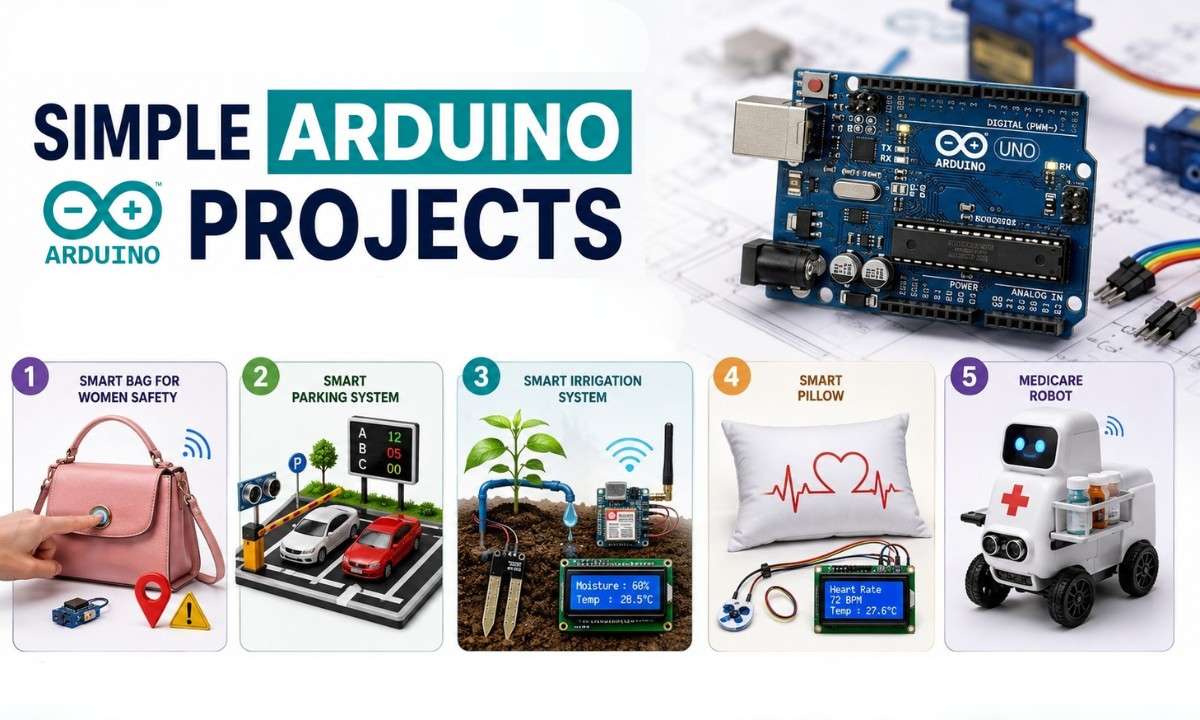 List of Simple Arduino Projects
 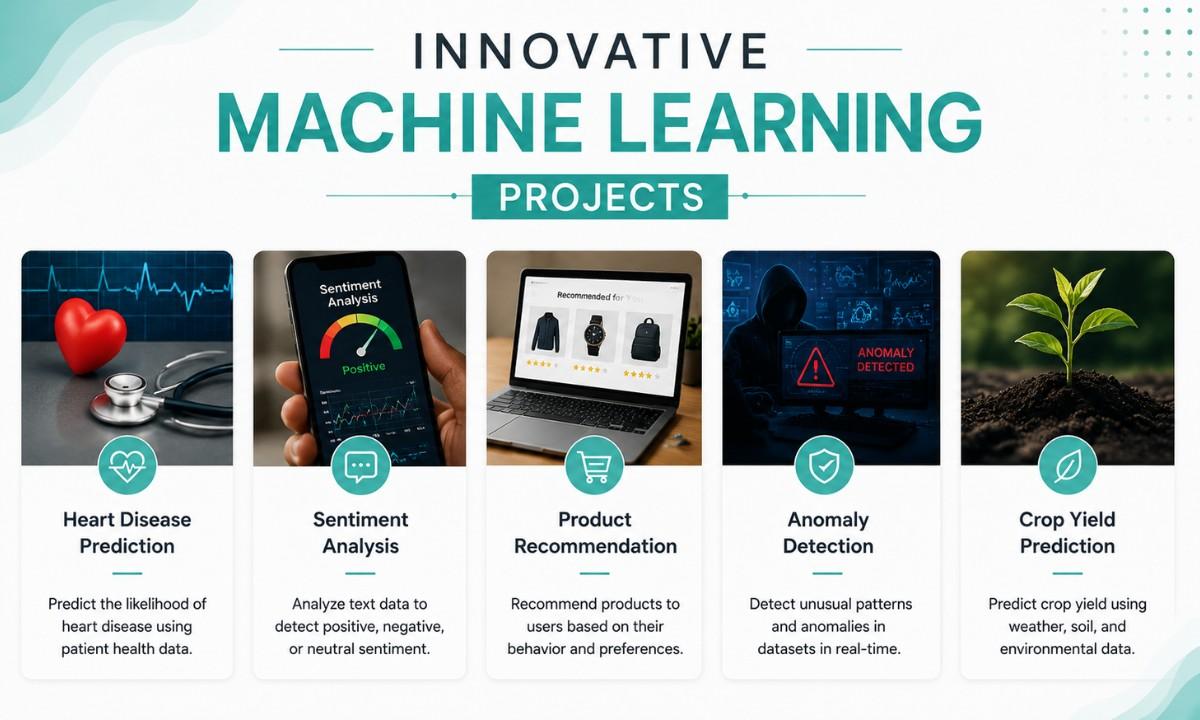 Innovative Machine Learning Projects
 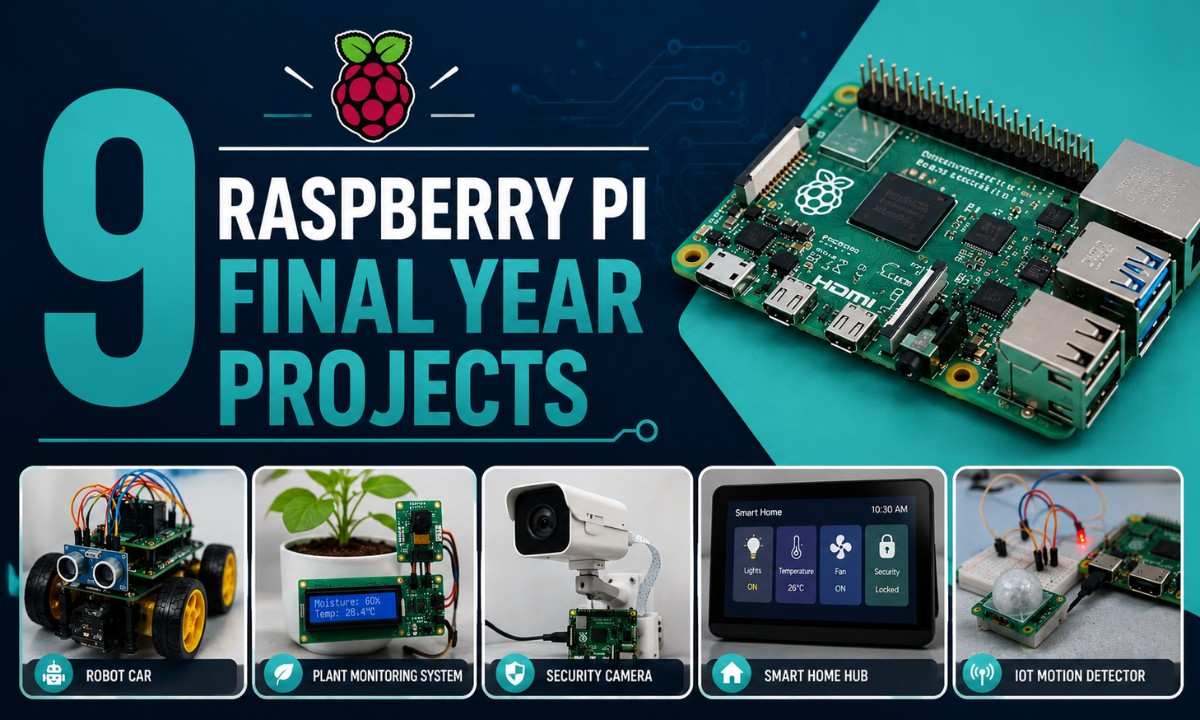 9 Raspberry Pi Final Year Projects
 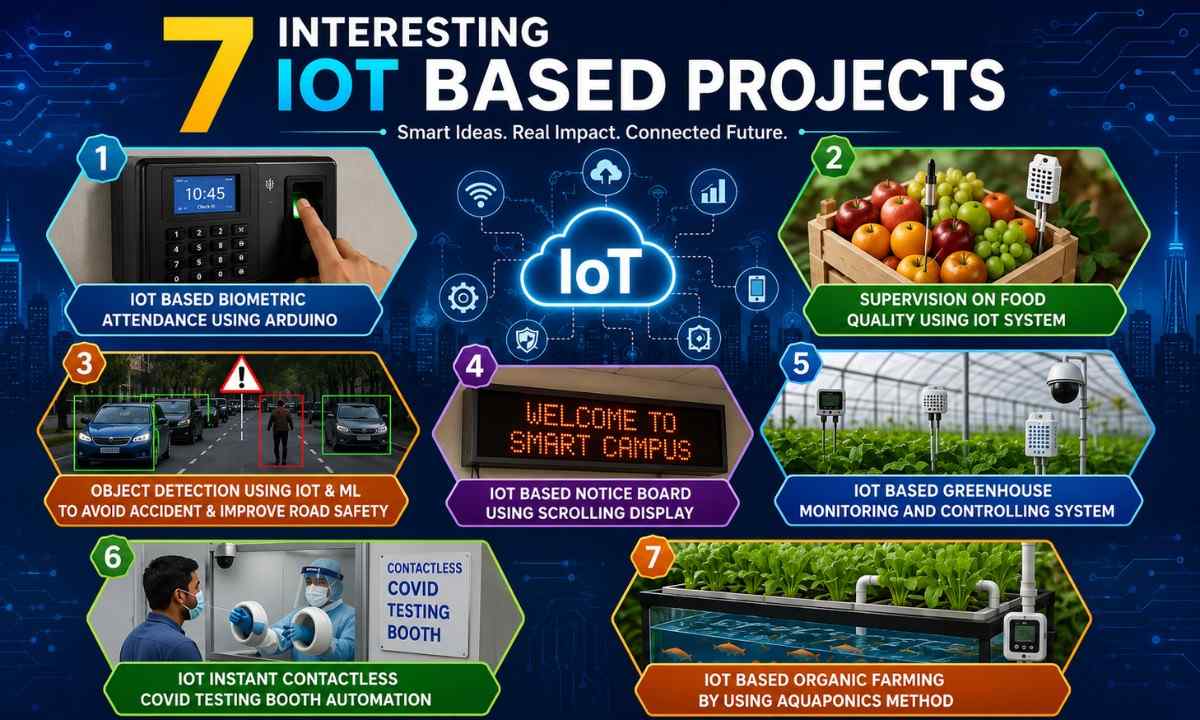 7 Interesting IoT Based Projects
  Latest Real Time Embedded Systems Projects for Final Year Students































 Paper Publishing




