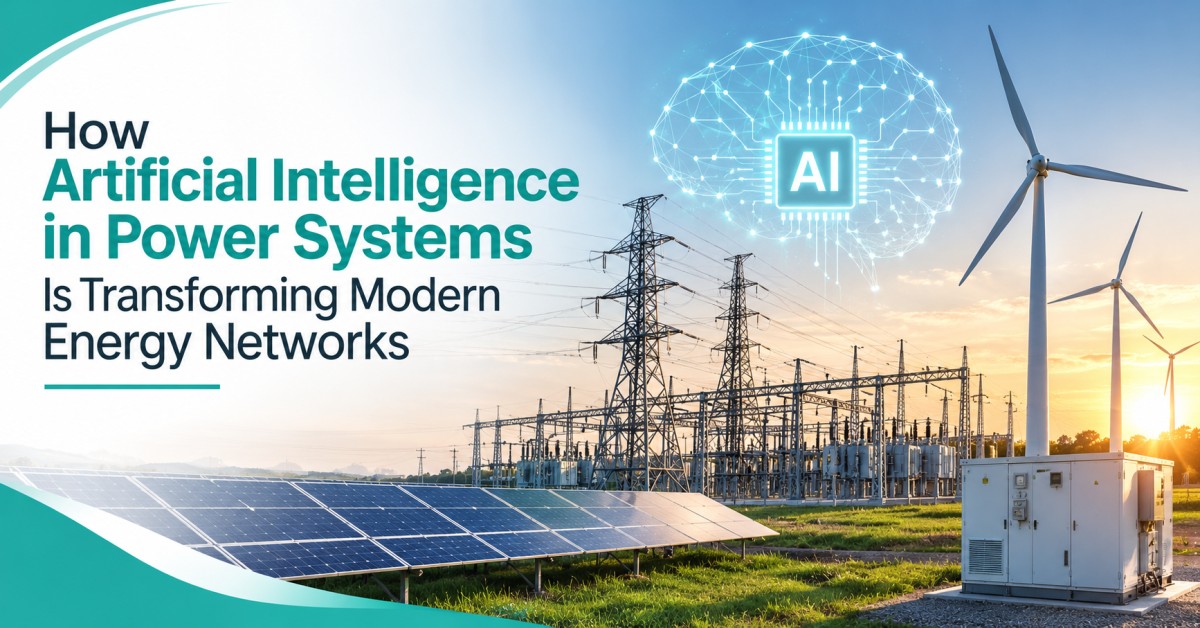

Introduction:
Artificial Intelligence in Power Systems is transforming how electricity is generated, transmitted, distributed, and consumed. With increasing energy demand, growing renewable energy adoption, and more complex electricity networks, traditional methods alone are no longer enough to manage modern power systems efficiently.
AI can process large amounts of data, identify patterns, forecast electricity demand, monitor equipment, and support faster decision-making. By combining AI with smart grids, sensors, renewable energy systems, and advanced monitoring technologies, power providers can improve reliability, efficiency, and sustainability. This article explores the major applications, benefits, challenges, and future potential of AI in modern energy networks.
How AI Is Transforming Power Systems:
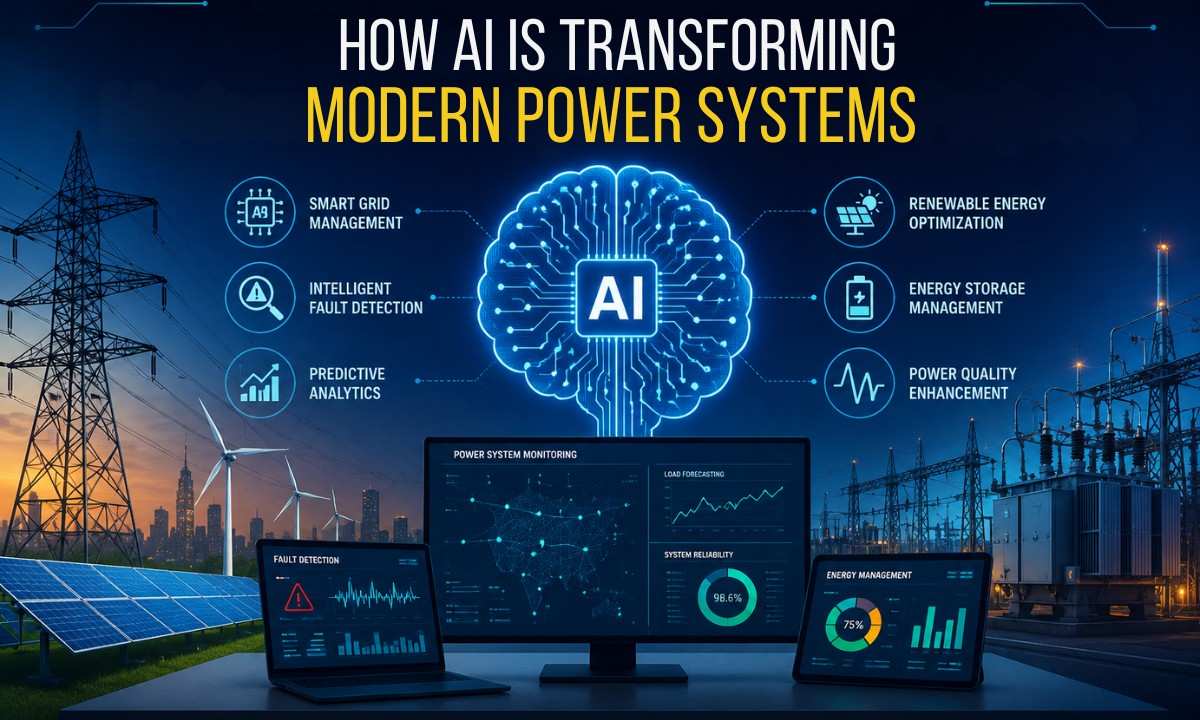
Artificial Intelligence is making modern power systems smarter, faster, and more efficient. By analyzing large amounts of data, AI helps power providers predict energy demand, monitor equipment, detect faults, manage renewable energy, and improve overall grid performance.
AI-Powered Energy Demand Forecasting: AI analyzes electricity usage, weather, and historical data to predict future energy demand.
Predictive Maintenance: AI monitors equipment such as transformers and generators to identify possible problems before failures occur.
Intelligent Fault Detection: AI analyzes real-time data to detect faults quickly and help operators locate the affected area.
Smart Grid Management: AI helps monitor and manage electricity flow, improving grid efficiency and reliability.
Renewable Energy Integration: AI predicts solar and wind energy generation and helps balance renewable power with electricity demand.
Energy Storage Management: AI helps decide when batteries should charge or discharge based on energy demand and availability.
Better Energy Efficiency: AI identifies energy usage patterns and helps reduce unnecessary energy consumption.
Major AI Applications in Power Systems:
Beyond forecasting and fault detection, AI is being applied across different areas of the electricity sector. From renewable energy integration to battery management and smart grid operations, AI is helping create more intelligent and responsive power networks.
1. Smarter Renewable Energy Management:
AI analyzes weather and historical data to predict solar and wind power generation. It helps utilities manage renewable energy, plan battery storage, balance supply and demand, and improve grid stability.
2. Intelligent Smart Grid Operations:
AI analyzes data from smart meters, sensors, and connected devices to monitor grid conditions. It helps forecast demand, optimize power distribution, and improve grid reliability.
3. Efficient Energy Consumption and Demand Management:
AI analyzes electricity consumption patterns and grid demand to identify opportunities for better energy management. It can support demand response programs, smart scheduling, peak-load management, and reduced energy waste.
4. Automated Fault Detection:
AI monitors grid data to detect unusual conditions and potential faults. It helps operators identify problem areas quickly, reduce downtime, and restore electricity faster.
5. Intelligent Energy Storage Management:
AI analyzes energy demand, renewable generation, and battery conditions to decide when batteries should charge or discharge. This improves energy storage efficiency and supports grid stability.
Key Features of AI in Modern Power Systems:
1. Smart Energy Forecasting:
AI analyzes electricity usage, weather conditions, and historical data to predict future energy demand. This helps power providers plan electricity generation more efficiently.
2. Predictive Maintenance:
AI monitors equipment such as transformers, generators, and circuit breakers to identify possible problems before major failures occur.
3. Intelligent Fault Detection:
AI analyzes real-time data from sensors and smart devices to detect faults quickly and help operators identify the affected area.
4. Smart Grid Management:
AI helps monitor electricity flow, balance supply and demand, and improve the efficiency and reliability of power networks.
5. Renewable Energy Integration:
AI predicts solar and wind power generation and helps power systems manage changing renewable energy availability.
6. Energy Storage Optimization:
AI helps determine the best time for batteries to charge, store, or supply electricity based on energy demand and availability.
7. Real-Time Data Analysis:
AI processes large amounts of data from smart meters, sensors, and connected devices to support faster and better decision-making.
Benefits of Artificial Intelligence in Power Systems:
The adoption of AI can provide several important benefits for utilities, businesses, and consumers.
Greater Energy Efficiency:
AI can optimize electricity generation, distribution, storage, and consumption. Better forecasting and energy management can reduce unnecessary usage and improve overall system efficiency.
Reduced Maintenance Costs:
Predictive maintenance allows organizations to identify equipment problems earlier. This can reduce unexpected failures, emergency repairs, and unnecessary maintenance activities.
Better Renewable Energy Integration:
AI-based forecasting helps utilities understand changing solar and wind generation. This makes it easier to balance renewable energy with other power sources and manage energy storage.
Faster Decision-Making:
Power networks generate large amounts of data every day. AI can process this information quickly and provide useful insights, helping operators make faster and more informed decisions.
Challenges of Implementing AI in Power Systems:
Although AI offers significant advantages, organizations must also address several challenges.
Data Quality and Availability:
AI systems depend on accurate, complete, and updated data. Missing, outdated, or incorrect information can affect predictions and reduce the reliability of AI-based decisions.
Cybersecurity:
Modern power systems are increasingly connected through digital technologies. This creates potential cybersecurity risks. Strong security measures are required to protect grid infrastructure, operational data, smart meters, and connected devices.
Implementation Costs:
AI adoption may require investment in sensors, communication networks, computing infrastructure, software, and employee training. Organizations need to carefully evaluate these investments and their expected benefits.
The Future of Artificial Intelligence in Power Systems:
The role of AI is expected to increase as electricity networks become more connected, automated, and decentralized. Renewable energy systems, battery storage, smart meters, and distributed energy resources will continue generating large amounts of data. Future applications of AI may include:
Automated grid management
Intelligent energy storage
Smart electric vehicle charging
Advanced demand response
Real-time energy optimization
Improved renewable energy forecasting
These developments can make modern energy networks more flexible, responsive, and efficient.
Conclusion:
Artificial Intelligence in Power Systems is changing the way modern energy networks are monitored, managed, and optimized. From energy demand forecasting and predictive maintenance to renewable energy management, smart grid operations, and automated fault detection, AI can help power providers address many of the challenges facing today's electricity networks.
As energy demand continues to grow and renewable energy becomes more important, intelligent technologies will play a greater role in creating reliable and sustainable power systems. AI can help turn large amounts of power system data into useful insights, enabling faster decisions and smarter energy management.
Unlock Powerful Opportunities in Power Systems!
Artificial Intelligence is creating exciting new possibilities for smarter and more efficient energy networks. If you're interested in Artificial Intelligence, Smart Grids, Renewable Energy, or Electric Vehicles, Takeoff Projects can help you turn your ideas into innovative, real-world solutions.
Discover Cutting-Edge Power System Projects and Start Building Your Future Today!
 Can Electric Vehicles Power Entire Cities? Understanding Vehicle-to-Grid (V2G) Technology
  How AI is Transforming Modern Power Systems
  Power Electronics for Smart Grids: Enhancing Efficiency
  Introduction to Control Systems: Principles and Applications
  Control Strategies for Electric Drives: An Overview
  Electric Drives: Fundamentals & Key Components
  Applications of Power Electronics in Renewable Energy Systems
  Designing Efficient Power Converters: Tips and Techniques
  Advances in Power Semiconductor Devices
  Power Electronics: Key Concepts and Applications
  Cybersecurity in Power Systems: Protecting Critical Infrastructure
  The Evolution of Power Transmission: From AC to HVDC
  Impact of Energy Storage on Power System Management
  Load Flow Analysis : Techniques and Applications in Power Systems
  Microgrids: Enhancing Resilience and Efficiency in Power Systems
  Innovative Technologies in Power System Protection
  Challenges and Solutions in Power System Stability
  Final Year Electrical Engineering Project Ideas for College Students
  The Role of Renewable Energy in Modern Power Systems
  Smart Grids: Revolutionizing the Future of Power Systems
 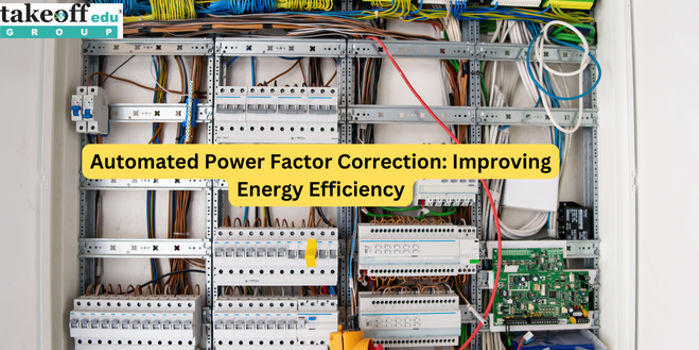 Automated Power Factor Correction: Improving Energy Efficiency
 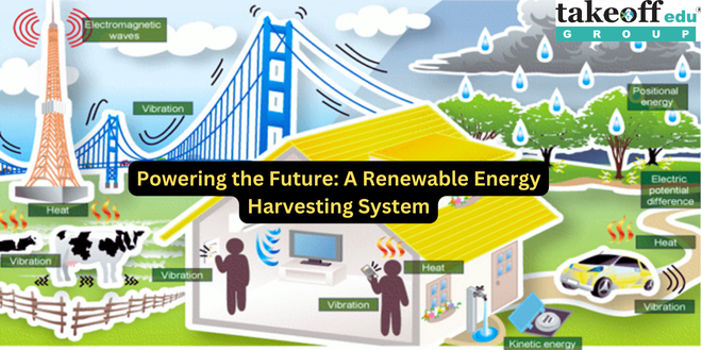 Powering the Future: A Renewable Energy Harvesting System
 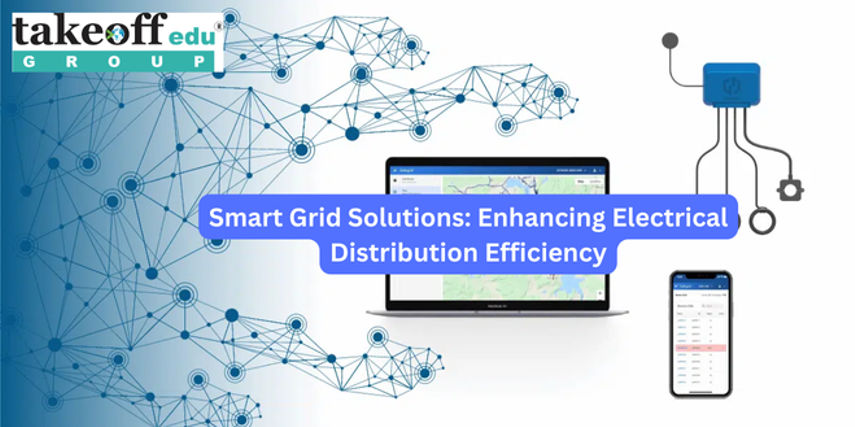 Smart Grid Solutions: Enhancing Electrical Distribution Efficiency
 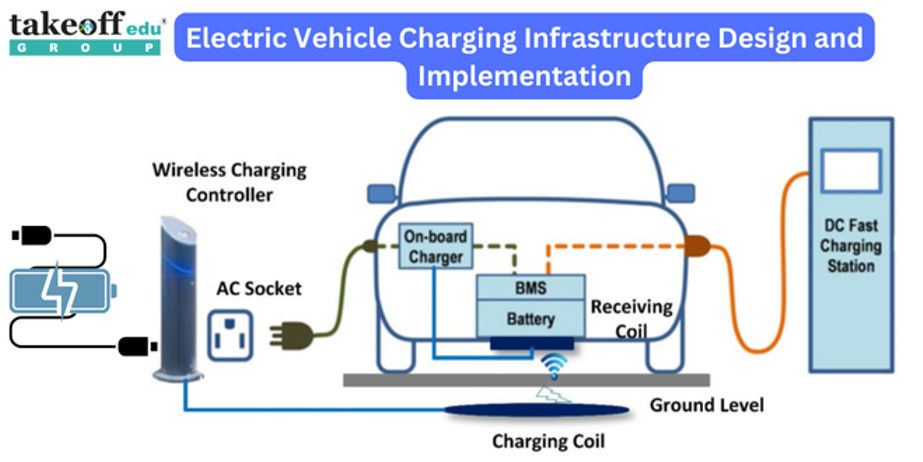 Electric Vehicle Charging Infrastructure Design and Implementation
 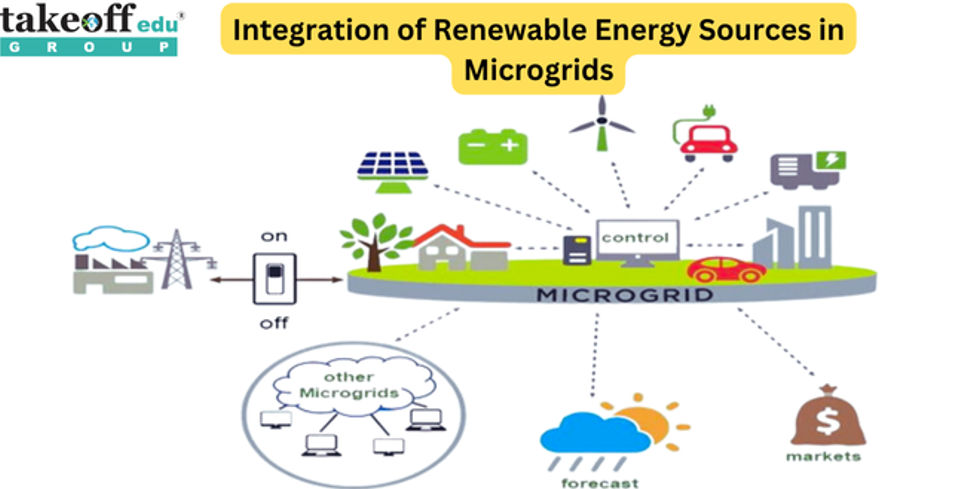 Integration of Renewable Energy Sources in Microgrids
  Electrical Projects Engineering Students
  M.Tech Thermal Engineering Projects
  IEEE Projects for Electrical Engineering
  Mini Projects for EEE
  Mini Projects for Electrical Students
  Top Electrical Projects for Final Year Students
  10 Interesting Projects for Electrical Engineering Students
  7 Trending Power Systems Based Projects for EEE
  Top 10 Power Electronics Projects for EEE
  Top 16 Electrical Engineering Projects




























 Paper Publishing




