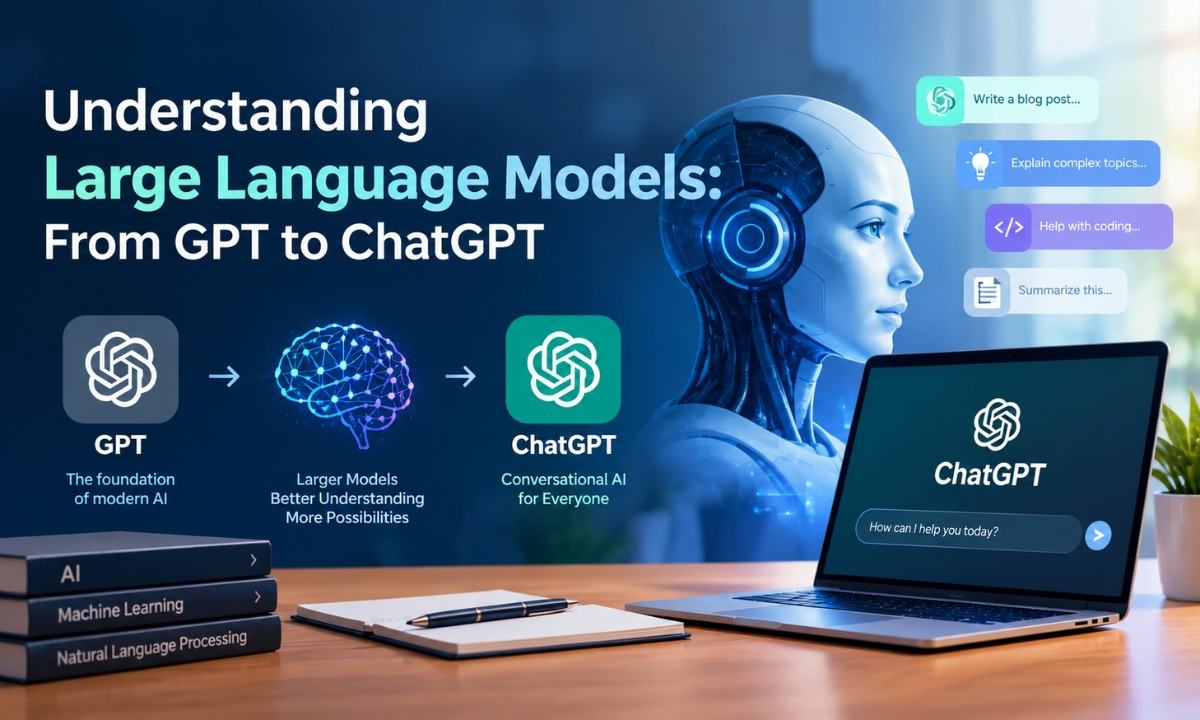

Introduction to Large Language Models (LLMs)
Large Language Models (LLMs) are transforming artificial intelligence by enabling machines to process information, recognize language patterns, and generate human-like responses. From answering questions and summarizing documents to writing code and automating business operations, LLMs are changing how people interact with technology.
At Takeoff Edu Group, understanding emerging technologies such as Large Language Models, Generative AI, and ChatGPT provides valuable insights into modern technological advancements. These innovations are creating opportunities across education, healthcare, finance, software development, and numerous other industries.
To understand their impact, it is important to explore how LLMs work, how GPT models are trained, how ChatGPT evolved, and how these technologies are being applied in real-world situations.
What Are Large Language Models (LLMs)?
A Large Language Model (LLM) is an artificial intelligence model trained on extensive datasets to recognize language patterns, process contextual information, and generate relevant text. LLMs use deep learning and neural networks to identify relationships between words, sentences, and concepts.
Unlike traditional rule-based systems that follow predefined instructions, LLMs learn statistical relationships from training data. This enables them to perform several tasks, including answering questions, translating languages, summarizing documents, generating content, and assisting with programming.
Key Characteristics of LLMs
· Large-scale training: Models learn from extensive collections of text, code, and other supported data.
· Deep learning: Neural networks identify complex relationships within training information.
· Contextual processing: Models use surrounding information to generate relevant responses.
· Text generation: LLMs create content based on learned patterns and user instructions.
· Task flexibility: A single model can support multiple language-related applications.
Although LLMs can produce sophisticated responses, they do not understand information exactly as humans do. Their outputs depend on learned patterns and the context provided. Consequently, responses may sometimes contain incorrect or misleading information.
Understanding GPT: Generative Pre-trained Transformer
GPT stands for Generative Pre-trained Transformer, a family of language models developed by OpenAI. GPT models generate text, respond to instructions, answer questions, and perform various language-based tasks.
The three components of GPT explain its fundamental approach.
1. Generative
Generative refers to the model's ability to create new content rather than simply retrieve or classify existing information. For example, GPT can explain artificial intelligence, draft emails, summarize articles, and suggest programming solutions based on user requests.
2. Pre-trained
Pre-training is the initial learning stage in which a model processes large datasets and learns statistical relationships between tokens and language structures.
Many GPT models use next-token prediction during pre-training. The model estimates which token is likely to follow a sequence and adjusts its parameters to improve predictions. This process establishes the foundation for subsequent instruction-following and text-generation capabilities.
3. Transformer
The Transformer is a neural network architecture introduced in the 2017 research paper Attention Is All You Need. It introduced an attention-based approach that significantly influenced modern natural language processing.
Transformers identify relationships between tokens across a sequence and support efficient parallel processing during training. Together, generative capabilities, pre-training, and the Transformer architecture form the foundation of GPT-based language generation.
How Does the Transformer Architecture Work?
The Transformer architecture is a fundamental component of modern Large Language Models. It converts text into numerical representations and processes relationships between different parts of a sequence.
Tokenization and Embeddings
Tokenization divides text into smaller units called tokens. A token may represent a complete word, part of a word, punctuation, or another text unit. For example, the sentence "Artificial intelligence is evolving" is divided into tokens according to the model's tokenizer.
These tokens are converted into numerical vectors called embeddings. Embeddings represent learned features and relationships that help the model process language.
Positional Information
Transformers use positional encodings or other positional mechanisms to account for token order. This is important because word order can change meaning. For example, "The student helped the teacher" and "The teacher helped the student" express different relationships despite containing the same words.
Self-Attention Mechanism
Self-attention enables a Transformer to evaluate relationships between tokens in a sequence. The model calculates attention weights to determine which tokens are relevant when processing another token.
For instance, surrounding words can help a model interpret a pronoun or identify relationships between different parts of a sentence. This mechanism supports contextual processing and helps generate coherent responses.
Feed-Forward Neural Networks
Transformer layers also contain feed-forward neural networks that transform token representations and learn complex patterns. Multiple layers work together to develop representations that support language processing and generation.
Next-Token Prediction
During text generation, an autoregressive GPT model predicts probabilities for possible next tokens. A decoding method selects a token, which becomes part of the context for the next prediction. This process continues until the model reaches a stopping condition or generation limit.
By repeatedly predicting tokens, GPT generates complete sentences, paragraphs, explanations, and other text-based outputs.

How Are Large Language Models Trained?
LLM training involves several stages that help models learn language patterns, follow instructions, and generate useful responses.
1. Data Collection and Preparation
Training begins with collecting datasets from sources such as publicly available text, licensed content, code repositories, and other permitted materials. The data is processed to improve quality, remove duplication, and filter unsuitable content where possible.
The quality and composition of training data significantly influence model performance.
2. Pre-training
During pre-training, the model predicts tokens from training examples. A loss function measures the difference between its predictions and the expected outputs. Optimization algorithms adjust the model's parameters to reduce this loss.
Repeating the process across extensive datasets helps the model learn language structures, contextual relationships, and statistical patterns. Pre-training requires substantial computing resources and carefully designed procedures.
3. Supervised Fine-Tuning
Supervised fine-tuning (SFT) adapts a pre-trained model using examples of instructions and appropriate responses.
Training examples may demonstrate how to answer questions, summarize documents, explain technical concepts, or follow formatting requirements. Fine-tuning helps the model respond more effectively to user instructions.
4. Human Feedback and Preference Optimization
Some models use human feedback or preference-based optimization to improve response quality.
In reinforcement learning from human feedback (RLHF), human evaluators assess or compare model responses. Their preferences can guide further optimization. Other approaches, including direct preference optimization, use different objectives to learn from preference data.
These techniques aim to improve helpfulness and instruction following, but they cannot eliminate all errors or inappropriate responses.
5. Evaluation and Safety Testing
Before deployment, models may be evaluated for accuracy, reliability, reasoning performance, privacy risks, bias, and harmful outputs.
Developers use benchmarks, human assessments, and safety testing to identify weaknesses. Continuous monitoring remains important because real-world use can reveal problems that initial evaluations may miss.
From GPT to ChatGPT: The Evolution of Conversational AI
The development of GPT models has contributed significantly to the growth of Generative AI. Successive generations have explored improvements in text generation, instruction following, and contextual processing.
Early GPT Models
The original GPT research demonstrated the value of Transformer-based language modeling and large-scale pre-training. GPT-2 demonstrated increasingly capable text generation, while GPT-3 expanded language-model capabilities and showed that large models could perform various tasks through prompts and examples.
These developments established large-scale pre-training as an influential approach to natural language processing.
GPT-3.5 and the Introduction of ChatGPT
OpenAI introduced ChatGPT in November 2022 as a conversational AI application built around models refined for dialogue.
Its interface allowed users to ask questions, generate content, request explanations, and refine responses through follow-up prompts. ChatGPT made advanced language-model capabilities accessible to students, educators, developers, professionals, and businesses.
GPT-4 and Modern AI Models
GPT-4 advanced language-model capabilities in areas such as instruction following and complex problem-solving.
Subsequent developments have expanded the use of multimodal AI systems that can process combinations of text, images, audio, and other supported inputs. Today, GPT-based technologies continue to influence education, research, software development, customer service, and business automation.
Available capabilities depend on the particular model and product configuration.
What Is ChatGPT and How Does It Work?
ChatGPT is a conversational AI application that enables users to interact with compatible AI models through natural language.
Instead of requiring specialized programming commands, users can describe their goals, ask questions, provide context, and refine instructions through follow-up messages.
When a user submits a prompt, ChatGPT processes the input and generates a response using the selected model. Depending on the available features, it may also support file analysis, image interpretation, web searches, and other tasks.
Key Features of ChatGPT
· Natural language interaction: Users communicate with AI using ordinary language.
· Content generation: ChatGPT assists with articles, emails, reports, and summaries.
· Programming assistance: It can explain code, suggest debugging approaches, and generate programming examples.
· Information summarization: It condenses lengthy documents into concise explanations.
· Educational support: It explains technical concepts and generates practice questions.
· Multimodal capabilities: Supported configurations can process images, audio, and other information.
An important distinction is that GPT is a family of AI models, whereas ChatGPT is an application through which users interact with compatible models and additional features.

Applications of Large Language Models Across Industries
Large Language Models are transforming industries by helping organizations process information, automate repetitive tasks, and improve digital communication.
1. Healthcare
LLMs can support medical documentation, summarize clinical information, organize administrative workflows, and explain general health concepts. Healthcare applications require strong privacy protections, clinical validation, and professional oversight.
2. Education
In education, LLMs support personalized learning by explaining difficult concepts, generating practice questions, summarizing learning materials, and assisting with language learning. Educators can also use these tools to develop lesson plans and educational resources.
3. Finance and Banking
Financial organizations can use LLMs to summarize reports, assist customer service teams, search internal documentation, and organize financial information. Reliable data, compliance procedures, and human oversight are essential for responsible implementation.
4. Software Development
LLMs help developers generate code, explain programming concepts, identify potential errors, prepare documentation, and support software testing. Generated code must be reviewed and tested for correctness and security before deployment.
5. Marketing and Content Creation
Marketing teams use LLMs to develop content ideas, draft product descriptions, prepare campaign materials, and summarize audience feedback.
LLMs can also support search engine optimization (SEO) by organizing content around relevant keywords, identifying related topics, and developing structures aligned with search intent. Human review remains important for factual accuracy, originality, and brand consistency.
6. Customer Service
LLM-powered chatbots can answer frequently asked questions, explain product features, provide troubleshooting instructions, and guide customers through support processes.
When connected to approved knowledge bases, these systems can provide contextual responses. Complex issues should have a clear escalation path to human support agents.
7. Manufacturing and Business Operations
Manufacturing and business teams can use LLMs to search technical documentation, summarize maintenance records, organize operational knowledge, and support internal communication.
These applications help employees access relevant information efficiently and reduce time spent on repetitive information-processing tasks.
These applications help employees access relevant information efficiently and reduce time spent on repetitive information-processing tasks.
Benefits of Large Language Models
The adoption of LLM technology offers several practical advantages.
- Improved productivity: LLMs accelerate drafting, summarization, and information retrieval.
- Natural communication: Users interact with AI through conversational instructions.
- Scalability: One model can support multiple applications, although additional adaptation may be necessary.
- Personalized assistance: Responses can be tailored to user instructions and provided context.
- Knowledge accessibility: Complex information becomes easier to explore and summarize.
- Workflow automation: Integrated AI systems can support multistep tasks and reduce manual effort.
The actual benefits depend on implementation quality, task complexity, and the safeguards used.
Challenges and Limitations of LLMs
Despite their advantages, Large Language Models have limitations that organizations must consider.
Hallucinations: LLMs can generate convincing responses containing incorrect facts or unsupported conclusions. Important information should be verified against reliable sources.
Bias and Fairness: Models may reproduce biases present in training data. Appropriate testing and mitigation strategies help reduce unfair outputs.
Data Privacy and Security: Users may unintentionally share confidential information with AI applications. Organizations need clear data-handling policies, access controls, and security procedures.
Computational Costs: Training and operating large models can require substantial computing power, infrastructure, energy, and financial investment.
Reliability: Models may struggle with ambiguous instructions, specialized knowledge, and tasks requiring consistently precise results.
Copyright and Intellectual Property: AI-generated content can raise questions about copyright, licensing, and ownership. Organizations should review generated material and follow applicable laws and policies.
Responsible AI adoption requires technical safeguards, human oversight, continuous evaluation, and clear governance practices.
The Future of Large Language Models and Generative AI
The future of Large Language Models and Generative AI will likely involve improved multimodal systems, more efficient architectures, advanced reasoning methods, and deeper integration with everyday software.
AI agents are developing as systems that can use tools, retrieve information, and perform multistep tasks with varying levels of autonomy. Appropriate permissions, monitoring, and human supervision remain essential.
Another important development is retrieval-augmented generation (RAG), which combines language models with external information sources. RAG enables applications to retrieve relevant documents and use that information when generating responses. However, answer quality still depends on the reliability of retrieved sources and the model's interpretation.
Smaller, specialized models may also provide advantages for organizations that prioritize cost efficiency, privacy, and deployment flexibility.
As AI advances, organizations will need to focus on reliability, security, transparency, and measurable business value rather than model capabilities alone.

Conclusion
Large Language Models, GPT, and ChatGPT represent significant developments in artificial intelligence, changing how people access information, generate content, develop software, and interact with digital systems. Through Transformer architecture, large-scale pre-training, fine-tuning, and advanced language generation, LLMs support applications across education, healthcare, finance, marketing, and numerous other industries.
Understanding these technologies also requires recognizing their limitations. Hallucinations, bias, privacy risks, computational costs, and security concerns highlight the importance of responsible AI implementation and human oversight.
At Takeoff Edu Group, exploring Large Language Models, Generative AI, and ChatGPT provides valuable insights into the future of technology and innovation. Understanding their architecture, applications, and limitations can help individuals and organizations identify opportunities, improve productivity, and develop intelligent solutions for real-world challenges.
 Generative AI in Art: Transforming Creativity in the Digital Age
 What is Generative AI? A Complete Guide to Its Technology and Applications
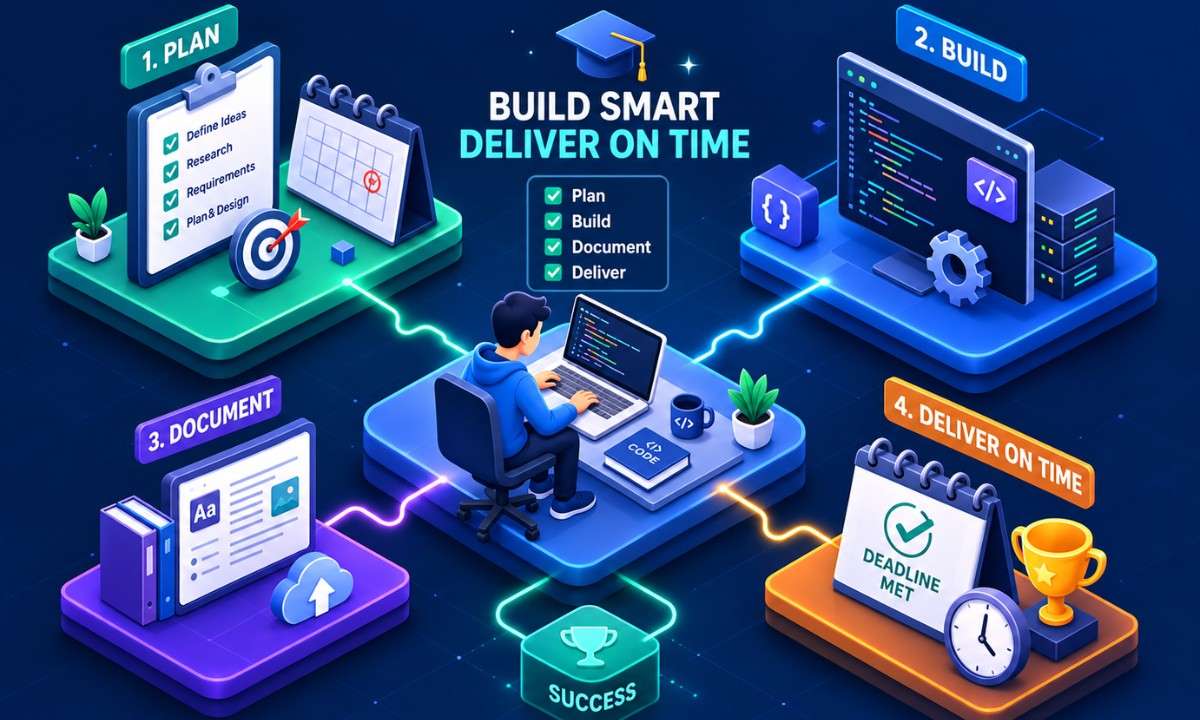 Computer Science Projects: A Step-by-Step Guide for Students
 The Impact of Large Language Models on Natural Language Processing
 An Introduction to Deep Learning: Understanding Neural Networks
 What is Agentic AI? Understanding Autonomous Decision-Making in AI Systems
 Confused About Choosing Data Science Projects for Final Year? Here's Everything You Need to Know
 What Are the Best Natural Language Processing Projects for Final Year Students?
 Top 10 Machine Learning Final Year Projects for Engineering Students
 How to Choose AI Projects for Students for Your Final Year Project?
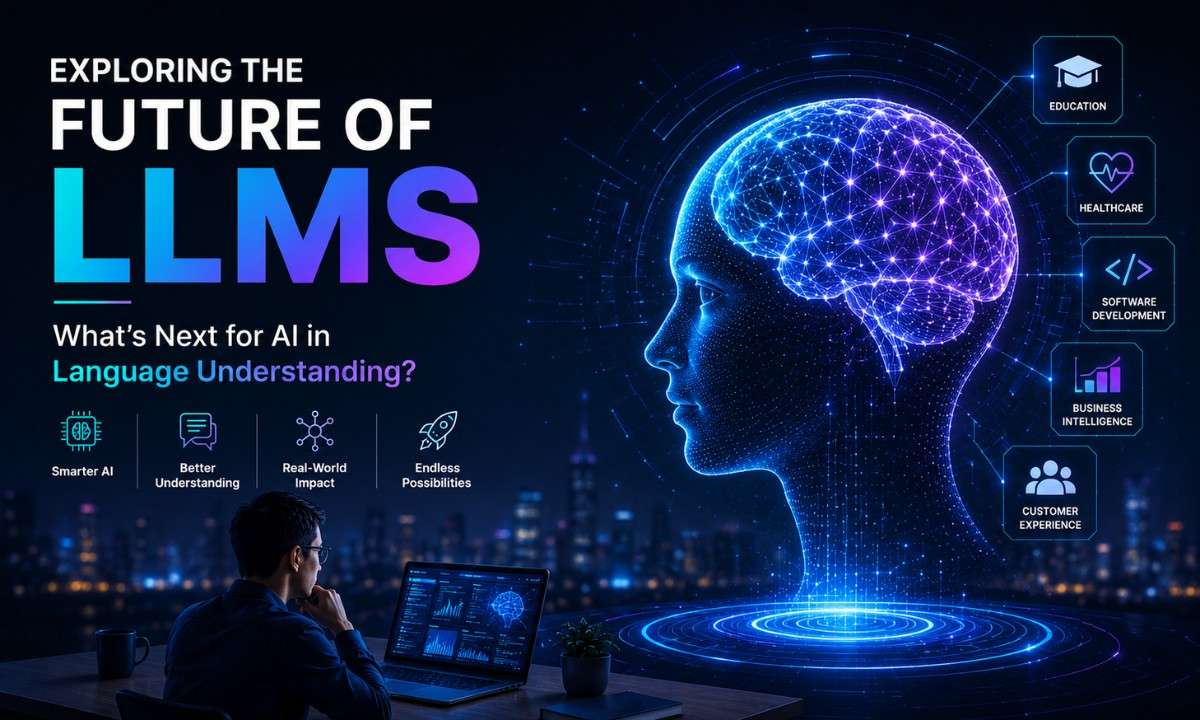 Exploring the Future of LLMs: What’s next for AI in Language Understanding?
 Artificial Intelligence Projects in Python with Complete Project Support
 Trending Data Mining Projects for BTech Students in 2026
 100+ Machine Learning Projects & Ideas for Students
 Top 10 Innovative AI Project Ideas for Final Year Students
 Explainable Artificial Intelligence (XAI) in the Era of Black Box Foundation Models
 Personalized AI Companions: A new wave of Emotional Intelligence in GenAI
 Responsible GenAI: Guardrails, Bias Control, and Alignment Techniques
 Synthetic Data Generation for Training Robust AI Models
 GenAI for Software Development: Code Generation, Refactoring & Debugging
 Agentic AI: The Rise of Multi-Agent Autonomous Systems
 Machine Learning Projects
 Fine-Tuning Llama 4 A Guide With Demo Project
 Top Advanced Machine Learning Projects for 2025
 Machine Learning Projects for Final Year Students
 Computer Science Projects
 ML Projects for Final Year
 Project Ideas for BTech CSE
 Mini Projects for Computer Science
 Major Project for CSE
 IEEE Projects for CSE
 Latest CSE Projects Ideas & Topics for Engineering Students
 List of Final Year Projects for Computer Science
 Top 6 Computer Science Engineering Projects


































 Paper Publishing