
Looking for the Right Machine Learning Final Year Project?
Choosing the right machine learning final year project is an important step for every engineering student. A practical and well-executed project not only helps you perform well in academics but also showcases your technical skills during placements and interviews. As industries continue to adopt Artificial Intelligence (AI) and Machine Learning (ML), students with hands-on project experience have a clear advantage in today's competitive job market.
Machine Learning is transforming industries such as healthcare, agriculture, finance, cybersecurity, and e-commerce by enabling intelligent decision-making through data. Developing an ML-based project allows students to understand real-world applications while gaining practical experience with modern technologies.
At Takeoff Edu Group, we help engineering students build industry-oriented projects that combine academic concepts with practical implementation. With expert guidance and real-world project exposure, students can confidently develop innovative solutions that strengthen their technical portfolios.
In this article, we've selected 10 innovative machine learning final year projects that are relevant, practical, and suitable for engineering students. These project ideas cover multiple domains and provide excellent opportunities to learn AI technologies while solving real-world problems.
Explore the Top 10 Machine Learning Final Year Projects
1. Integration of AI Model with Mobile App for Identification of Pest
This project combines image recognition with a mobile application to identify pests affecting crops. Farmers can capture an image of an infected plant, and the AI model predicts the pest while suggesting preventive measures. It is an excellent example of how intelligent systems support modern agriculture.
Technologies: Python, TensorFlow, OpenCV, CNN, Flutter
Applications: Smart Farming, Precision Agriculture, Crop Monitoring
2. Predicting Brain Age Using Machine Learning Algorithms: A Comprehensive Evaluation
This healthcare-focused project estimates a person's biological brain age using medical imaging and machine learning models. Students compare multiple algorithms to evaluate prediction accuracy, making it a valuable project for learning medical data analysis and predictive modeling.
Technologies: Python, Scikit-learn, TensorFlow, MRI Image Processing
Applications: Brain Health Assessment, Medical Research, Healthcare Analytics
3. Machine Learning to Identify Psychomotor Behaviors of Delirium for Patients in Long-Term Care Facility
This project develops an intelligent monitoring system that analyzes patient behavior to identify early signs of delirium. By recognizing unusual movement patterns, the system supports healthcare professionals in providing timely medical attention and improving patient care.
Technologies: Python, Machine Learning Algorithms, IoT Sensors, Data Analytics
Applications: Smart Healthcare, Patient Monitoring, Elderly Care
4. Machine Learning Based Water Potability Prediction
Access to safe drinking water is essential for public health. This project develops a predictive model that determines whether water is safe for consumption by analyzing quality parameters such as pH, hardness, dissolved solids, and conductivity. Students learn how to clean datasets, train classification models, and evaluate prediction accuracy while working on a real-world environmental problem.
Technologies: Python, Scikit-learn, Pandas, NumPy
Applications: Water Quality Monitoring, Environmental Engineering, Smart Water Management
5. Personal Credit Risk Identification Based on Combined Machine Learning Model
Financial institutions use data-driven systems to evaluate loan applications and reduce credit risk. This project combines multiple machine learning algorithms to analyze customer financial information and predict the likelihood of loan repayment. It provides hands-on experience in financial analytics, feature engineering, and predictive modeling.
Technologies: Python, XGBoost, Random Forest, Scikit-learn
Applications: Banking, Credit Risk Analysis, Loan Approval Systems

6. Prediction of Coronary Artery Disease Using Electrocardiography: A Machine Learning Approach
This project focuses on predicting coronary artery disease by analyzing Electrocardiography (ECG) data using machine learning algorithms. By identifying patterns in heart signals, the system supports early diagnosis and helps healthcare professionals make informed clinical decisions.
Technologies: Python, TensorFlow, ECG Signal Processing, Scikit-learn
Applications: Cardiac Health Monitoring, Clinical Decision Support, Healthcare Analytics
7. Virus Prediction Using Machine Learning Techniques
Early prediction of virus outbreaks can help healthcare organizations respond more effectively. This project uses historical health data and predictive models to identify possible disease trends. Students gain practical knowledge of data analysis, forecasting, and model evaluation while understanding the role of AI in public health.
Technologies: Python, Pandas, Scikit-learn, Time Series Analysis
Applications: Disease Surveillance, Epidemic Forecasting, Public Health Planning
8. Short-Term Stock Selection Strategy Based on Machine Learning
Stock markets generate large amounts of data every day, making them an excellent application for machine learning. This project analyzes historical stock prices and market indicators to predict short-term investment opportunities. It introduces students to financial data analysis and predictive analytics.
Technologies: Python, LSTM, Pandas, Financial Data APIs
Applications: Stock Market Analysis, Investment Planning, Financial Forecasting
9. Machine Learning-Based Heart Disease Prediction: A Study for Home Personalized Care
Heart disease remains one of the leading health concerns worldwide. This project develops a predictive system that evaluates patient information such as age, blood pressure, cholesterol levels, and lifestyle factors to estimate the risk of heart disease. It demonstrates how intelligent healthcare solutions can support early diagnosis and personalized care.
Technologies: Python, Logistic Regression, Decision Tree, Scikit-learn
Applications: Personalized Healthcare, Remote Patient Monitoring, Preventive Care
10. Classification of Mobile Phone Price Dataset Using Machine Learning Algorithms
This project classifies smartphones into different price categories based on specifications such as RAM, storage, battery capacity, processor performance, and camera quality. It helps students understand classification algorithms, feature selection, and model evaluation while working with structured datasets.
Technologies: Python, Scikit-learn, Decision Tree, Support Vector Machine (SVM)
Applications: E-commerce, Product Classification, Retail Analytics
Skills you’ll develop through These Projects
Completing practical Machine Learning projects helps students gain technical knowledge and industry-relevant experience. Throughout these projects, you'll develop skills in:
- Python programming
- Data preprocessing and visualization
- Feature engineering
- Model training and evaluation
- Classification and prediction techniques
- Problem-solving and analytical thinking
- Project documentation and presentation
- Working with real-world datasets
These skills are valuable for engineering students preparing for internships, campus placements, and careers in Artificial Intelligence, Machine Learning, Data Science, and Software Development.
How to Choose the Right Machine Learning Final Year Project
Selecting the right project is just as important as developing it. Before making your decision, consider your area of interest, technical skills, available resources, and future career goals. A project that solves a real-world problem and demonstrates practical implementation is more likely to leave a positive impression during project evaluations and placement interviews.
Here are a few tips to help you choose the right topic:
- Select a project that matches your interests and career aspirations.
- Choose a dataset that is reliable and relevant to your project.
- Understand the technologies and algorithms required before starting development.
- Focus on solving practical problems instead of selecting overly complex topics.
- Build a project that you can confidently explain during presentations and technical interviews.
A well-planned project not only improves your learning experience but also strengthens your portfolio for future opportunities.
Why Choose Takeoff Edu Group?
Finding the right guidance can make a significant difference in the success of your final year project. Takeoff Edu Group helps engineering students turn innovative ideas into practical solutions through expert mentoring and industry-focused project development.
Our team supports students at every stage of the project lifecycle from selecting the right topic to implementation, documentation, testing, and final presentation. Whether you're working on healthcare, finance, agriculture, cybersecurity, or AI-based applications, we provide the technical support needed to build a high-quality project.
Our Support Includes
- Latest Machine Learning and AI-based project topics
- IEEE and industry-oriented project guidance
- Expert mentoring and technical assistance
- Complete documentation and source code support
- Project customization based on university requirements
- Online and offline project assistance
- Guidance for project demonstrations and viva preparation
Our objective is to help students build projects that not only meet academic requirements but also enhance their technical knowledge and career readiness.

Conclusion
Choosing the right machine learning final year projects is an investment in your academic success and professional growth. The projects discussed in this article cover diverse domains including healthcare, agriculture, finance, environmental monitoring, and data analytics, helping students explore practical applications of Machine Learning.
If you're planning to build an innovative project with expert guidance, Takeoff Edu Group offers industry-oriented mentoring, practical implementation support, and complete project assistance to help engineering students achieve their academic goals.
Ready to begin your final year project?
Contact Takeoff Edu Group today to explore the latest Machine Learning, Artificial Intelligence, Data Science, and IEEE-based projects designed to help you build practical skills and prepare for a successful career.
FAQs
1. Which Machine Learning project is best for engineering students?
The best project depends on your interests and career goals. Healthcare, agriculture, finance, and computer vision projects are popular because they solve practical problems and provide valuable learning opportunities.
2. Which programming language is commonly used for Machine Learning projects?
Python is the most widely used language due to its extensive libraries such as Scikit-learn, TensorFlow, Keras, Pandas, and NumPy.
3. Can beginners develop Machine Learning projects?
Yes. Beginners can start with prediction and classification projects before moving on to advanced topics like deep learning, computer vision, and natural language processing.
4. Are Machine learning projects useful for placements?
Absolutely. Practical project experience demonstrates your ability to apply technical concepts to real-world challenges, making your resume stronger during internships and campus placements.
5. Where can I get guidance for Machine Learning final year projects?
If you're looking for expert support, Takeoff Edu Group provides mentoring, implementation assistance, documentation guidance, and industry-oriented project solutions for engineering students.
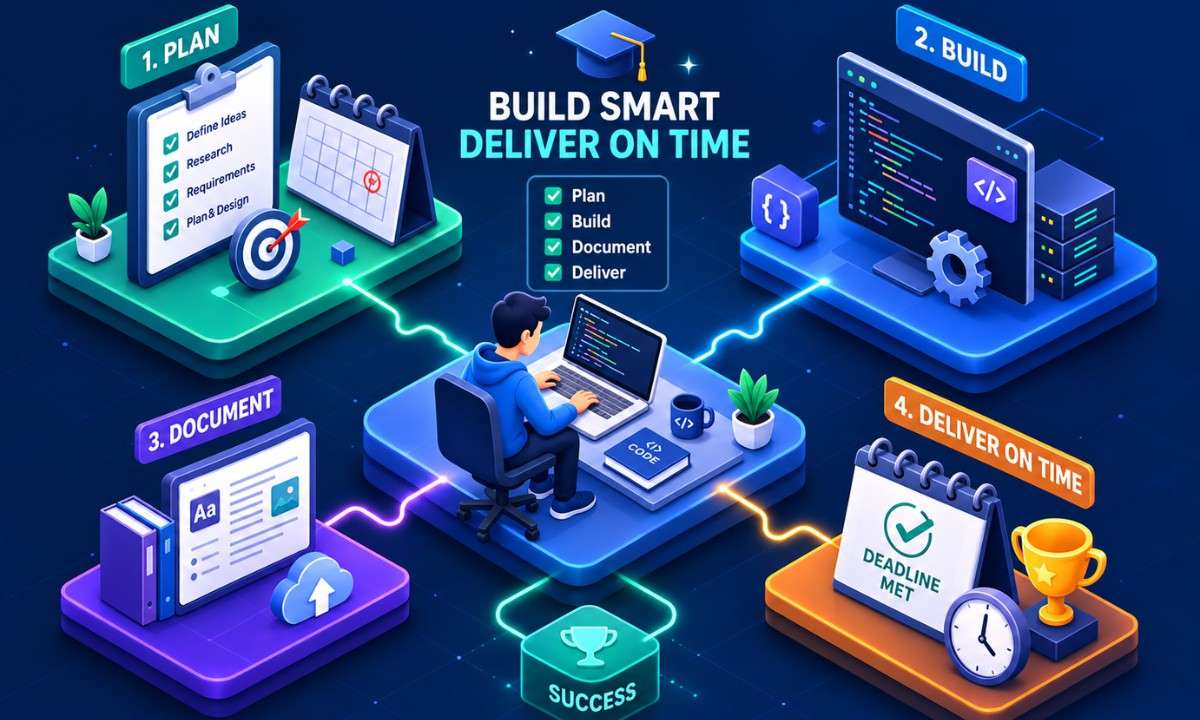 Computer Science Projects: A Step-by-Step Guide for Students
  The Impact of Large Language Models on Natural Language Processing
  An Introduction to Deep Learning: Understanding Neural Networks
  What is Agentic AI? Understanding Autonomous Decision-Making in AI Systems
  Confused About Choosing Data Science Projects for Final Year? Here's Everything You Need to Know
  What Are the Best Natural Language Processing Projects for Final Year Students?
  How to Choose AI Projects for Students for Your Final Year Project?
  Exploring the Future of LLMs: What’s next for AI in Language Understanding?
  What is Generative AI? A Complete Guide to Its Technology and Applications
  Artificial Intelligence Projects in Python with Complete Project Support
  Trending Data Mining Projects for BTech Students in 2026
  100+ Machine Learning Projects & Ideas for Students
  Top 10 Innovative AI Project Ideas for Final Year Students
  Explainable Artificial Intelligence (XAI) in the Era of Black Box Foundation Models
  Personalized AI Companions: A new wave of Emotional Intelligence in GenAI
  Responsible GenAI: Guardrails, Bias Control, and Alignment Techniques
  Synthetic Data Generation for Training Robust AI Models
  GenAI for Software Development: Code Generation, Refactoring & Debugging
  Agentic AI: The Rise of Multi-Agent Autonomous Systems
  Machine Learning Projects
  Fine-Tuning Llama 4 A Guide With Demo Project
 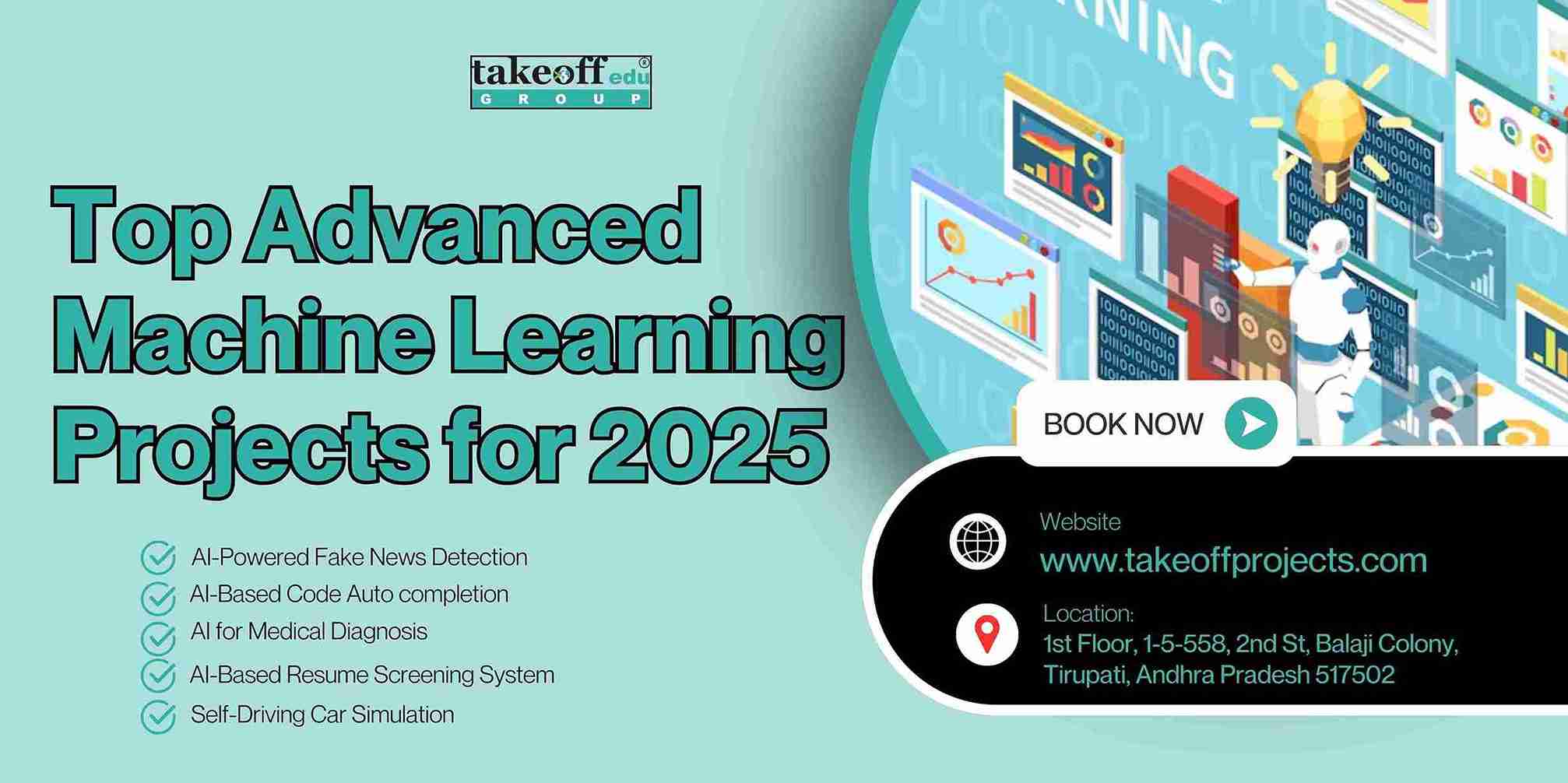 Top Advanced Machine Learning Projects for 2025
  Machine Learning Projects for Final Year Students
  Computer Science Projects
  ML Projects for Final Year
  Project Ideas for BTech CSE
  Mini Projects for Computer Science
  Major Project for CSE
  IEEE Projects for CSE
  Latest CSE Projects Ideas & Topics for Engineering Students
  List of Final Year Projects for Computer Science
  Top 6 Computer Science Engineering Projects






























 Paper Publishing




