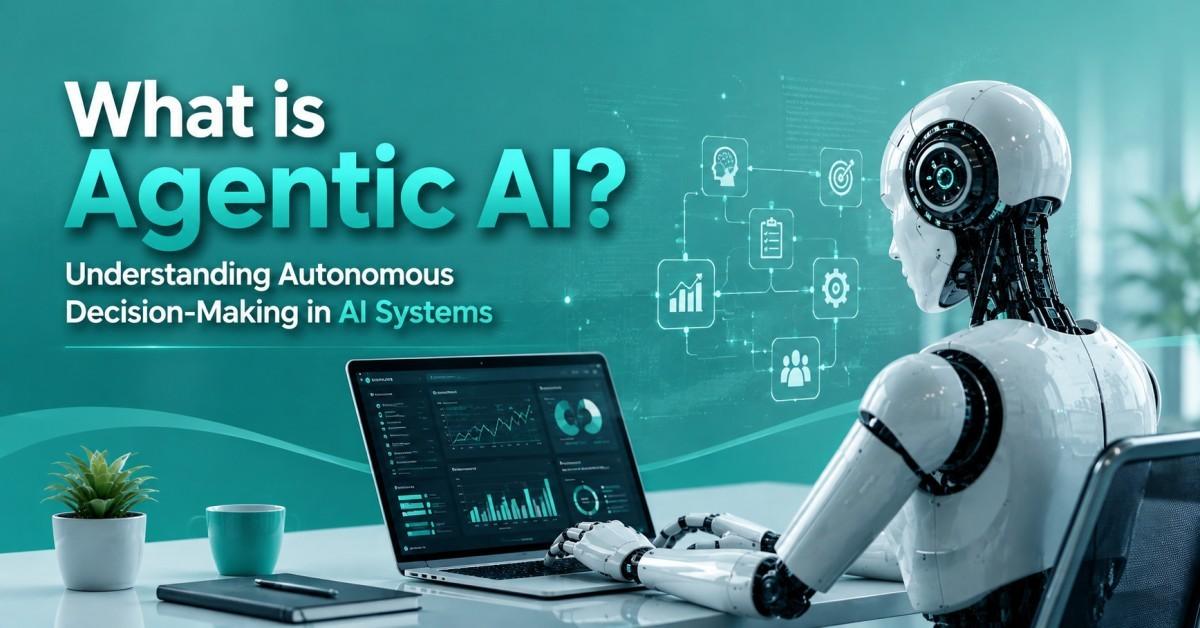

Introduction
Artificial Intelligence is evolving beyond systems that simply respond to user commands. represents a new generation of AI systems that can understand goals, make decisions, plan tasks, take actions, and adapt based on changing situations. Instead of requiring humans to provide instructions for every individual step, AI can work toward a defined objective with a greater level of autonomy.
The growing use is transforming how businesses and individuals approach automation, problem solving and decision-making. From customer service and software development to business operations and research, autonomous AI agents can perform complex tasks while reducing the need for continuous human intervention.
What is Agentic AI?
Agentic AI refers to AI systems designed to operate autonomously by understanding a goal, analyzing available information, making decisions, and taking actions to achieve the desired outcome.
Traditional AI systems generally respond to specific prompts or predefined instructions. In contrast, agentic AI can determine the steps required to complete a task and adjust its approach when circumstances change.
For example, instead of asking an AI system to complete every step of a research task separately, an AI system could:
1. Understand the research objective.
2. Break the objective into smaller tasks.
3. Gather and analyze relevant information.
4. Make decisions based on the findings.
5. Complete the required actions.
6. Evaluate the results and improve its approach.
This ability to plan, reason, act, and adapt is what makes agentic AI different from conventional AI applications.
How Does Agentic AI Work?
AI typically combines several AI capabilities to achieve a specific objective. The process can include the following stages:
1. Goal Understanding
The AI first identifies what needs to be achieved. The goal may come from a user, business process, application, or another system.
2. Planning
After understanding the goal, the AI determines the actions required to accomplish it. Complex objectives can be divided into smaller and manageable tasks.
3. Decision Making
The system evaluates available information and selects appropriate actions based on the goal, context, and expected results.
4. Taking Action
Agentic AI can interact with tools, applications, databases, APIs, or other digital systems to perform tasks.
5. Monitoring and Adaptation
The AI evaluates the results of its actions. If the original approach does not produce the expected outcome, it can modify its plan and try another approach.
Key Features of Agentic AI
Some important characteristics of Agentic AI include:
- Autonomous decision-making: Makes decisions based on goals and available information.
- Task planning: Breaks complex objectives into smaller steps.
- Reasoning: Evaluates information before selecting an action.
- Tool usage: Can interact with external tools and software.
- Adaptability: Can respond to changing circumstances.
- Goal-oriented behavior: Focuses on achieving a specific objective.
- Continuous feedback: Uses results and feedback to improve future actions.
Agentic AI vs Traditional AI
Traditional AI is often designed to perform a specific task based on a direct instruction. Agentic AI takes a more autonomous approach.
|
Traditional AI |
Agentic AI |
|
Responds to specific instructions |
Works toward broader goals |
|
Usually performs defined tasks |
Can plan multiple tasks |
|
Limited autonomy |
Higher level of autonomy |
|
Often follows predefined workflows |
Can adapt workflows |
|
Requires more step-by-step guidance |
Can determine the next action |
For example, a traditional AI chatbot may answer a customer's question. An agentic AI system could understand the customer's problem, check available information identify a solution update a system and communicate the result.
Applications of Agentic AI
Agentic AI can be applied across many industries and use cases.
Customer Service
AI agents can understand customer requests, retrieve information, resolve common issues, and escalate complex cases to human employees.
Software Development
Agentic AI can assist developers by analyzing requirements, generating code, identifying errors, testing solutions, and suggesting improvements.
Business Operations
Businesses can use AI agents to automate repetitive workflows, analyze information, manage tasks, and support operational decision-making.
Research and Data Analysis
AI agents can collect information, organize data, identify patterns, and generate useful insights for researchers and organizations.
Healthcare
I can support administrative processes, information analysis, and decision-support workflows while keeping appropriate human oversight in critical situations.
Finance
Financial organizations can use AI agents for data analysis, customer support, workflow automation, and monitoring activities.
Benefits of Agentic AI
The adoption of Agentic AI can provide several potential benefits:
Improved Productivity
AI agents can automate multiple steps within a workflow, allowing employees to focus on higher-value activities.
Faster Decision Making
Agentic systems can analyze information and take appropriate actions faster than manually managed workflows in suitable use cases.
Automation of Complex Tasks
Unlike simple automation, agentic AI can handle tasks involving multiple steps and changing conditions.
Reduced Manual Work
Organizations can reduce repetitive activities by allowing AI agents to manage routine digital processes.
Scalable Operations
AI agents can support large volumes of tasks without requiring a proportional increase in manual effort.
Challenges of Agentic AI
Despite its potential, agentic AI also introduces important challenges.
Accuracy and Reliability
AI agents may make incorrect decisions or misunderstand objectives, so systems need appropriate monitoring and safeguards.
Security
Because autonomous AI agents may interact with applications and data, strong security controls are important.
Human Oversight
High impact decisions should include appropriate human review rather than relying entirely on autonomous systems.
Privacy
Organizations need to carefully manage the information accessed and processed by AI agents.
Cost and Complexity
Building reliable agentic systems may require advanced AI models, infrastructure, integrations, testing, and ongoing monitoring.
The Future of Agentic AI
The future of AI is expected to focus on creating AI systems that can handle increasingly complex workflows while operating within clearly defined boundaries. As AI models, tool integration, memory, reasoning capabilities, and security frameworks continue to improve, AI agents may become an important part of business and digital operations.
Conclusion
Agentic AI is changing the way we think about artificial intelligence by moving from simple question and answer systems toward AI that can understand goals, plan actions, make decisions, use tools, and adapt to results. Its ability to operate with greater autonomy makes it useful for automating complex workflows across industries.
Explore the Future of AI with Agentic AI
Want to learn more about, AI agents, and autonomous decision-making? Explore innovative AI solutions and discover how intelligent AI systems can help automate tasks, improve productivity, and support smarter business decisions.
👉 Contact us today to learn more about AI technologies, Agentic AI solutions, and innovative AI applications.
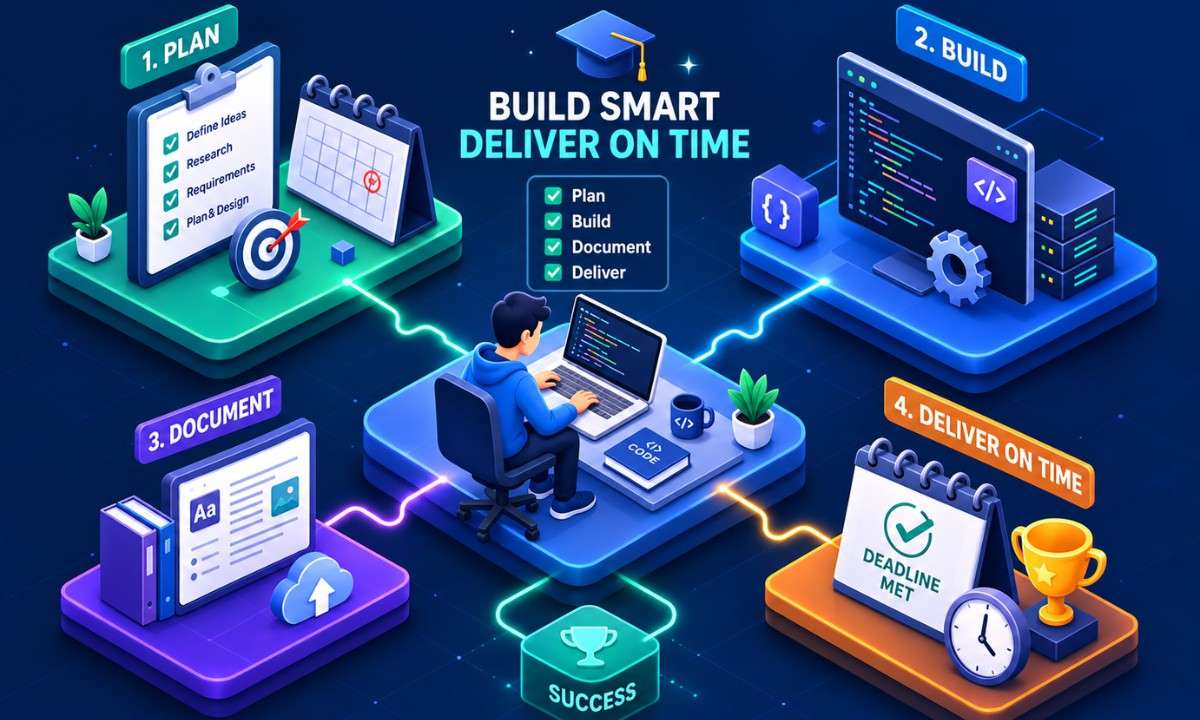 Computer Science Projects: A Step-by-Step Guide for Students
 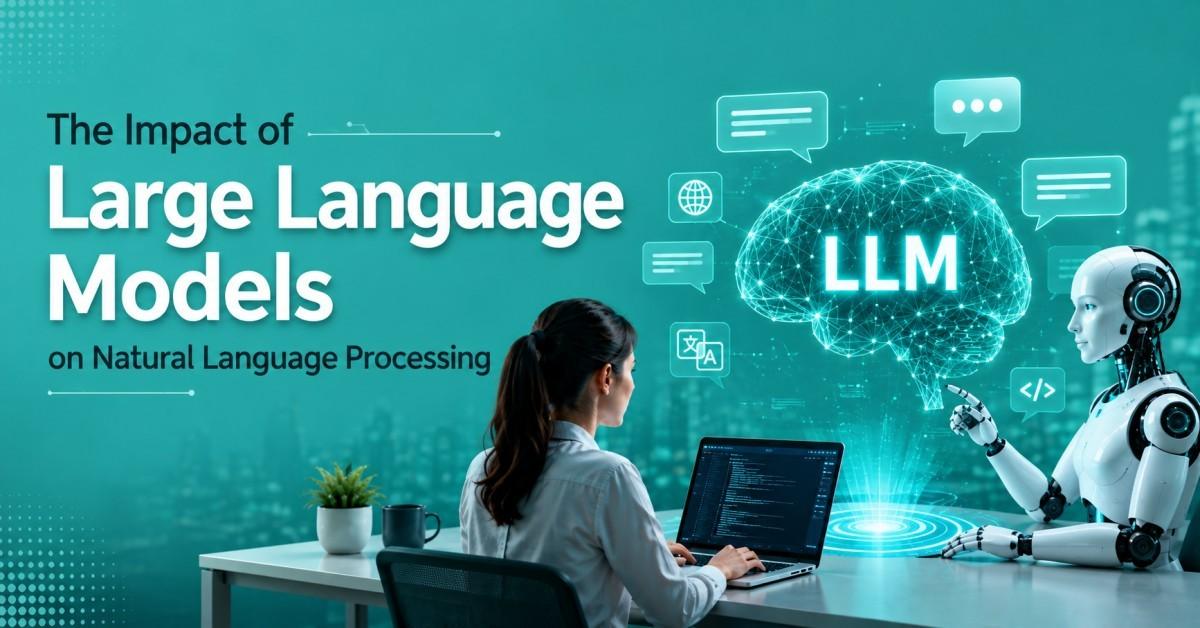 The Impact of Large Language Models on Natural Language Processing
 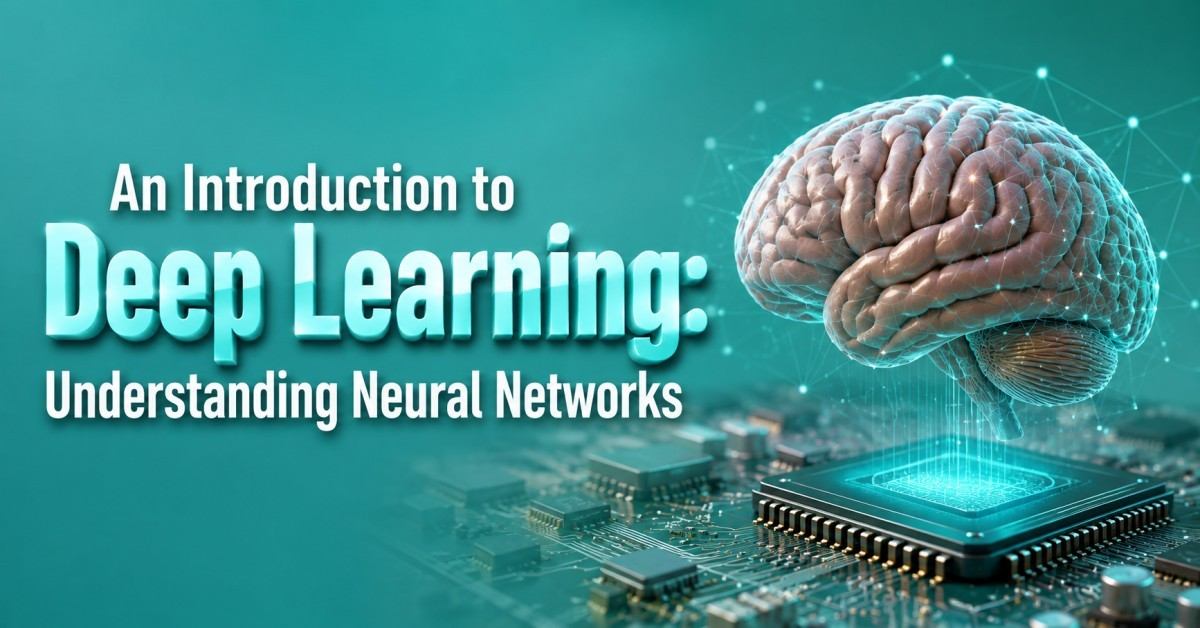 An Introduction to Deep Learning: Understanding Neural Networks
  Confused About Choosing Data Science Projects for Final Year? Here's Everything You Need to Know
  What Are the Best Natural Language Processing Projects for Final Year Students?
  Top 10 Machine Learning Final Year Projects for Engineering Students
  How to Choose AI Projects for Students for Your Final Year Project?
  Exploring the Future of LLMs: What’s next for AI in Language Understanding?
  What is Generative AI? A Complete Guide to Its Technology and Applications
 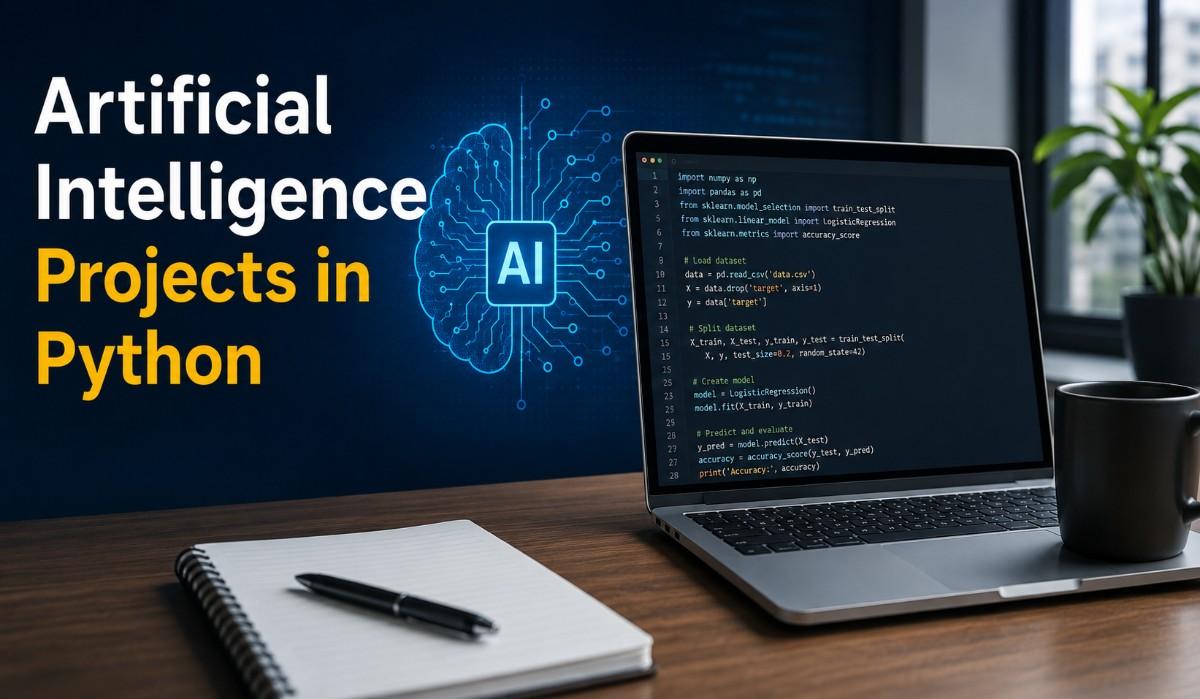 Artificial Intelligence Projects in Python with Complete Project Support
  Trending Data Mining Projects for BTech Students in 2026
  100+ Machine Learning Projects & Ideas for Students
  Top 10 Innovative AI Project Ideas for Final Year Students
  Explainable Artificial Intelligence (XAI) in the Era of Black Box Foundation Models
  Personalized AI Companions: A new wave of Emotional Intelligence in GenAI
  Responsible GenAI: Guardrails, Bias Control, and Alignment Techniques
  Synthetic Data Generation for Training Robust AI Models
  GenAI for Software Development: Code Generation, Refactoring & Debugging
  Agentic AI: The Rise of Multi-Agent Autonomous Systems
  Machine Learning Projects
  Fine-Tuning Llama 4 A Guide With Demo Project
  Top Advanced Machine Learning Projects for 2025
  Machine Learning Projects for Final Year Students
  Computer Science Projects
  ML Projects for Final Year
  Project Ideas for BTech CSE
  Mini Projects for Computer Science
  Major Project for CSE
  IEEE Projects for CSE
  Latest CSE Projects Ideas & Topics for Engineering Students
  List of Final Year Projects for Computer Science
  Top 6 Computer Science Engineering Projects






























 Paper Publishing




