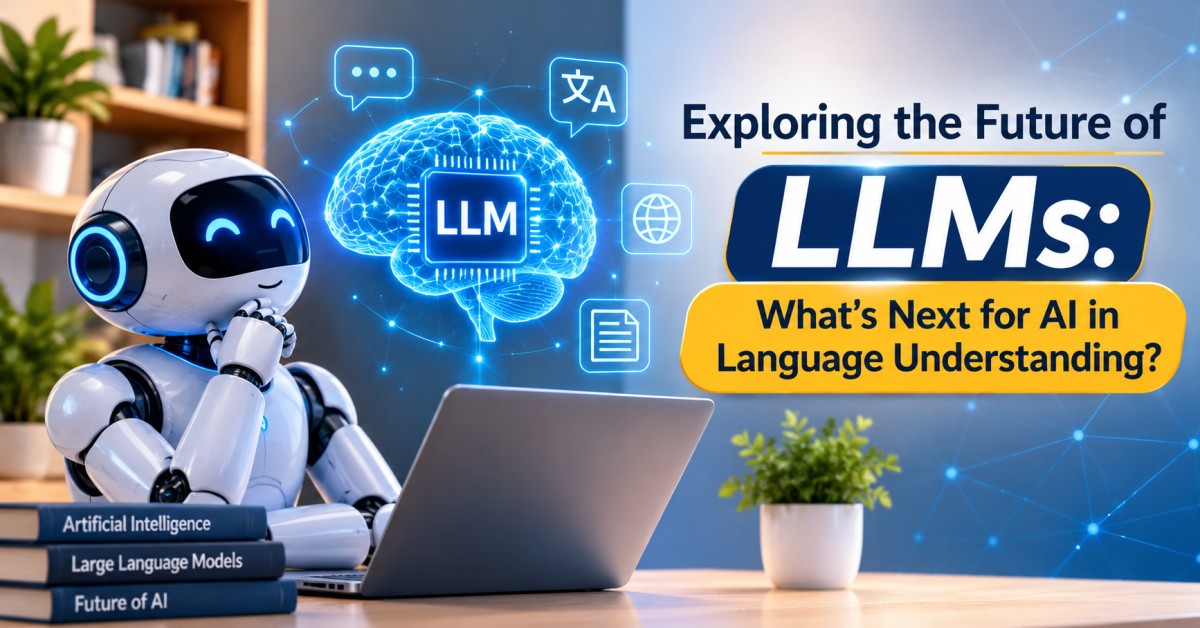

Introduction
Artificial Intelligence (AI) is growing rapidly and changing the way people interact with technology. One of the most important developments in AI is Large Language Models (LLMs). These models help computers understand human language, generate meaningful responses, answer questions, summarize information, and perform different language-related tasks.
LLMs are widely used in chatbots, virtual assistants, content generation tools, education, healthcare, and business applications. As AI technology continues to improve, Large Language Models are becoming more advanced, accurate, and useful.
What Are Large Language Models (LLMs)?
Large Language Models are advanced AI models trained using large amounts of text data. They use deep learning techniques and Transformer architecture to understand language patterns and generate human-like text.
These models can understand questions, identify important information, translate languages, write content, generate code, and support problem-solving activities.
Some popular applications of LLM technology include:
- AI-powered chatbots and virtual assistants
- Automatic text generation and summarization
- Language translation tools
- Code generation and programming assistance
- Document analysis and information retrieval
- Customer support automation
LLMs are becoming an important part of modern AI applications because they make human-computer communication easier and more natural.
How Are LLMs Changing AI Language Understanding?
Traditional computer systems often depend on predefined rules and commands to process language. However, LLMs use advanced neural networks to identify relationships between words, sentences, and larger sections of text.
This helps AI systems understand context and generate more relevant responses.
Some important improvements include:
1. Better Context Understanding
Modern LLMs can understand the context of conversations and provide more relevant answers. They can also process longer documents and maintain context across multiple interactions, depending on their architecture and available memory.
2. Improved Natural Language Processing
LLMs are improving Natural Language Processing (NLP) by supporting tasks such as sentiment analysis, text classification, translation, and question answering.
3. Advanced Reasoning Capabilities
Newer models are designed to handle complex instructions, break problems into smaller steps, and provide more structured responses.
4. Personalized Communication
AI systems can adapt their responses based on user instructions, preferences, and the information provided during interactions.
Future Trends in Large Language Models
The future of LLMs will focus on making AI systems more intelligent, efficient, reliable, and accessible. Here are some important trends shaping the next generation of language models.
1. Multimodal AI Models
One of the major developments in LLM technology is multimodal AI. Earlier language models mainly focused on understanding and generating text. Modern multimodal models can work with different types of information, including text, images, audio, and video.
2. Improved AI Reasoning and Problem-Solving
AI reasoning is another important area of development. Future LLMs are expected to become better at solving mathematical problems, understanding complex instructions, analyzing information, and supporting decision-making.
3. Growth of Agentic AI Systems
Agentic AI is an emerging development that allows AI systems to perform multiple tasks with less human intervention.
The combination of LLMs, external tools, memory, and planning capabilities is expected to make AI applications more useful in real-world environments.
4. Smaller and More Efficient Language Models
Training and running large AI models requires significant computing resources, memory, and electricity.
To reduce these requirements, researchers are developing smaller and more efficient language models. Techniques such as model compression, quantization, and knowledge distillation help reduce model size and computational requirements.
5. Better Multilingual Language Understanding
Language is an important part of communication, and AI systems should support people from different linguistic backgrounds.
Future LLMs are expected to improve their understanding of regional and less-represented languages. This can help users communicate with AI systems in their preferred languages.

Applications of Future LLM Technology
Large Language Models have the potential to improve many industries. Their applications will continue to expand as AI technology develops.
Healthcare: LLMs can assist with medical document summarization, healthcare information retrieval, and administrative tasks. Medical professionals must verify important outputs.
Education: AI-powered learning assistants can explain complex topics, generate practice questions, and support personalized learning.
Software Development: LLMs can help developers generate code, identify errors, explain programming concepts, and create technical documentation.
Banking and Finance: AI models can support document analysis, customer assistance, and financial information processing with appropriate security and human oversight.
Marketing: LLMs can help generate content ideas, prepare product descriptions, analyze customer feedback, and support digital marketing activities.
Customer Service: AI-powered chatbots can answer common questions, understand customer requests, and provide faster support.
Challenges in the Future Development of LLMs
Although LLMs offer many advantages, several challenges must be addressed before they can become more reliable and widely adopted.
1. Accuracy and Hallucinations: LLMs sometimes generate incorrect or misleading information. Improving factual accuracy and verification is important.
2. Data Privacy: AI models may process sensitive information. Strong data protection and privacy practices are necessary.
3. High Computational Costs: Training and operating large models require advanced hardware and significant computing resources.
4. Bias and Fairness: Models can reflect biases present in their training data. Better data selection and evaluation methods are required.
5. Security Risks: AI applications can face risks such as prompt injection, data leakage, and misuse of external tools.
6. Transparency: Understanding how AI models generate specific answers remains challenging. Better explainability and evaluation methods are needed.
What Can We Expect from LLMs in the Coming Years?
The future of LLMs will not depend only on increasing model size. Improvements in reasoning, efficiency, multimodal understanding, personalization, and responsible AI development will also play important roles.
Future AI systems may work more effectively with different types of information, interact with external applications, and support complex tasks through intelligent automation.
The focus will gradually move toward building AI systems that are not only powerful but also accurate, secure, affordable, and useful in everyday applications.
Future of Large Language Models in NLP
Large Language Models (LLMs) are improving rapidly with new developments in Artificial Intelligence. In the future, these models will become more advanced and help people communicate with computers more easily.
Some important future developments include:
1. Better Language Understanding: AI models will understand human questions and conversations more accurately.
2. Multimodal AI: Future LLMs will work with text, images, audio, and videos.
3. Improved Accuracy: AI models will provide better answers and reduce incorrect information.
4. Faster AI Models: New technologies will help LLMs work faster with fewer computing resources.
5. Multilingual Support: AI systems will support more languages and help people communicate easily.
Conclusion
Large Language Models are transforming the field of Artificial Intelligence by making communication between humans and computers more natural and effective. From content generation and language translation to advanced reasoning and intelligent automation, LLMs are creating new opportunities across multiple industries.
As Large Language Models continue to evolve, exploring their latest developments can help you understand the future of AI and its real-world applications. Stay connected with Takeoff Projects to discover more AI, Machine Learning, and Generative AI technologies, and explore innovative project ideas to build your technical knowledge and skills.
Explore the latest AI and LLM projects at Takeoff Projects and take the next step toward future-ready technology
FAQs
1. What are Large Language Models (LLMs)?
LLMs are AI models trained on large amounts of text data to understand and generate human-like language.
2. What is the future of LLMs?
The future of LLMs includes better reasoning, multimodal understanding, improved efficiency, and intelligent AI agents.
3. How are LLMs used in everyday applications?
LLMs are used in chatbots, virtual assistants, content creation, translation, education, and software development.
4. What is multimodal AI in LLMs?
Multimodal AI allows models to understand and process different types of information, such as text, images, audio, and video.
5. What are the major challenges of LLMs?
Major challenges include incorrect responses, data privacy, security risks, computational costs, and AI bias.
 Generative AI in Art: Transforming Creativity in the Digital Age
 Understanding Large Language Models: From GPT to ChatGPT
 What is Generative AI? A Complete Guide to Its Technology and Applications
 Computer Science Projects: A Step-by-Step Guide for Students
 The Impact of Large Language Models on Natural Language Processing
 An Introduction to Deep Learning: Understanding Neural Networks
 What is Agentic AI? Understanding Autonomous Decision-Making in AI Systems
 Confused About Choosing Data Science Projects for Final Year? Here's Everything You Need to Know
 What Are the Best Natural Language Processing Projects for Final Year Students?
 Top 10 Machine Learning Final Year Projects for Engineering Students
 How to Choose AI Projects for Students for Your Final Year Project?
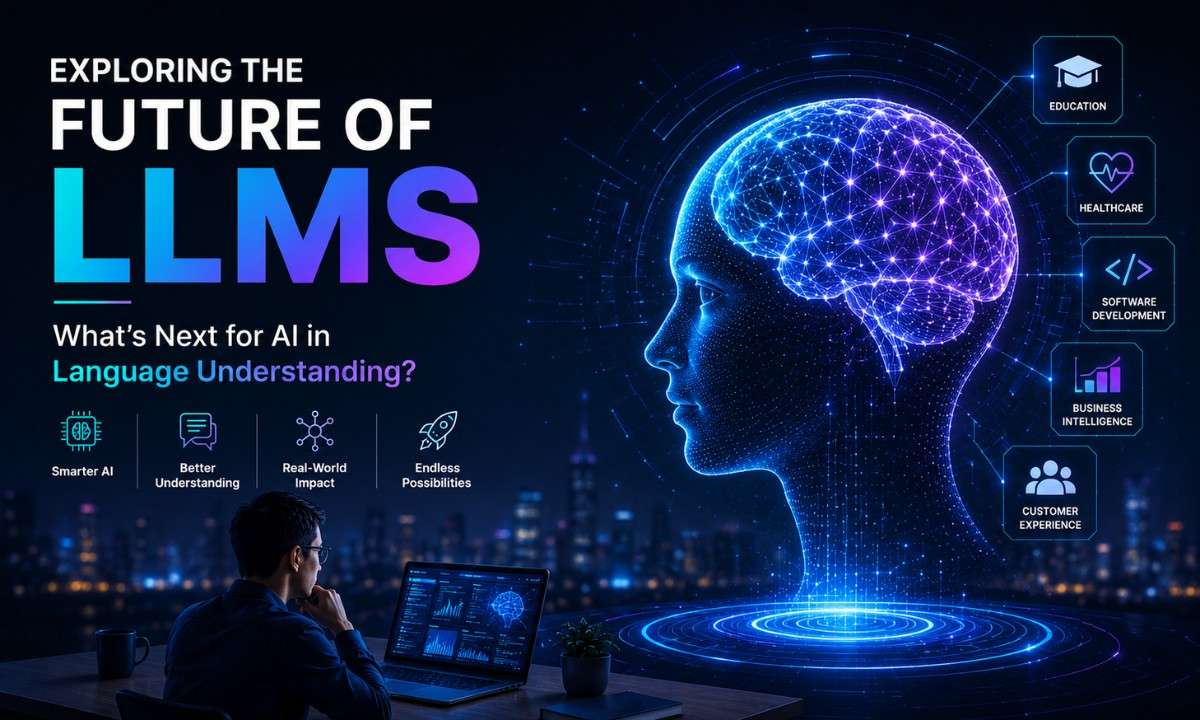 Exploring the Future of LLMs: What’s next for AI in Language Understanding?
 Artificial Intelligence Projects in Python with Complete Project Support
 Trending Data Mining Projects for BTech Students in 2026
 100+ Machine Learning Projects & Ideas for Students
 Top 10 Innovative AI Project Ideas for Final Year Students
 Explainable Artificial Intelligence (XAI) in the Era of Black Box Foundation Models
 Personalized AI Companions: A new wave of Emotional Intelligence in GenAI
 Responsible GenAI: Guardrails, Bias Control, and Alignment Techniques
 Synthetic Data Generation for Training Robust AI Models
 GenAI for Software Development: Code Generation, Refactoring & Debugging
 Agentic AI: The Rise of Multi-Agent Autonomous Systems
 Machine Learning Projects
 Fine-Tuning Llama 4 A Guide With Demo Project
 Top Advanced Machine Learning Projects for 2025
 Machine Learning Projects for Final Year Students
 Computer Science Projects
 ML Projects for Final Year
 Project Ideas for BTech CSE
 Mini Projects for Computer Science
 Major Project for CSE
 IEEE Projects for CSE
 Latest CSE Projects Ideas & Topics for Engineering Students
 List of Final Year Projects for Computer Science
 Top 6 Computer Science Engineering Projects



































 Paper Publishing