

Artificial Intelligence (AI) is transforming industries such as healthcare, robotics, automotive engineering, smart manufacturing, and the Internet of Things (IoT). These applications require powerful computing hardware capable of processing large amounts of data with high speed and accuracy. AI Processors play a crucial role in meeting these requirements by accelerating artificial intelligence computations while optimizing power consumption and performance.
However, complex AI workloads can increase energy consumption, heat generation, and hardware costs. To address these challenges, engineers are developing energy-efficient AI Processors using Very Large Scale Integration (VLSI) technology. This approach combines optimized processor architecture, low-power circuit design, and efficient data processing techniques.
Takeoff Edu Group supports engineering students exploring VLSI, AI hardware acceleration, and related technical projects. The project Design and Implementation of Energy-Efficient AI Processors Using VLSI Technology introduces students to processor architecture, RTL design, simulation, and power optimization techniques used in modern semiconductor development.
What Are AI Processors?
AI Processors are specialized computing units designed to accelerate artificial intelligence workloads, including machine learning, deep learning, image recognition, and neural network inference.
Unlike general-purpose processors, AI Processors can be optimized for repetitive mathematical operations such as matrix multiplication, vector processing, and multiply-accumulate (MAC) computations. These operations are fundamental to many AI algorithms.
AI hardware may include CPUs with AI instructions, GPUs, neural processing units (NPUs), and application-specific integrated circuits (ASICs). Each architecture offers different advantages in terms of performance, power consumption, flexibility, and hardware complexity.
The primary objective of an energy-efficient AI processor is to deliver the required computational performance while reducing energy consumption and maintaining acceptable accuracy.

What Is VLSI Technology?
Very Large Scale Integration (VLSI) is a semiconductor technology that integrates millions or billions of transistors into a single integrated circuit, depending on the device and manufacturing process.
VLSI technology enables engineers to develop compact and efficient hardware systems, including microprocessors, memory units, digital signal processors, and AI accelerators.
In AI processor development, VLSI design techniques help optimize circuit structure, data paths, memory access, and power consumption. These optimizations are especially important for embedded devices and edge AI applications, where energy and thermal constraints can be significant.
Objectives of the Project
The main objective of designing energy-efficient AI Processors using VLSI technology is to improve computational efficiency while controlling power consumption and hardware area.
The key objectives include:
- Designing an AI-oriented digital processor architecture.
- Reducing unnecessary switching activity in digital circuits.
- Implementing arithmetic units for AI-related computations.
- Exploring low-power VLSI design techniques.
- Improving data reuse and memory-access efficiency.
- Verifying the processor using RTL simulation.
- Evaluating power, performance, and area (PPA) metrics.
- Exploring FPGA implementation or an ASIC design flow, depending on project requirements.
How Do Energy-Efficient AI Processors Work?
Energy-efficient AI Processors execute AI workloads through several coordinated hardware components.
1. Input Data Processing
The processor receives input data, such as image pixels, sensor measurements, or numerical values. The data is formatted according to the selected processor architecture.
2. Memory and Data Management
Input values, model parameters, and intermediate results are stored in registers, buffers, or memory. Efficient data management reduces unnecessary data transfers and can improve overall energy efficiency.
3. Computational Processing
Arithmetic units execute operations such as multiplication, addition, accumulation, and activation functions. MAC units are particularly important for many neural network workloads.
4. Low-Power Optimization
Techniques such as clock gating, operand isolation, reduced-precision arithmetic, and efficient memory access help reduce unnecessary power consumption.
5. Output Generation
The processor generates the required output, such as classification scores, predictions, or processed numerical data.
6. Performance Evaluation
The design is evaluated using power consumption, latency, throughput, operating frequency, and hardware area to determine whether the optimization objectives have been achieved.

Techniques for Designing Energy-Efficient AI Processors
1. Clock Gating
Clock gating disables the clock signal to selected circuit blocks when they are not required. This reduces unnecessary switching activity in sequential logic and can lower dynamic power consumption.
2. Reduced-Precision Arithmetic
AI applications may support lower numerical precision for suitable workloads. For example, 8-bit integer operations can reduce storage requirements and simplify arithmetic hardware compared with some higher-precision implementations. The effect on model accuracy must be verified.
3. Parallel Processing
Parallel processing allows multiple operations to execute simultaneously. AI Processors use parallel computing elements to accelerate matrix operations and neural network computations. The design must balance throughput with additional power and hardware-area requirements.
4. Memory Optimization
Data movement can consume substantial energy in AI workloads. Local buffers, efficient memory hierarchies, and data-reuse techniques can reduce repeated memory accesses and improve processing efficiency.
5. Operand Isolation
Operand isolation prevents unnecessary input switching in inactive computational units. This technique can reduce dynamic power when implemented appropriately.
6. Hardware Resource Sharing
Resource sharing allows multiple operations to use the same hardware unit when timing and throughput requirements permit. This can reduce circuit area, although additional control logic or longer execution times may affect performance.
Proposed Architecture of AI Processors Using VLSI
A typical educational implementation of energy-efficient AI Processors may include the following components:
- Input interface: Receives input data and configuration signals.
- Control unit: Coordinates processor operations and control signals.
- Processing elements: Perform arithmetic computations.
- MAC unit: Executes multiply-accumulate operations.
- Memory buffers: Store input values, weights, and intermediate results.
- Low-power control logic: Supports clock gating and other power-saving techniques.
- Output interface: Delivers the computed results.
The architecture depends on the selected AI workload, target hardware, and performance requirements. A compact edge processor may prioritize low power and small area, while a high-throughput accelerator may use more parallel processing elements.
Design and Implementation Methodology
The project can be developed through the following VLSI design stages.
Step 1: Define Requirements
Identify the target AI workload, numerical precision, operating frequency, power constraints, and expected output.
Step 2: Design the Architecture
Prepare a block diagram showing the control unit, processing elements, memory, and data paths.
Step 3: Develop RTL Code
Use Verilog or VHDL to describe the digital circuit behavior and implement the processor components.
Step 4: Perform Functional Simulation
Verify arithmetic operations, control signals, input-output behavior, and boundary conditions using an appropriate HDL simulator.
Step 5: Apply Power Optimization
Introduce suitable low-power techniques and compare the optimized design against a baseline implementation.
Step 6: Synthesize the Design
Convert the RTL description into a gate-level netlist using a compatible synthesis tool. Examine area, timing, and available power estimates.
Step 7: Implement and Evaluate
Depending on the project scope, implement the design on an FPGA or proceed through an ASIC implementation flow. Compare results using consistent operating conditions.
Tools Used for AI Processor Design
The following tools may be used according to the selected implementation approach:
|
Tool or Technology |
Purpose |
|
Verilog or VHDL |
RTL design and hardware description |
|
ModelSim or Questa |
Functional simulation |
|
Xilinx Vivado |
FPGA synthesis and implementation |
|
Intel Quartus Prime |
FPGA development |
|
Synopsys or Cadence tools |
ASIC synthesis and implementation, depending on licensed products |
|
MATLAB or Python |
Reference algorithms and result analysis |
The tools required depend on the academic scope, available licenses, and hardware platform.
Performance Metrics for AI Processors
Evaluating AI Processors requires more than measuring power consumption alone.
- Power consumption: The electrical power used during operation.
- Latency: The time required to complete a specified task.
- Throughput: The number of operations or inferences completed within a given period.
- Hardware area: The circuit area for ASIC designs or resource utilization for FPGA implementations.
- Energy per operation: The energy required to perform a defined number of computations.
- Accuracy: The correctness of the AI output when the processor executes the intended model.
A successful design should balance power, performance, area, and functional correctness. Actual improvements must be established using simulation reports, implementation data, or hardware measurements.

Applications of Energy-Efficient AI Processors
Edge AI and IoT
AI Processors support local inference in smart sensors, wearable devices, and connected equipment while working within limited energy budgets.
Healthcare
AI hardware can support medical image processing, signal analysis, and diagnostic-assistance applications, subject to appropriate validation.
Robotics
Robotic systems use AI for object recognition, navigation, and decision-making. Energy-efficient processors help address embedded power and thermal constraints.
Smart Manufacturing
Industrial monitoring systems use AI to analyze sensor data, identify anomalies, and support predictive maintenance.
Automotive Electronics
AI accelerators can support driver-assistance systems, object detection, and in-vehicle perception applications.
Smart Cameras
Specialized AI hardware can accelerate image classification and object detection for surveillance, industrial inspection, and other computer-vision applications.
Advantages of the Project
The design and implementation of energy-efficient AI Processors using VLSI technology offers several academic and technical benefits:
- Develops practical knowledge of low-power digital design.
- Improves understanding of RTL coding and functional verification.
- Introduces power, performance, and area analysis.
- Demonstrates the relationship between processor architecture and energy consumption.
- Provides exposure to FPGA and ASIC design workflows.
- Creates a foundation for further research in VLSI, embedded systems, and AI hardware acceleration.
Challenges and Future Scope
Designing energy-efficient AI Processors involves balancing computational accuracy, memory bandwidth, power consumption, timing constraints, and circuit area.
Reduced-precision arithmetic may affect model accuracy, while additional parallel processing elements can increase hardware complexity. Designers must therefore select optimization techniques according to the application requirements.
Future research areas include neural processing units, processing-in-memory architectures, sparsity-aware computation, adaptive power management, and hardware-software co-design. These approaches offer opportunities to improve AI inference efficiency in edge computing, robotics, and embedded systems.
Commercial and Academic Project Guidance
Students developing VLSI-based AI processor projects need to understand processor architecture, RTL development, simulation, synthesis, and performance evaluation.
Takeoff Edu Group provides academic project guidance for engineering students interested in VLSI, artificial intelligence, embedded systems, and related technologies. Students can explore suitable project scopes, implementation methodologies, and technical concepts according to their academic requirements and available tools.
Conclusion
The Design and Implementation of Energy-Efficient AI Processors Using VLSI Technology project demonstrates how specialized hardware architectures and low-power circuit techniques can improve the efficiency of artificial intelligence computations. By combining clock gating, reduced-precision arithmetic, parallel processing, and memory optimization, engineers can explore better trade-offs between power consumption, performance, and hardware area.
AI Processors are becoming increasingly important in edge computing, robotics, healthcare, automotive systems, and smart manufacturing. This project helps engineering students understand the fundamentals of RTL design, VLSI implementation, simulation, and hardware optimization. Takeoff Edu Group supports students exploring these technologies through academic project guidance and related engineering project opportunities.
Visit Takeoff Projects to explore relevant project ideas and technical guidance for your academic requirements.
FAQs
1. What are AI Processors used for?
AI Processors accelerate artificial intelligence workloads such as neural network inference, image recognition, machine learning, and data analysis.
2. How does VLSI technology improve AI processor efficiency?
VLSI technology enables circuit-level and architectural optimization, including efficient arithmetic units, reduced switching activity, and improved memory management.
3. Which techniques reduce AI processor power consumption?
Common techniques include clock gating, operand isolation, reduced-precision arithmetic, efficient memory access, and hardware resource sharing.
4. Which languages are used to design AI Processors?
Verilog and VHDL are commonly used for RTL design. Python and MATLAB can support algorithm development and result analysis.
5. Is this project suitable for final-year ECE and VLSI students?
Yes. The project can be adapted for final-year ECE, EEE, and VLSI students, with implementation ranging from simulation to FPGA prototyping or ASIC design.
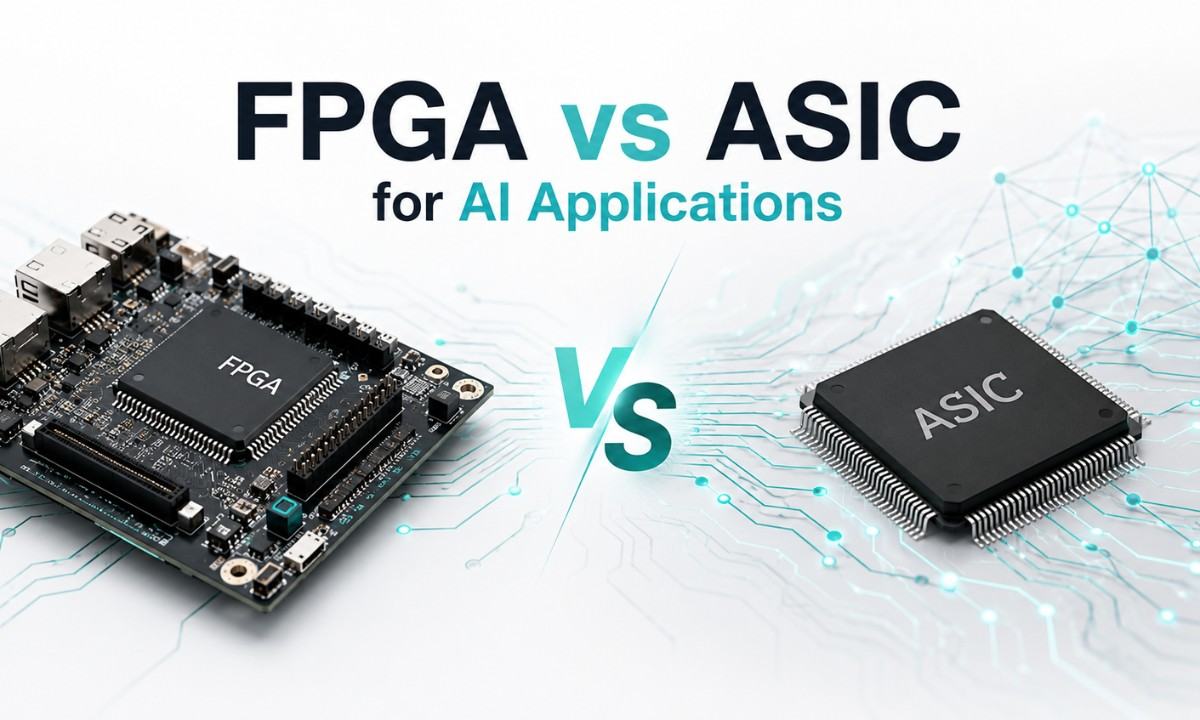 FPGA vs ASIC for AI Applications: Which Is Better for AI Workloads?
  AI Accelerators in Modern VLSI: Future of Semiconductor Hardware
  Design and Analysis of Multi-Protocol Conversion Unit for SPI, I2C and UART
  Design of Polar Codes in 5G New Radio
  Design & Study the Performance of CMOS Based Ring Oscillator for 5G Mobile Communication
  Top IEEE VLSI Engineering Projects For Final Year Students with Source Code
 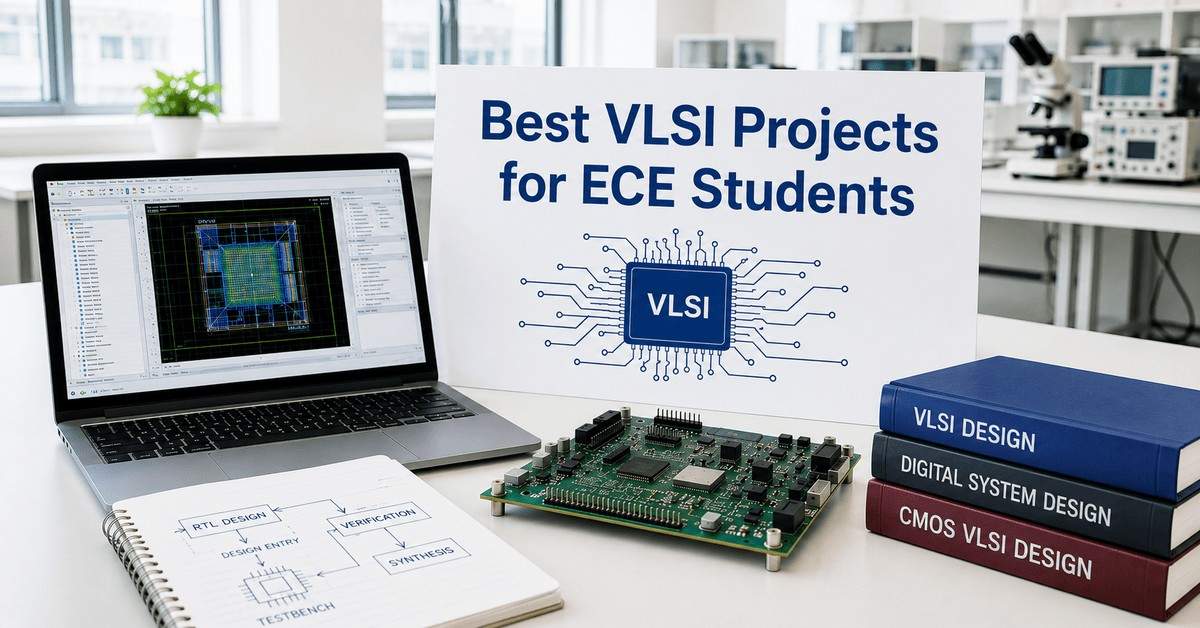 Best VLSI Projects for ECE Students
  Top 7 Transistor Logic Projects for Engineering
  Top 10 Low Power VLSI Projects
  Top 5 Nano Technology Projects using VLSI
  Top 6 Communications Projects for Students
  Top 7 Projects on DSP Core
  Top 5 Projects on Arithmetic Core
  Top 7 Projects on Finite State Machines
  Top 10 Projects on Cadence EDA Tool
  FPGA Final Year Projects for Electronics Students
  Verilog Projects for ECE
  VLSI Project Ideas for Engineering
  VLSI Mini Projects for ECE Department Students
  VLSI Projects for Final Year












 Paper Publishing