Under water object Detection
Objective
This project aims to build an efficient, accessible system for enhanced underwater vision. Key goals include applying GMAN to eliminate haze effects, recover natural colours, and sharpen details in degraded images. The pipeline then employs YOLOv11 for accurate, rapid detection of multiple object classes in processed frames. A Streamlit-based interface will provide seamless user interaction, including authentication, file upload, side-by-side result comparison, and processing. Models will be fine-tuned and assessed on the SUIM dataset to demonstrate measurable improvements in detection metrics over unprocessed inputs. Ultimately, the system will offer a practical tool for marine scientists, environmental monitors, and educators to analyse underwater scenes reliably, supporting conservation, research, and exploration efforts through improved visual intelligence
Abstract
Underwater object detection plays a crucial role in identifying and analyzing objects beneath water surfaces. This project develops a comprehensive system integrating image dehazing using the Generic Model-Agnostic Convolutional Neural Network (GMAN) to remove haze-like degradation caused by light scattering and absorption, thereby restoring clarity, contrast, and color fidelity in underwater images. Subsequently, the YOLOv11 algorithm performs efficient detection of multiple underwater objects from dehazed images and live video input. The system features a user-friendly interface with modules including Home, Register, Login, Image Upload (for dehazing and detection), and Logout. The dataset for training and testing is the SUIM dataset from Roboflow, containing annotated underwater images. The project employs Python as the back-end language and Streamlit for building an interactive framework. By preprocessing images with GMAN dehazing, the system enhances detection accuracy under challenging underwater conditions, such as varying lighting and visibility levels. Results, including dehazed images and detected objects, are displayed in a structured manner. This approach supports underwater monitoring, exploration, and research activities by providing clearer visuals and accurate object identification. Overall, the project demonstrates the effective integration of deep learning algorithms for dehazing and object detection in underwater environments.
Keywords: Underwater object detection, image dehazing, GMAN (Generic Model-Agnostic Convolutional Neural Network), YOLOv11, SUIM dataset, light scattering and absorption, visibility enhancement, color restoration, Streamlit interface, live video detection, deep learning, marine exploration, Python backend.
NOTE: Without the concern of our team, please don't submit to the college. This Abstract varies based on student requirements.
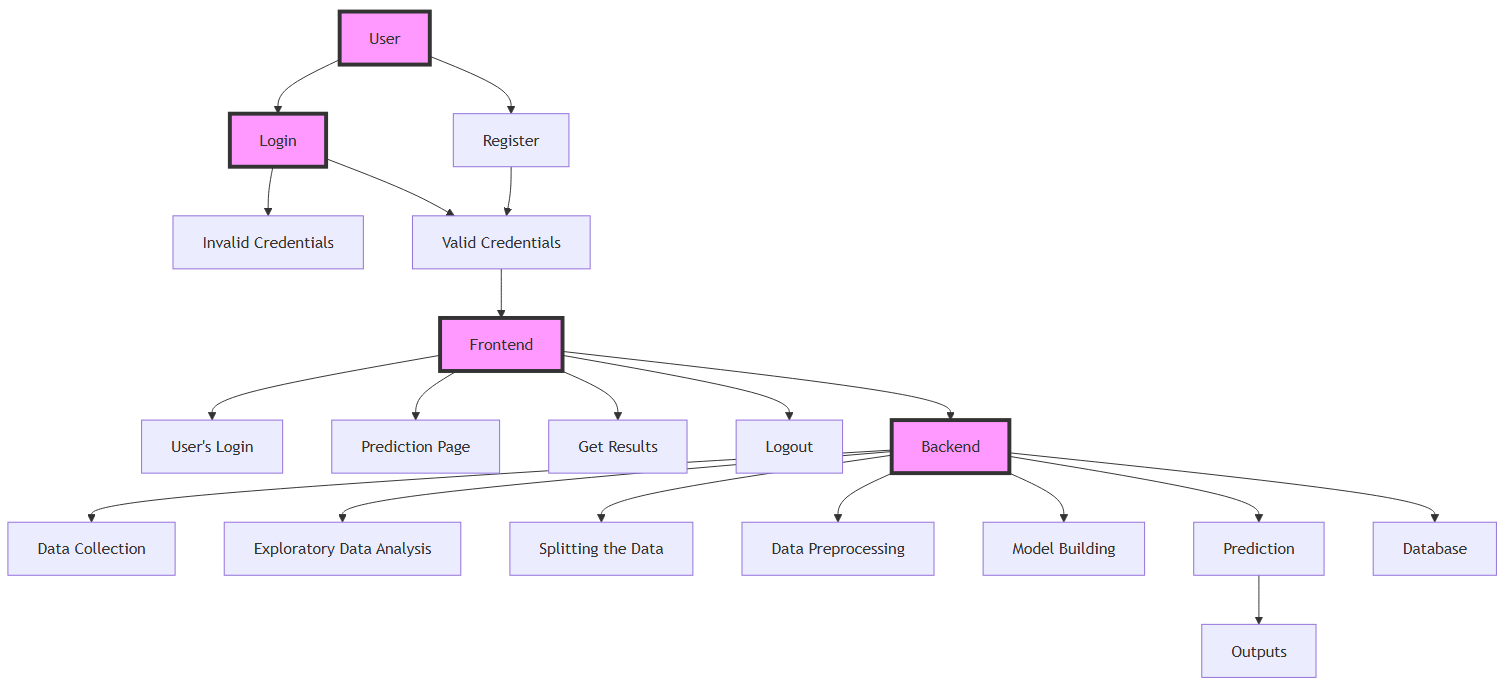
Block Diagram
Specifications
Hardware Requirements
Processor - I3/Intel Processor
Hard Disk - 160GB
Key Board - Standard Windows Keyboard
Mouse - Two or Three Button Mouse
Monitor - SVGA
RAM - 8GB
Software Requirements:
Operating System : Windows 7/8/10
Server side Script : HTML, CSS, Bootstrap & JS
Programming Language : Python
Libraries : Flask/Django, Pandas, Mysql.connector, Os, Smtplib, Numpy
IDE/Workbench : PyCharm
Technology : Python 3.6+
Server Deployment : Xampp Server
Database : MySQL


Related Projects
 Paper Publishing

Request Call Back
Would you like to receive a free callback now?
Choose the best time for callback:
Leave your message and we will contact you as soon as possible

6-2-85/B, Old Maternity Hospital Road, Thyagaraja Nagar, Tirupati, Andhra Pradesh – 517501
+91 9030333433
+91 9393939065
0877-2261612

Disclaimer - Takeoff Edu Group Projects are not associated or affiliated with IEEE in any way. The IEEE Projects mentioned here are mentioned in the context of student projects, whose ideas are derived from IEEE publications, not projects of or by IEEE.

