Tweeter Sentiment Analysis using LSTM
Objective
The Machine Learning objective of Twitter Sentiment Analysis using LSTM (Long Short-Term Memory) is to analyze and classify the sentiments of tweets into categories like positive, negative, or neutral. By leveraging LSTM's ability to remember sequential information, the analysis provides deeper insights into public opinion, enabling better decision-making in areas such as marketing, politics, or social trends.
Abstract
The classification of emotional states from poetry or formal text has received less attention by the experts of computational intelligence in recent times as compared to informal textual content like SMS, email, chat, and online user reviews. In this study, an emotional state classification system for text is proposed using the latest and cutting edge technology of Artificial Intelligence, called Deep Learning. For this purpose, an attention-based LSTM model along with GRU is implemented on the text corpus. The proposed approach classifies the text into different emotional states, like neutral, joy, fear, sadness and anger.
Keywords: Deep learning, emotion recognition, text, attention-based LSTM, formal text, emotional states
NOTE: Without the concern of our team, please don't submit to the college. This Abstract varies based on student requirements.
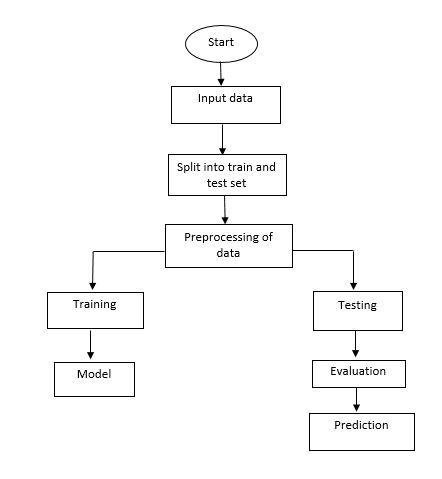
Block Diagram
Specifications
SYSTEM REQUIREMENTS
HARDWARE CONFIGURATION:
Processor-I3/Intel Processor
Hard Disk-160GB
RAM-8 GB
SOFTWARE CONFIGURATION:
Operating System: Windows 7/8/10
IDE: Pycharm
Libraries Used: Numpy, IO, OS, Pillow, keras, Tkinter
Technology: Python 3.6+
Accessories: Webcam.


Related Projects
 Paper Publishing

Request Call Back
Would you like to receive a free callback now?
Choose the best time for callback:
Leave your message and we will contact you as soon as possible

6-2-85/B, Old Maternity Hospital Road, Thyagaraja Nagar, Tirupati, Andhra Pradesh – 517501
+91 9030333433
+91 9393939065
0877-2261612

Disclaimer - Takeoff Edu Group Projects are not associated or affiliated with IEEE in any way. The IEEE Projects mentioned here are mentioned in the context of student projects, whose ideas are derived from IEEE publications, not projects of or by IEEE.

