Prediction of Relevant Diseases Among the People Using Machine Learning Models
Objective
The main objective of this project is to detect disease in the humans using machine learning techniques.
Abstract
Computer-aided illness diagnosis is less expensive, saves time, is more accurate, and removes the need for additional personnel in medical decision making. Many nutrition surveys indicate that about a quarter of the world's population are suffering with some chronic diseases like anemia and diabetes. As a result, there is a pressing need to create an effective machine learning regressor capable of properly detecting anaemia and diabetes. The goal is to find out which individual classifier or group of classifier combinations obtain the highest accuracy in Red blood cell categorization for anaemia detection. Blood Glucose level is the concentration of glucose present in the blood of humans. Diabetes is a chronic illness characterized by the absence of glucose. Insulin therapy is needed to maintain Blood Glucose levels in the advised target range. According to global report on diabetes by World Health Organization, over 400 million people suffer from diabetes. Regular monitoring of Blood Glucose Level is of paramount importance in the treatment process. Diabetes can be found out in many ways. We use Machine Learning algorithms to predict whether the patient has diabetes or not. We used Lasso and Ridge regressions to detect and estimate the anemia. However the classifier Ridge performs better achieves an accuracy higher than the Lasso regression. Hence to achieve maximum accuracy in medical decision making, a better and powerful algorithm should be used. The outcomes of this algorithms decides whether the patient is infected with anemia or not. The proposed version generates a better response to the inputs to confirm the disease. The algorithms like Logistic regression, Support vector machine, artificial neural networks and Deep learning neural network are used to predict the chances of diabetes of a patient. First we take some parameters of patient which include blood pressure, sex, diabetes pedigree function, BMI, age, Insulin, skin thickness etc. Then by giving these features input to the machine learning algorithms we can predict the blood glucose level of the patient. Alzheimer's disease is an irreversible, progressive brain disorder that slowly destroys memory and thinking skills and, eventually, the ability to carry out the simplest tasks. Machine learning (ML), a branch of artificial intelligence, employs a variety of probabilistic and optimization techniques that permits PCs to gain from vast and complex datasets.
KEYWORDS: Diabetes, Lasso and Ridge regressions, Anemia, Logistic regression, Alzheimer's
NOTE: Without the concern of our team, please don't submit to the college. This Abstract varies based on student requirements.
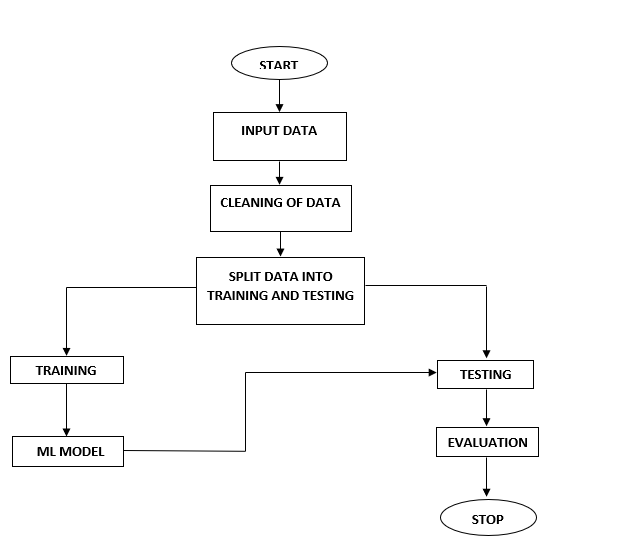
Block Diagram
Specifications
SYSTEM SPECIFICATIONS
HARDWARE SPECIFICATIONS:
Processor: I3/Intel Processor
RAM: 4GB (min)
Hard Disk: 128 GB
Key Board: Standard Windows Keyboard
Mouse: Two or Three Button Mouse
Monitor: Any
SOFTWARE SPECIFICATIONS:
Operating System: Windows 7+
Server-side Script: Python 3.6+
IDE: PyCharm IDE
Libraries Used: Pandas, Numpy, Scikit-Learn
Framework: Flask
Data Base: MySql


Related Projects
 Paper Publishing

Request Call Back
Would you like to receive a free callback now?
Choose the best time for callback:
Leave your message and we will contact you as soon as possible

6-2-85/B, Old Maternity Hospital Road, Thyagaraja Nagar, Tirupati, Andhra Pradesh – 517501
+91 9030333433
+91 9393939065
0877-2261612

Disclaimer - Takeoff Edu Group Projects are not associated or affiliated with IEEE in any way. The IEEE Projects mentioned here are mentioned in the context of student projects, whose ideas are derived from IEEE publications, not projects of or by IEEE.

