new born babies
Objective
The primary objective of this project is to develop a machine learning-based system capable of accurately predicting the risk of heart failure in newborns. This will be achieved by analyzing relevant clinical and physiological data through well-established algorithms such as Decision Tree, Random Forest, Logistic Regression, and XGBoost.
Abstract
The early detection of heart failure in newborn babies is critical to improving their health outcomes. Newborns are vulnerable to various life-threatening conditions, including heart failure, which can often go undiagnosed due to the subtle nature of early symptoms. Timely detection and intervention are essential for reducing mortality rates and enhancing the quality of care. However, traditional methods of diagnosis can be slow and inefficient, making it crucial to explore machine learning as a tool for automating the detection process. This project seeks to bridge the gap by utilizing machine learning algorithms—specifically Decision Tree, Random Forest, Logistic Regression, and XGBoost—to predict heart failure in newborns. By applying these models, healthcare professionals can make quicker and more accurate decisions. The motivation behind this project is to leverage advanced technologies to support doctors in their efforts to provide optimal care for newborns, ultimately leading to better health outcomes, reduced complications, and lower healthcare costs.
Keywords:
Heart failure prediction, newborn healthcare, early diagnosis, machine learning, decision tree, random forest, logistic regression, XGBoost, medical AI, neonatal care, healthcare automation, clinical decision support.
NOTE: Without the concern of our team, please don't submit to the college. This Abstract varies based on student requirements.
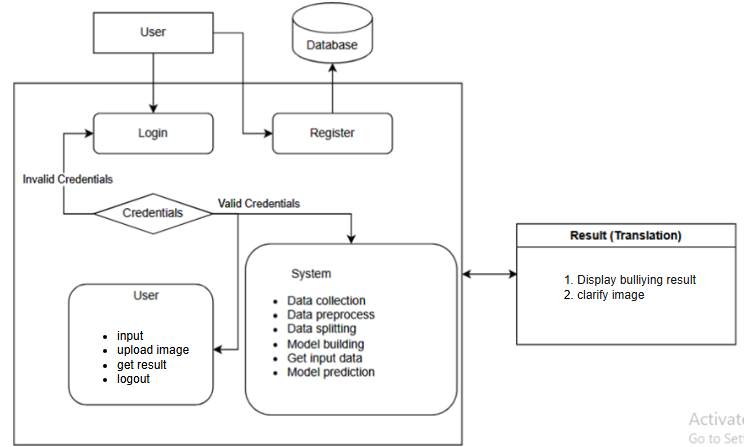
Block Diagram
Specifications
Hardware Requirements
Minimum Requirements:
- Processor: Intel i5 or AMD Ryzen 5
- RAM: 8 GB
- Storage: 256 GB SSD
- GPU: NVIDIA GTX 1050 or equivalent (for model training only)
Recommended for Development/Deployment:
- Processor: Intel i7 or AMD Ryzen 7
- RAM: 16 GB or higher
- Storage: 512 GB SSD
- GPU: NVIDIA RTX 2060 or higher with CUDA support (for training or tuning models with large datasets)
Software Requirements
- Operating System: Windows 10/11, Ubuntu 20.04+, or macOS (for development)
- Programming Language: Python 3.8+
- Frontend: HTML, CSS, JavaScript (for web-based user interface)
- Backend Libraries:
- scikit-learn (for implementing Decision Tree, Random Forest, Logistic Regression, XGBoost)
- Pandas, NumPy (for data handling and preprocessing)
- Matplotlib, Seaborn, Plotly (for model visualization and performance metrics)
- SHAP or LIME (for model interpretability)
- Web Framework: Flask or Django (for building web interface and RESTful APIs)
- IDE: VS Code, PyCharm, or Jupyter Notebook
- Browser: Google Chrome, Mozilla Firefox, Microsoft Edge (for UI testing)


Related Projects
 Paper Publishing

Request Call Back
Would you like to receive a free callback now?
Choose the best time for callback:
Leave your message and we will contact you as soon as possible

6-2-85/B, Old Maternity Hospital Road, Thyagaraja Nagar, Tirupati, Andhra Pradesh – 517501
+91 9030333433
+91 9393939065
0877-2261612

Disclaimer - Takeoff Edu Group Projects are not associated or affiliated with IEEE in any way. The IEEE Projects mentioned here are mentioned in the context of student projects, whose ideas are derived from IEEE publications, not projects of or by IEEE.

