intrusion detection system using machine learning and deep learning
Objective
The primary objective of this study is to develop and evaluate an integrated intrusion detection framework for self-organizing networks by conducting a comparative analysis of traditional machine learning and contemporary deep learning algorithms.
Abstract
This study presents an Intrusion Detection System (IDS) that leverages machine learning and deep learning algorithms to enhance the detection and prevention of cyber threats in self-organizing networks. The proposed system integrates traditional machine learning techniques, such as Random Forest and Decision Tree, with advanced deep learning models, including Convolutional Neural Networks (CNN) and Long Short-Term Memory (LSTM) networks, to improve detection accuracy across diverse network traffic data. To further enhance preprocessing efficiency, K-Best feature selection and K-Means clustering are utilized for dimensionality reduction and effective data categorization. A notable novelty of this approach is the incorporation of deep learning models, which are adept at handling large datasets with spatial and temporal patterns, and have demonstrated superior performance in detecting complex attack patterns. Additionally, a chatbot interface is integrated into the system to provide real-time intrusion detection information, allowing users to query and gain insights into detected threats. The backend is implemented using Python, while the frontend is developed with HTML, CSS, and JavaScript to ensure an interactive user experience. The experimental results show that while deep learning models such as CNN and LSTM offer high accuracy in detecting sophisticated attacks, traditional methods like Random Forest and Decision Tree excel in computational efficiency, making them ideal for real-time applications. The combination of these approaches ensures scalability, robustness, and adaptability in dynamic network environments.
Keywords: Intrusion Detection, Random Forest, Decision Tree, CNN, LSTM, K-Best, K-Means, Machine Learning, Deep Learning, Chatbot, Network Security, Flask.
NOTE: Without the concern of our team, please don't submit to the college. This Abstract varies based on student requirements.
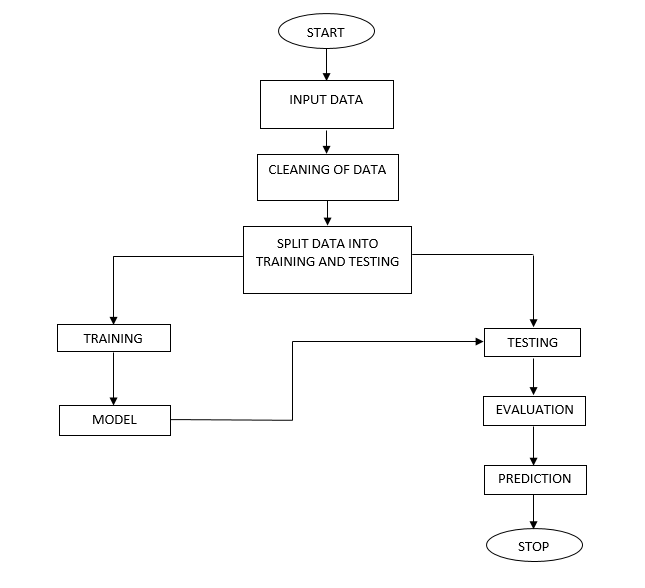
Block Diagram
Specifications
H/W CONFIGURATION:
• Operating system : Windows 7 or 7+
• RAM : 8 GB
• Hard disc or SSD : More than 500 GB
• Processor : Intel 3rd generation or high or Ryzen with 8 GB Ram
S/W CONFIGURATION:
• Software’s : Python 3.6 or high version
• IDE : PyCharm are VS code.
• Framework : Django, pandas, numpy and Scikit-Learn


Related Projects
 Paper Publishing

Request Call Back
Would you like to receive a free callback now?
Choose the best time for callback:
Leave your message and we will contact you as soon as possible

6-2-85/B, Old Maternity Hospital Road, Thyagaraja Nagar, Tirupati, Andhra Pradesh – 517501
+91 9030333433
+91 9393939065
0877-2261612

Disclaimer - Takeoff Edu Group Projects are not associated or affiliated with IEEE in any way. The IEEE Projects mentioned here are mentioned in the context of student projects, whose ideas are derived from IEEE publications, not projects of or by IEEE.

