Improving Cardiovascular Disease Prediction With Deep Learning and Correlation Aware SMOTE

Project Code :TCMAPY1551

Objective

This project develops a cardiovascular disease prediction system using a Flask web application integrated with Random Forest, XGBoost, Stacking Classifier, CNN, LSTM, RNN, and GRU models. It utilizes MinMaxScaler for feature scaling, providing early diagnosis and promoting preventive healthcare through secure user authentication and machine learning techniques.

Abstract

This project introduces a comprehensive cardiovascular disease prediction system developed using a Flask-based web application seamlessly integrated with multiple machine learning models. The platform enables users to conveniently register, login, and input essential health-related features, including gender, height, weight, blood pressure, cholesterol levels, glucose levels, smoking habits, and physical activity status. After processing the inputs, the system predicts the risk of cardiovascular disease, offering users an accessible early-warning tool. The Random Forest Classifier is employed as the primary predictive model due to its strong performance in handling complex datasets and providing high prediction accuracy with minimal computational overhead. In addition to Random Forest, other advanced models such as Stacking Classifier, XGBoost, CNN, LSTM, RNN, and GRU are also implemented and compared, providing insights into model effectiveness. Feature scaling is achieved through MinMaxScaler to normalize the data and optimize model performance. Furthermore, the system emphasizes secure user authentication and a user-friendly interface to encourage wider adoption. By integrating powerful machine learning techniques into a lightweight web framework, this project aims to assist in the early diagnosis of cardiovascular diseases, promote preventive healthcare measures, and support informed clinical decision-making. The system holds promise for expanding future healthcare applications and predictive diagnostic tools.   Keywords: Flask Web Application, Cardiovascular Disease Prediction, Random Forest Classifier, Machine Learning, Health Monitoring, XGBoost, Stacking Classifier, CNN, LSTM, RNN, GRU, MinMaxScaler, User Authentication, Early Diagnosis

NOTE: Without the concern of our team, please don't submit to the college. This Abstract varies based on student requirements.

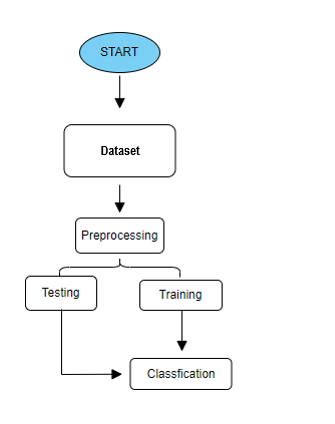
Block Diagram
Specifications

Hardware Requirements
  • Processor                                - I7/Intel Processor
  • Hard Disk                                -160GB
  • Key Board                               - Standard Windows Keyboard
  • Mouse                                      - Two or Three Button Mouse
  • RAM                                        -  8Gb
  Software Requirements 

β€’       Operating System                                 : Windows 11

β€’       Server side Script                                 : Python, HTML, MYSQL, CSS, Bootstrap.

β€’       Libraries                                              :  Pandas, Flask,Scikit-learn,Numpy

β€’       IDE                                                      :    VS code

β€’       Technology                                          :  Python 3.10+

Demo Video




