Identifying Risk Factors and Predicting Food Security Status Using Supervised Machine Learning Techniques
Objective
The primary objective is to create robust predictive models using supervised machine learning algorithms—Decision Trees, Random Forest, MLP, and XGBoost—to accurately determine food security status. This involves analyzing a comprehensive dataset containing socio-economic, environmental, and demographic variables. The objective is twofold: firstly, to develop accurate predictive models and, secondly, to identify key risk factors influencing food security at different levels. The aim is to provide valuable insights for policymakers and stakeholders to enable targeted interventions.
Abstract
This study investigates the identification of risk factors and prediction of food security status utilizing various supervised machine learning algorithms, including Decision Trees, Random Forest, Multi-layer Perceptron (MLP), and XGBoost. The objective is to develop a robust predictive model that accurately determines the Food Security Index as Low, Moderate, or High based on diverse indicators. Using a comprehensive dataset encompassing socio-economic, environmental, and demographic variables, the research employs these machine learning techniques to analyze and classify the food security status of different regions or households. The Decision Tree algorithm provides an initial understanding of feature importance, while Random Forest harnesses the power of ensemble learning for enhanced accuracy. Additionally, the MLP neural network and XGBoost algorithm are employed to capture complex nonlinear relationships and boost predictive performance. Evaluation metrics such as accuracy, precision, recall, and F1-score are utilized to assess the models' performance. The results showcase the effectiveness of these supervised learning methods in accurately predicting food security status. Moreover, the study identifies key risk factors contributing to different levels of food security, providing valuable insights for policymakers and stakeholders to target interventions and improve food access and availability..
Keywords: Decision Trees, Random Forest, Multi-layer Perceptron (MLP), and XGBoost.
NOTE: Without the concern of our team, please don't submit to the college. This Abstract varies based on student requirements.
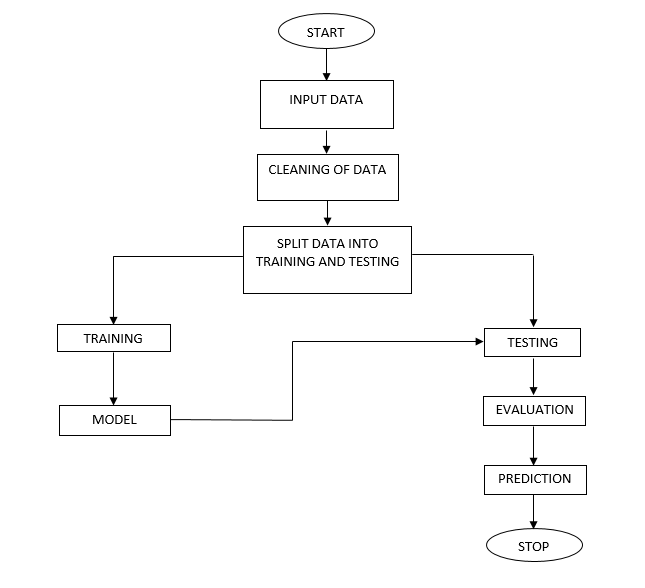
Block Diagram
Specifications
H/W CONFIGURATION:
• Processor - I7/Intel Processor
• Hard Disk - 160GB
• Key Board - Standard Windows Keyboard
• Mouse - Two or Three Button Mouse
• RAM - 8Gb
S/W CONFIGURATION:
• Operating System : Windows 11
• Server side Script : Python, HTML, MYSQL, CSS.
• Libraries : PANDAS, Django
• IDE : PyCharm (or) VS code
• Technology : Python 3.10


Related Projects
 Paper Publishing

Request Call Back
Would you like to receive a free callback now?
Choose the best time for callback:
Leave your message and we will contact you as soon as possible

6-2-85/B, Old Maternity Hospital Road, Thyagaraja Nagar, Tirupati, Andhra Pradesh – 517501
+91 9030333433
+91 9393939065
0877-2261612

Disclaimer - Takeoff Edu Group Projects are not associated or affiliated with IEEE in any way. The IEEE Projects mentioned here are mentioned in the context of student projects, whose ideas are derived from IEEE publications, not projects of or by IEEE.

