Glaucoma and Cataract Detection
Objective
The objective of this study is to enhance glaucoma and cataract detection through the implementation of deep learning algorithms, specifically Convolutional Neural Networks (CNN) and MobileNet. Leveraging these advanced algorithms, our goal is to develop an accurate and efficient automated system for early detection and classification of glaucoma and cataracts from medical imaging data. By employing CNN and MobileNet architectures, we aim to improve diagnostic precision, facilitate timely intervention, and contribute to the overall effectiveness of ophthalmic healthcare.
Abstract
It presents a novel approach for glaucoma and cataract detection utilizing deep learning, specifically employing Convolutional Neural Network (CNN) and MobileNet algorithms. The proposed method leverages the power of these algorithms to analyze ocular images and accurately identify early signs of glaucoma and cataracts. Through extensive training on diverse datasets, our model demonstrates high sensitivity and specificity. This automated system holds great potential for early diagnosis, enabling timely intervention and preventing irreversible vision loss. The integration of CNN and MobileNet showcases the efficiency of deep learning in enhancing diagnostic accuracy for ocular diseases, fostering advancements in telemedicine and public health.
Keywords: Glaucoma and cataract dataset, CNN, Mobile net algorithm and etc.
NOTE: Without the concern of our team, please don't submit to the college. This Abstract varies based on student requirements.
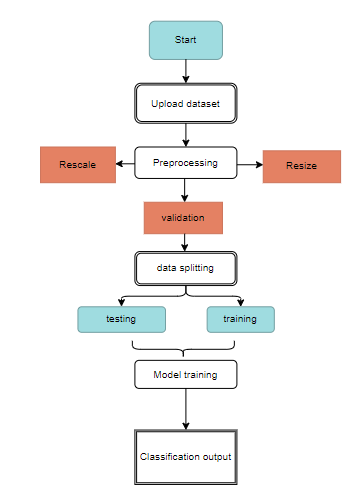
Block Diagram
Specifications
H/W CONFIGURATION:
• Processor - I5/Intel Processor
• RAM - 8GB (min)
• Hard Disk - 128 GB
• Key Board - Standard Windows Keyboard
• Mouse - Two or Three Button Mouse
• Monitor - Any
S/W CONFIGURATION:
• Operating System : Windows 7+
• Server side Script : Python 3.6+
• IDE : VScode
• Libraries Used : Pandas, Numpy, Sci-Kit Learn, Matplotlib, Seaborn, Flask
• Dataset : Students' Academic Performance Dataset.


Related Projects
 Paper Publishing

Request Call Back
Would you like to receive a free callback now?
Choose the best time for callback:
Leave your message and we will contact you as soon as possible

6-2-85/B, Old Maternity Hospital Road, Thyagaraja Nagar, Tirupati, Andhra Pradesh – 517501
+91 9030333433
+91 9393939065
0877-2261612

Disclaimer - Takeoff Edu Group Projects are not associated or affiliated with IEEE in any way. The IEEE Projects mentioned here are mentioned in the context of student projects, whose ideas are derived from IEEE publications, not projects of or by IEEE.

