Elephant Detection using Aerial and Satellite Imagery using Deep Learning Techniques.
Objective
The objective of this project is to develop an automated system for detecting elephants in aerial imagery using the YOLOv10 deep learning model. The system aims to accurately identify elephants, display detection results, and send real-time notifications to users, enhancing wildlife monitoring and conservation efforts.
Abstract
This research presents a deep learning-based system for detecting elephants from aerial imagery using advanced object detection techniques. The project utilizes the YOLOv10 algorithm trained on the “new-elephant-data” dataset obtained from Roboflow. The dataset contains annotated aerial images captured from drone perspectives, enabling the model to learn spatial features, object shapes, and contextual patterns associated with elephants. The system is developed using Streamlit to provide an interactive and user-friendly interface with modules including Home, About, Register, Login, Prediction, and Logout. The proposed model processes uploaded aerial images and identifies the presence of elephants by drawing bounding boxes around detected objects. Upon successful detection, a notification message is automatically sent to registered users. The detection pipeline includes data preprocessing, model training, performance evaluation, and deployment through a structured web interface. YOLOv10 is selected due to its improved accuracy and efficient object localization capabilities. This project contributes to automated wildlife monitoring by providing a structured detection mechanism using aerial data. The system ensures secure user authentication and organized workflow management. The integration of detection and notification features enhances the usability of the platform. Overall, the research demonstrates the effectiveness of deep learning models in analyzing aerial imagery for object detection tasks and provides a scalable framework for further enhancements in animal detection systems.
Keywords: Elephant Detection, Aerial Imagery, YOLOv10, Deep Learning, Object Detection, Drone Images, Wildlife Monitoring, Streamlit Application, Bounding Box Localization, Automated Notification.
NOTE: Without the concern of our team, please don't submit to the college. This Abstract varies based on student requirements.
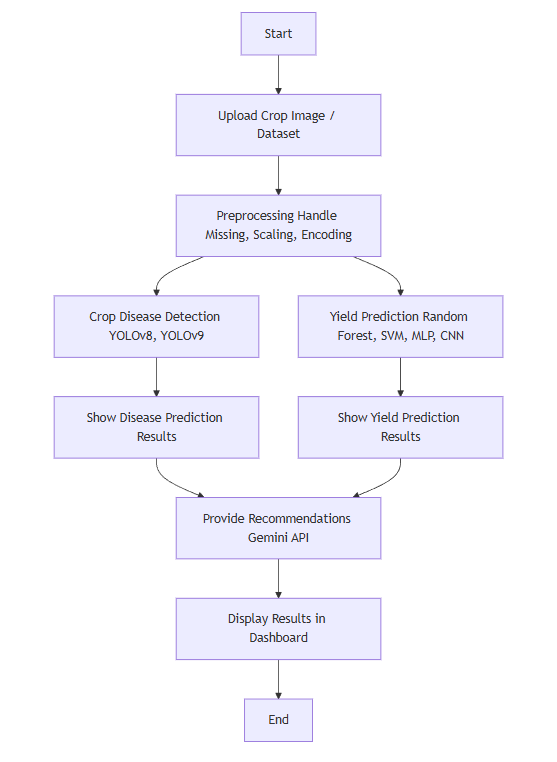
Block Diagram
Specifications
3.1 Hardware Requirements
Processor - I3/Intel Processor
Hard Disk - 160GB
Key Board - Standard Windows Keyboard
Mouse - Two or Three Button Mouse
Monitor - SVGA
RAM - 8GB
3.2 Software Requirements
Operating System : Windows 7/8/10
Programming Language : Python
Libraries : Pandas, Numpy, scikit-learn.
IDE/Workbench : Visual Studio Code.
Framework : Flask


Related Projects
 Paper Publishing

Request Call Back
Would you like to receive a free callback now?
Choose the best time for callback:
Leave your message and we will contact you as soon as possible

6-2-85/B, Old Maternity Hospital Road, Thyagaraja Nagar, Tirupati, Andhra Pradesh – 517501
+91 9030333433
+91 9393939065
0877-2261612

Disclaimer - Takeoff Edu Group Projects are not associated or affiliated with IEEE in any way. The IEEE Projects mentioned here are mentioned in the context of student projects, whose ideas are derived from IEEE publications, not projects of or by IEEE.

