Continuous Management of ML-Based Applications
Objective
The objective of this study is to ensure the stability of non-functional properties—such as fairness, privacy, and explainability—in machine learning (ML) models deployed in dynamic real-world environments. By leveraging the Adult Census Income dataset, which includes sensitive demographic attributes, the study aims to evaluate how models behave under contextual shifts and detect any unfair or biased outcomes. The proposed system uses a multi-model architecture to continuously monitor these non-functional aspects and intelligently switch between models to maintain consistent ethical standards. This approach ensures ML systems remain reliable, transparent, and equitable throughout their operational lifecycle.
Abstract
Modern software systems increasingly integrate Machine Learning (ML) components, whose non-deterministic behavior presents significant challenges across the application life cycle—from design and development to deployment and operation. A key concern lies in maintaining stable non-functional properties (NFPs), such as fairness, privacy, confidentiality, and explainability, especially as ML models evolve and are retrained. While current approaches predominantly address functional performance, such as classifier accuracy or algorithm optimization, they fall short in ensuring long-term stability of NFPs under dynamic, real-world conditions. In this paper, we propose a multi-model architectural and methodological approach designed to ensure consistent non-functional behavior in ML-based applications. The core idea is to monitor, verify, and maintain NFPs over time by comparing multiple models exhibiting similar non-functional characteristics and selecting the one that best supports stable performance amid contextual changes. Our approach is ML algorithm-agnostic and includes a two-step operational process: (1) Model Assessment, which evaluates non-functional properties of models chosen during the development phase, and (2) Model Substitution, which dynamically selects and replaces models to sustain stable NFPs during application runtime. We validate our method through experimental evaluation in a real-world scenario, focusing on fairness as a representative non-functional property, demonstrating the viability and effectiveness of our solution.
Keywords: Machine Learning, Non-functional Properties, Fairness, Model Assessment, Model Substitution, ML-based Applications, Explainability, Privacy, Confidentiality, Context-aware Systems.
NOTE: Without the concern of our team, please don't submit to the college. This Abstract varies based on student requirements.
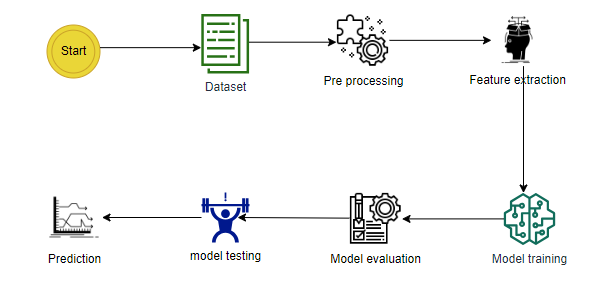
Block Diagram
Specifications
SOFTWARE REQUIREMENS
Operating System : Windows 7/8/10
Server side Script : HTML, CSS, Bootstrap & JS
Programming Language : Python
Libraries Flask, Pandas, Torch, Keras, Sklearn,Numpy , Seaborn
IDE/Workbench : VSCode
Server Deployment : Xampp Server
Database : MySQL
HARDWARE REQUIREMENTS
Processor - I3/Intel Processor
RAM - 8GB (min)
Hard Disk - 128 GB
Key Board - Standard Windows Keyboard
Mouse - Two or Three Button Mouse
Monitor - Any


Related Projects
 Paper Publishing

Request Call Back
Would you like to receive a free callback now?
Choose the best time for callback:
Leave your message and we will contact you as soon as possible

6-2-85/B, Old Maternity Hospital Road, Thyagaraja Nagar, Tirupati, Andhra Pradesh – 517501
+91 9030333433
+91 9393939065
0877-2261612

Disclaimer - Takeoff Edu Group Projects are not associated or affiliated with IEEE in any way. The IEEE Projects mentioned here are mentioned in the context of student projects, whose ideas are derived from IEEE publications, not projects of or by IEEE.

