Automated Lip Reading system using Deep Learning based transformer model
Objective
The objective of this project is to develop an automated lip-reading system that uses deep learning techniques to enhance the accuracy of visual speech recognition (VSR). The system aims to address current challenges in lip-reading, particularly in noisy environments and for individuals with hearing impairments. By utilizing Convolutional Neural Networks (CNN) for feature extraction and Long Short-Term Memory (LSTM) networks for sequential learning, the project focuses on improving the model's capability to understand and predict spoken words based on lip movements. The goal is to create a robust, efficient, and real-time solution for automated visual speech recognition in various applications.
Abstract
Lip reading classification has gained considerable attention in recent years due to its potential in enhancing communication, particularly in noisy environments and for individuals with hearing impairments. This field of study is crucial for visual speech recognition (VSR) as it bridges the gap between verbal communication and visual input. Despite significant progress, challenges such as efficient feature extraction and model capability still persist, limiting the performance of existing systems. This paper proposes an automated lip reading system using a deep learning-based transformer model to address these issues. The system leverages Convolutional Neural Networks (CNN) for extracting spatial features from lip movements and Long Short-Term Memory (LSTM) networks for sequential pattern recognition, enabling the system to understand and predict spoken words from visual cues accurately. The combination of CNN and LSTM allows for better feature extraction and improves the model’s ability to recognize dynamic visual speech patterns, providing a significant advancement in visual speech recognition systems.
Keywords: Lip Reading, Deep Learning, Transformer Model, Visual Speech Recognition, Convolutional Neural Networks (CNN), Long Short-Term Memory (LSTM), Feature Extraction, Hearing Impairments, Communication Enhancement.
NOTE: Without the concern of our team, please don't submit to the college. This Abstract varies based on student requirements.
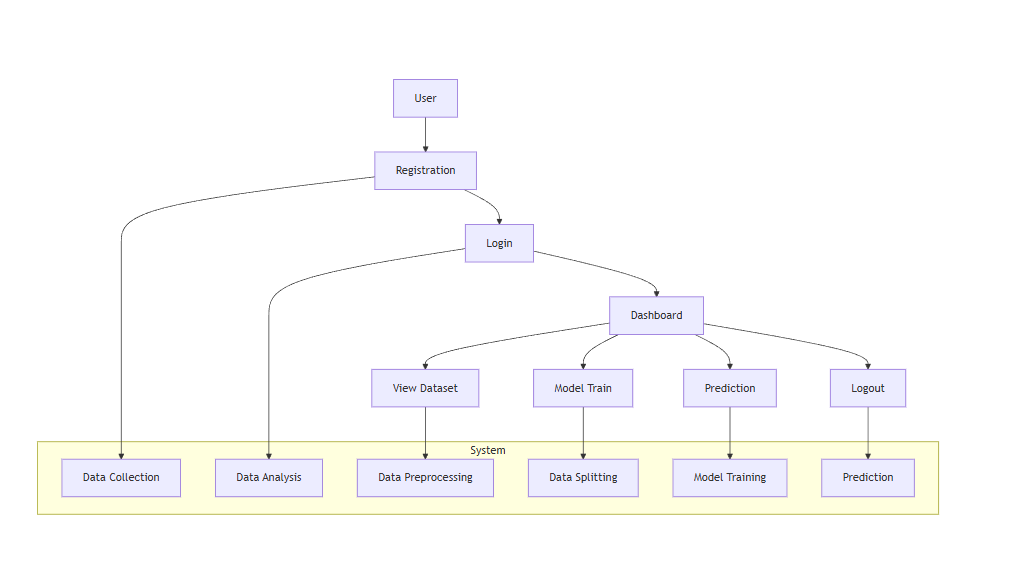
Block Diagram
Specifications
Hardware Requirements
Processor - I3/Intel Processor
Hard Disk - 160GB
Key Board - Standard Windows Keyboard
Mouse - Two or Three Button Mouse
Monitor - SVGA
RAM - 8GB
Software Requirements:
Operating System : Windows 7/8/10
Server side Script : HTML, CSS, Bootstrap & JS
Programming Language : Python
Libraries : Streamlit, Pandas, NumPy, TensorFlow, Matplotlib and Seaborn.
IDE/Workbench : VS Code
Technology : Python 3.10
Database : MySQL


Related Projects
 Paper Publishing

Request Call Back
Would you like to receive a free callback now?
Choose the best time for callback:
Leave your message and we will contact you as soon as possible

6-2-85/B, Old Maternity Hospital Road, Thyagaraja Nagar, Tirupati, Andhra Pradesh – 517501
+91 9030333433
+91 9393939065
0877-2261612

Disclaimer - Takeoff Edu Group Projects are not associated or affiliated with IEEE in any way. The IEEE Projects mentioned here are mentioned in the context of student projects, whose ideas are derived from IEEE publications, not projects of or by IEEE.

