Air Quality Index Prediction by Using Machine and Deep Learning
Objective
To build a predictive model that classifies the air quality of Indian cities into three categories: Good, Moderate, and Poor based on pollutant concentration levels, using various supervised machine learning algorithms.
Abstract
ABSTRACT
Air pollution has become a critical environmental concern in India, posing severe health risks to millions of people. This project aims to predict the air quality levels—categorized as Good, Moderate, or Poor—using machine learning algorithms applied to historical air pollution data. The dataset, sourced from Kaggle, comprises air quality measurements collected from various Indian cities between 2015 and 2020. Key pollutant indicators such as PM2.5, PM10, NO, NO2, NOx, NH3, CO, SO2, O3, Benzene, and Toluene are used as input features, while the AQI Bucket serves as the target label. The dataset underwent thorough preprocessing including missing value imputation, categorical encoding, and class balancing using SVMSMOTE and undersampling techniques. Six classification models were implemented: Logistic Regression, MLP Classifier, Decision Tree, Random Forest, AdaBoost, and XGBoost. A custom prediction class was developed for real-time input processing and prediction. This system demonstrates how machine learning can effectively assist in environmental monitoring, enabling authorities and citizens to take timely actions to mitigate the impact of poor air quality.
NOTE: Without the concern of our team, please don't submit to the college. This Abstract varies based on student requirements.
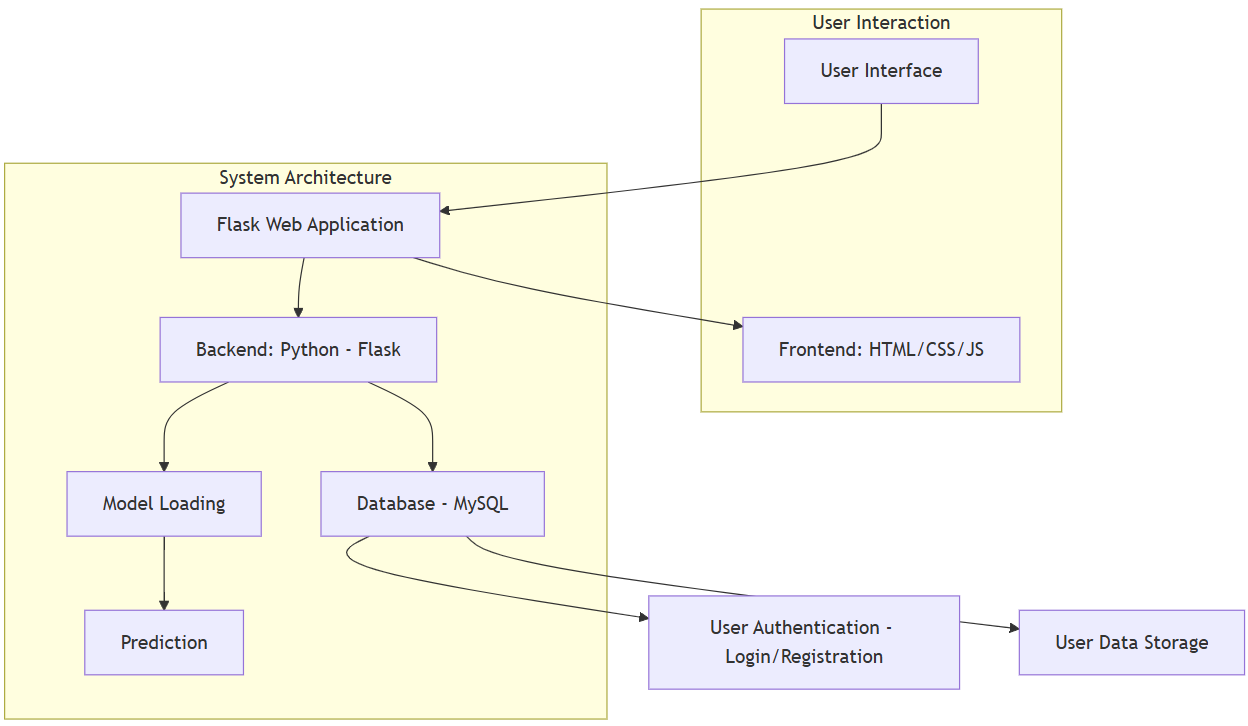
Block Diagram
Specifications
REQUIREMENT ANALYSIS
Hardware Requirements
Processor - I7/Intel Processor
Hard Disk - 160GB
Key Board - Standard Windows Keyboard
Mouse - Two or Three Button Mouse
Monitor - SVGA
RAM - 8GB
Software Requirements:
Operating System : Windows 11
Server side Script : HTML, CSS, Bootstrap & JS
Programming Language : Python
Libraries : Pandas, NumPy, Matplotlib, Seaborn, scikit-learn
IDE/Workbench : PyCharm
Technology : Python 3.6+
Server Deployment : Xampp Server
Database : MySQL

Demo Video


Request for Video
Related Projects
 Paper Publishing
Request Call Back
Would you like to receive a free callback now?
Choose the best time for callback:
Leave your message and we will contact you as soon as possible

6-2-85/B, Old Maternity Hospital Road, Thyagaraja Nagar, Tirupati, Andhra Pradesh – 517501
+91 9030333433
+91 9393939065
0877-2261612

Disclaimer - Takeoff Edu Group Projects are not associated or affiliated with IEEE in any way. The IEEE Projects mentioned here are mentioned in the context of student projects, whose ideas are derived from IEEE publications, not projects of or by IEEE.

