AI Driven Diagnosis of Oral Malignancies through machine learning and deep learning
Objective
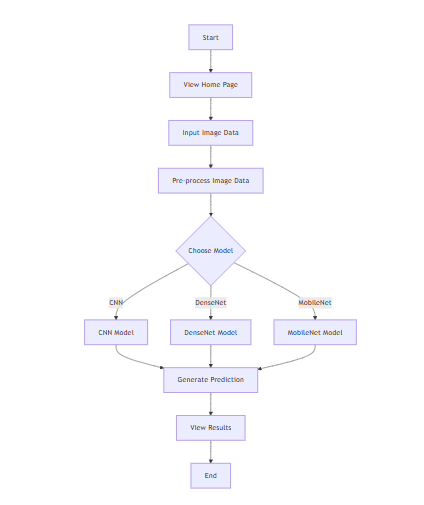
Develop an AI diagnostic system using MobileNet, CNN, and DenseNet to classify oral lesions, enabling early detection, improving outcomes, and enhancing equitable cancer screening access.
Abstract
Oral cancer is one of the most common and deadly forms of malignancy globally, with high morbidity and mortality rates, often due to late diagnosis. Early detection plays a crucial role in improving survival rates, making it essential to develop accurate and efficient diagnostic tools. This research proposes an AI-driven hybrid system for the diagnosis of oral malignancies using machine learning and deep learning algorithms. The system employs Convolutional Neural Networks (CNN), DenseNet, MobileNet architectures, and a Recurrent Neural Network (RNN) to classify images of oral lesions, aiming to predict the presence of oral cancer with high accuracy. The CNN is used for extracting hierarchical image features, DenseNet for efficient feature reuse, MobileNet for real-time application without compromising accuracy, and RNN for temporal pattern recognition and sequence learning in image-based data. The model is trained on a dataset of labeled oral lesion images, and its performance is evaluated using various metrics such as accuracy, sensitivity, specificity, and F1-score. The results demonstrate the potential of hybrid deep learning models in the early diagnosis of oral malignancies, paving the way for the development of AI-powered diagnostic tools that can be integrated into clinical settings for improved patient outcomes.
Keywords:
Oral Cancer, Machine Learning, Deep Learning, Convolutional Neural Networks (CNN), DenseNet, MobileNet, Recurrent Neural Network (RNN), Oral Malignancies, Early Detection, Image Classification, Medical Imaging, Cancer Diagnosis, AI-driven Diagnostics, Predictive Modeling, Feature Extraction, Medical AI, Hybrid Model, Temporal Analysis.
NOTE: Without the concern of our team, please don't submit to the college. This Abstract varies based on student requirements.
Block Diagram
Specifications
H/W SPECIFICATIONS:
- Processor - I7/Intel Processor
- Hard Disk -160GB
- Key Board - Standard Windows Keyboard
- Mouse - Two or Three Button Mouse
- RAM - 8Gb
· Monitor : Any
S/W SPECIFICATIONS:
• Operating System : Windows 11
• Server side Script : Python, HTML, MYSQL, CSS, Bootstrap.
• Libraries : PANDAS, Flask
• IDE : PyCharm (or) VS code, XAMPP
• Technology : Python 3.10

Demo Video


Request for Video
Related Projects
 Paper Publishing
Request Call Back
Would you like to receive a free callback now?
Choose the best time for callback:
Leave your message and we will contact you as soon as possible

6-2-85/B, Old Maternity Hospital Road, Thyagaraja Nagar, Tirupati, Andhra Pradesh – 517501
+91 9030333433
+91 9393939065
0877-2261612

Disclaimer - Takeoff Edu Group Projects are not associated or affiliated with IEEE in any way. The IEEE Projects mentioned here are mentioned in the context of student projects, whose ideas are derived from IEEE publications, not projects of or by IEEE.

