AI Based Power Theft Detection in Electrical System Using ML
Objective
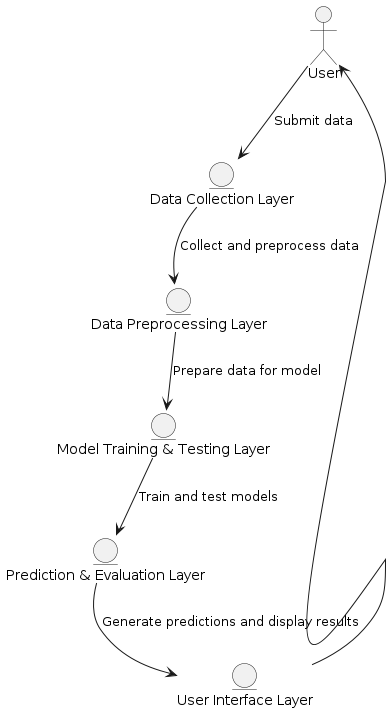
The objective of this project is to develop an AI-based system for the detection of power theft using advanced machine learning techniques. The project aims to automate and enhance the process of identifying irregularities in electrical usage patterns by leveraging three powerful machine learning models—Support Vector Machine (SVM), Random Forest (RF), and XGBoost. These models are trained on a dataset containing key electrical parameters such as voltage, current, power factor, energy consumption, and meter readings, enabling them to distinguish between normal and suspicious behavior indicative of power theft. The system is integrated into a user-friendly web application using Flask, which allows utility providers to monitor real-time data and receive alerts for potential theft incidents. By achieving high accuracy rates, with XGBoost demonstrating 97.95% test accuracy, the project seeks to provide a scalable, efficient, and cost-effective solution for detecting power theft, ultimately reducing the reliance on traditional manual inspection methods, improving operational efficiency, and minimizing financial losses for utilities.
Abstract
Power theft is a significant issue for electrical utilities worldwide, leading to substantial financial losses and operational inefficiencies. Traditional methods of detecting power theft, such as manual inspections and simple sensor-based systems, are slow, inaccurate, and require extensive human resources. This project aims to develop an AI-based power theft detection system using machine learning (ML) techniques to automate and enhance the process of identifying irregularities in electrical usage patterns. The system leverages three machine learning models—Support Vector Machine (SVM), Random Forest (RF), and XGBoost—trained on a dataset containing key electrical parameters such as voltage, current, power factor, energy consumption, and meter readings. By analyzing these parameters, the models are capable of distinguishing between normal and suspicious behavior indicative of power theft. The project achieves high accuracy with XGBoost showing 97.95% test accuracy, followed by RF with 98.10%, and SVM with 97.50%. These models are integrated into a web application developed using Flask, offering a user-friendly interface for utility providers to monitor real-time data and receive alerts for potential theft incidents. This AI-based solution enhances the speed, accuracy, and scalability of power theft detection, providing a cost-effective alternative to traditional manual inspection methods and reducing operational costs for utilities.
Keywords: Power theft detection, Machine learning, XGBoost, Random Forest, Support Vector Machine, Electrical parameters, Anomaly detection, AI, Flask, Real-time monitoring.
NOTE: Without the concern of our team, please don't submit to the college. This Abstract varies based on student requirements.
Block Diagram
Specifications
SOFTWARE REQUIREMENS
Operating System : Windows 7/8/10
Server side Script : HTML, CSS & JS
Programming Language : Python
Libraries : SVM, Random Forest, XGBoost, Flask, Pandas, Scikit-learn, TensorFlow, Matplotlib, NumPy Joblib.
IDE/Workbench : VSCode
Server Deployment : MYSQL
Database : MySQL
HARDWARE REQUIREMENTS
Processor - I3/Intel Processor
RAM - 8GB (min)
Hard Disk - 128 GB
Key Board - Standard Windows Keyboard
Mouse - Two or Three Button Mouse
Monitor - Any


Related Projects
 Paper Publishing

Request Call Back
Would you like to receive a free callback now?
Choose the best time for callback:
Leave your message and we will contact you as soon as possible

6-2-85/B, Old Maternity Hospital Road, Thyagaraja Nagar, Tirupati, Andhra Pradesh – 517501
+91 9030333433
+91 9393939065
0877-2261612

Disclaimer - Takeoff Edu Group Projects are not associated or affiliated with IEEE in any way. The IEEE Projects mentioned here are mentioned in the context of student projects, whose ideas are derived from IEEE publications, not projects of or by IEEE.

