A Machine Learning Based Cyber Attack Detection Model for Wireless Sensor Networks in Microgrids
Objective
The objective of this project is to develop a machine learning-based cyber-attack detection model specifically designed for Wireless Sensor Networks (WSNs) within microgrids. The model aims to accurately and efficiently identify potential cyber threats, including gray hole, blackhole, and flooding attacks, by analyzing network data. Through the integration of advanced algorithms such as Convolutional Neural Networks (CNN), Passive Aggressive Classifiers, Random Forest Classifiers, and XGBoost Classifiers, the project seeks to enhance the security framework of microgrids, ensuring their continuous and reliable operation. This model is expected to significantly contribute to safeguarding the critical infrastructure against sophisticated cyber-attacks, thereby bolstering the resilience of microgrids.
Abstract
The increasing reliance on wireless sensor networks (WSNs) within microgrids has underscored the critical need for robust security mechanisms, given their susceptibility to various cyber-attacks. This study introduces a machine learning-based cyber-attack detection model tailored for WSNs in microgrids, utilizing a comprehensive dataset from Kaggle. Our model integrates a diverse set of algorithms, including Convolutional Neural Networks (CNN), Passive Aggressive Classifiers, Random Forest Classifiers, and XGBoost Classifiers, to ensure high accuracy and efficiency in detecting anomalies. By feeding the system with network data, it can accurately classify the network state as either normal or under one of three specific attack types: grayhole, blackhole, or flooding attack. This multifaceted approach not only enhances the detection capabilities but also contributes to the resilience of microgrids against sophisticated cyber threats, ensuring their reliable and secure operation.
Keywords: Wireless Sensor Networks, Cyber Attack Detection, Machine Learning, CNN, Passive Aggressive Classifier, Random Forest, XGBoost, Microgrids, SecurityNOTE: Without the concern of our team, please don't submit to the college. This Abstract varies based on student requirements.
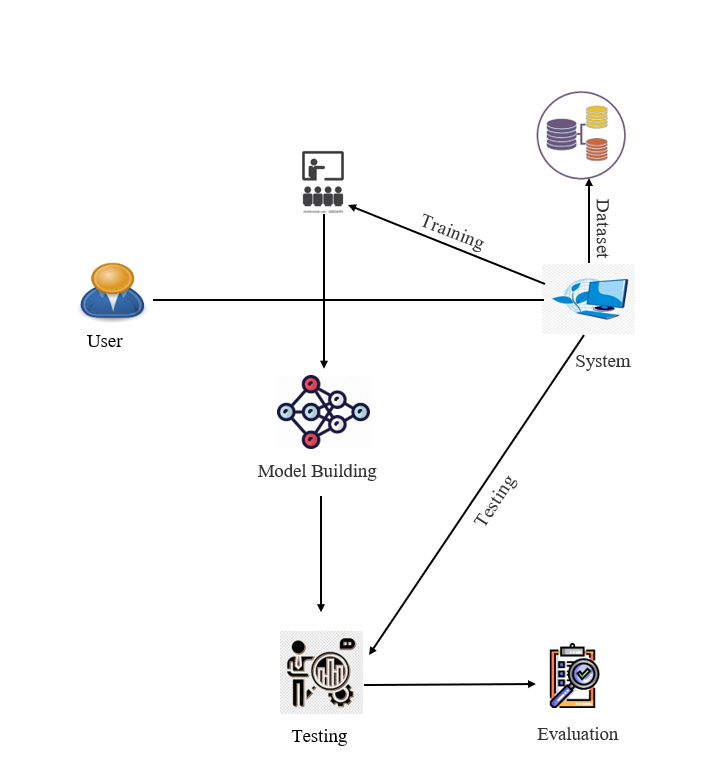
Block Diagram
Specifications
Hardware Requirements
· Operating system : Windows 7 or 7+
· RAM : 8 GB
· Hard disc or SSD : More than 500 GB
· Processor : Intel 3rd generation or high or Ryzen with 8 GB Ram
Software Requirements:
· Software’s : Python 3.6 or high version
· IDE : PyCharm/VSCode
· Framework : Flask, pandas, numpy and Scikit-Learn


Related Projects
 Paper Publishing

Request Call Back
Would you like to receive a free callback now?
Choose the best time for callback:
Leave your message and we will contact you as soon as possible

6-2-85/B, Old Maternity Hospital Road, Thyagaraja Nagar, Tirupati, Andhra Pradesh – 517501
+91 9030333433
+91 9393939065
0877-2261612

Disclaimer - Takeoff Edu Group Projects are not associated or affiliated with IEEE in any way. The IEEE Projects mentioned here are mentioned in the context of student projects, whose ideas are derived from IEEE publications, not projects of or by IEEE.

