YOLO-Based Smart Surveillance for Road Safety Compliance
Objective
The objective of this system is to develop a YOLO-based smart surveillance system for monitoring road safety compliance. It aims to detect violations such as not wearing helmets, seatbelt misuse, or signal jumping in real time. The system enhances accuracy and speed in identifying offenses using computer vision. Additionally, it supports automated enforcement and improves overall traffic safety.
Abstract
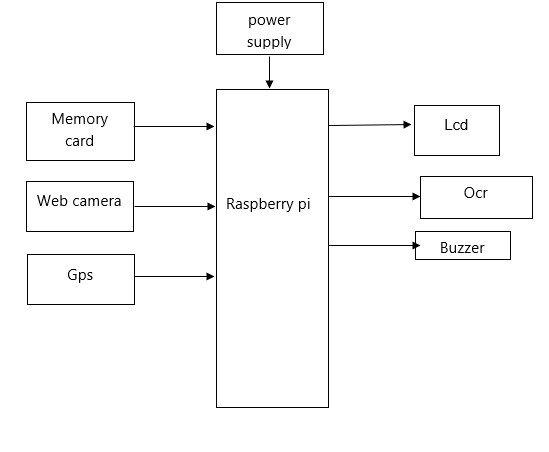
This project presents a YOLO-based smart surveillance system for road safety compliance using a real-time monitoring approach. The system is implemented on a Raspberry Pi integrated with a live webcam that continuously captures traffic video feed. YOLO (You Only Look Once) algorithm is used to detect traffic violations such as riders not wearing helmets in real time. Once a violation is detected, the system captures the vehicle image and applies OCR (Optical Character Recognition) to extract the number plate details. Simultaneously, a GPS module records and transmits the location of the incident for enforcement action. An LCD display provides system status updates, while a buzzer is activated to indicate abnormal conditions. This prototype enables automated, accurate, and efficient traffic monitoring, reducing the need for manual surveillance and improving road safety enforcement through intelligent real-time detection and response.
NOTE: Without the concern of our team, please don't submit to the college. This Abstract varies based on student requirements.
Block Diagram
Specifications
Hardware Components
- Raspberry Pi
- Web Camera
- GPS Module
- LCD Display
- OCR
- Buzzer
- Power Supply
- 12V Adapter
- SD Card
- Connecting Wires
Software Components
- Python
- Raspbian OS
Learning Outcomes
Learning outcomes:
• Raspberry Pi pin diagram and
architecture
• How to install Raspberry Pi OS / setup software
• Setting up and installation procedure for Raspberry Pi
• Introduction to Raspberry Pi development environment
• Basic programming in Raspberry Pi (Python / C / C++)
• Basics of Embedded Python / Raspberry Pi programming
• Basics of IoT platforms
• Working of power supply
• About Project Development Life Cycle:
•
Planning and Requirement Gathering (software, tools, hardware components, etc.)
• Schematic preparation
• Code development and debugging
• Hardware development and debugging
• Development of the project and output testing
• Practical exposure to:
•
Hardware and software tools
• Solution providing for real-time problems
• Working with team/individual
• Work on creative ideas
• Skills developed:
•
Project development skills
• Problem analyzing skills
• Problem solving skills
• Creativity and imaginative skills
• Programming skills
• Deployment
• Testing skills
• Debugging skills
• Project presentation skills
• Thesis writing skills


 Paper Publishing

Request Call Back
Would you like to receive a free callback now?
Choose the best time for callback:
Leave your message and we will contact you as soon as possible

6-2-85/B, Old Maternity Hospital Road, Thyagaraja Nagar, Tirupati, Andhra Pradesh – 517501
+91 9030333433
+91 9393939065
0877-2261612

Disclaimer - Takeoff Edu Group Projects are not associated or affiliated with IEEE in any way. The IEEE Projects mentioned here are mentioned in the context of student projects, whose ideas are derived from IEEE publications, not projects of or by IEEE.

