XAI-Enhanced Machine Learning for Obesity Risk Classifiaction  an approach with lime explanations

Project Code :TCMAPY1564

Objective

The primary objective of this project is to develop an XAI-enhanced machine learning framework for obesity risk classification that balances high predictive accuracy with interpretability.

Abstract

Obesity poses a significant global health challenge, necessitating accurate and interpretable predictive models for risk classification. This study proposes an XAI-enhanced machine learning framework for obesity risk classification, leveraging Local Interpretable Model-agnostic Explanations (LIME) to ensure transparency and interpretability. The existing system employs a stacking algorithm with base estimators including Light Gradient Boosting Machine (LGBM), Logistic Regression (LR), and Random Forest (RF), with a Stochastic Gradient Descent (SGD) classifier as the final estimator. While effective, this approach may be limited by computational complexity and interpretability challenges. The proposed system introduces a novel ensemble of XGBoost, Decision Tree, and Convolutional Neural Network (CNN) classifiers, integrated with LIME to provide clear, feature-level explanations of predictions. XGBoost enhaances predictive accuracy through gradient boosting, Decision Trees offer intuitive rule-based insights, and CNNs capture complex patterns in structured data. This combination aims to improve classification performance while maintaining interpretability, addressing the limitations of the existing system. By prioritizing both accuracy and transparency, the proposed framework seeks to support healthcare professionals in identifying at-risk individuals and making informed decisions, ultimately contributing to more effective obesity prevention and management strategies. Keywords: Obesity Risk Classification, Explainable AI, XAI, LIME, Machine Learning, XGBoost, Decision Tree, Convolutional Neural Network, CNN, Stacking Algorithm, Light Gradient Boosting Machine, LGBM, Logistic Regression, Random Forest, Stochastic Gradient Descent, SGD, Predictive Modeling, Interpretability, Transparency, Healthcare Decision Support, Ensemble Classifiers

NOTE: Without the concern of our team, please don't submit to the college. This Abstract varies based on student requirements.

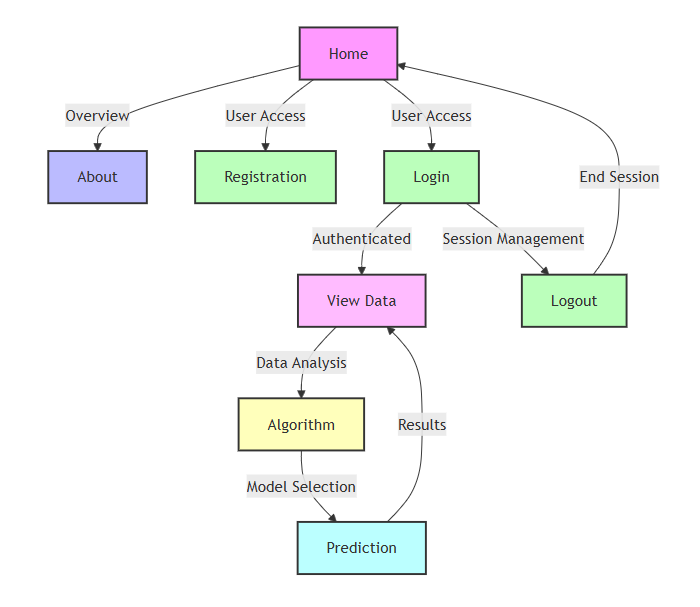
Block Diagram
Specifications

H/W CONFIGURATION:

Processor                                 - I3/Intel Processor

Β·         Hard Disk                                - 160GB 

  Β·         Key Board                              - Standard Windows Keyboard 

  Β·         Mouse                                     - Two or Three Button Mouse

Β·         Monitor                                   - SVGA

Β·         RAM                                       - 8GB 

  S/W CONFIGURATION: Β·       

  Operating System                   :  Windows 7/8/10

Β·         Server side Script                    :  HTML, CSS, Bootstrap & JS

Β·         Programming Language         :  Python

Β·         Libraries                                  :  Flask, Pandas, MySQL. Connector, Os, Smtplib, Numpy

Β·         IDE/Workbench                      :  PyCharm

Β·         Technology                             :  Python 3.6+

Β·         Server Deployment                 :  Xampp Server

Demo Video

mail-banner
call-banner
contact-banner
Request Video




