Waiter Robot – Solution To Restaurant Automation With Raspberry Pi
Objective
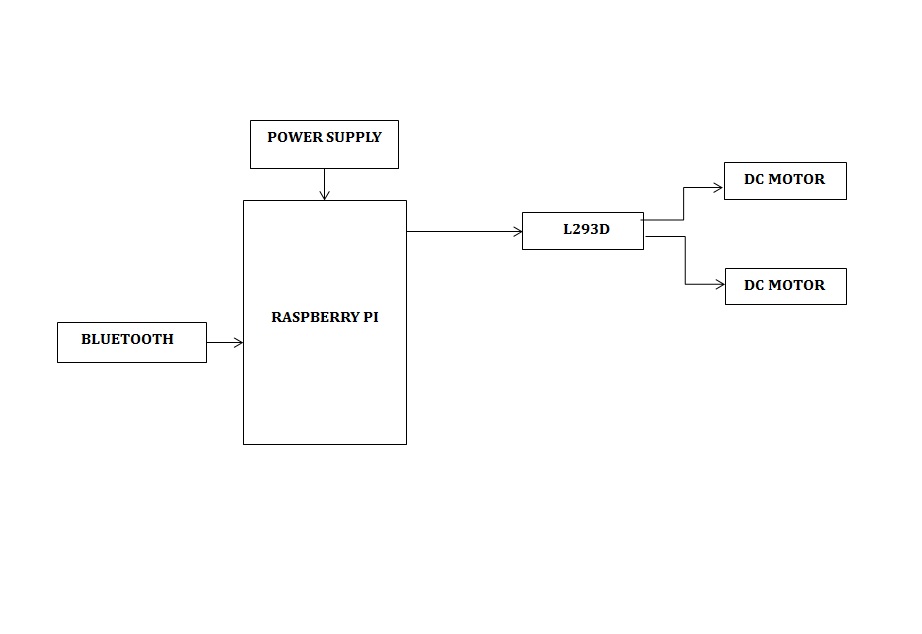
The main objective of this project is to create Autonomous Robot for delivering orders in Restaurants by using Raspberry pi. Robot having wheels. This robot is controlled by Bluetooth to move towards the table for serving of the food.
Abstract
The use of robots as waiters in restaurants is an increasing trend in the service industry. The Waiter-robot is an exceptional autonomous robot which has the ability to follow a designated path by measuring the distance and reach its intended destination. It reduces effort, time, error, etc. and increasing quality, capacity and efficiency in delivering the food.
It is a robot used to help restaurant staffs to deliver order to particular tables in the restaurant. . This robot is controlled by predefined path as it follows a path by a unique identification of table. With the help of Bluetooth, we give commands to the robot to move towards the table for serving of food.
Keywords: Raspberry pi, Bluetooth, l293d, DC motor
NOTE: Without the concern of our team, please don't submit to the college. This Abstract varies based on student requirements.
Block Diagram
Specifications
Hardware Requirements:
- Raspberry pi
- Micro SD card
- Bluetooth
- L239D Motor driver
- DC motor
- 5V Adapter
- Connecting wires
Software Requirements:
- Python3 IDE
- VNC viewer
- NOOBS software
- Fritzing
- Bluetooth Mobile Application
Learning Outcomes
- Raspberry Pi Pin diagram and Architecture
- How to install NOOBS Software
- Setting up and Installation procedures for Raspberry Pi
- How to connect Raspberry Pi through VNC viewer?
- Introduction to Python3 IDE
- Commands in Python
- Basic coding in Python
- How to interface Bluetooth with Raspberry Pi?
- How to interface L239D with Raspberry Pi?
- How to interface DC motor with Raspberry Pi?
- About Project Development Life Cycle:
- Planning and Requirement Gathering( software’s, Tools, Hardware components, etc.,)
- Schematic preparation
- Code development and debugging
- Hardware development and debugging
- Development of the Project and Output testing
- Practical exposure to:
- Hardware and software tools.
- Solution providing for real time problems.
- Working with team/ individual.
- Work on Creative ideas.
- Project development Skills
- Problem analyzing skills
- Problem solving skills
- Creativity and imaginary skills
- Programming skills
- Deployment
- Testing skills
- Debugging skills
- Project presentation skills
- Thesis writing skills


 Paper Publishing

Request Call Back
Would you like to receive a free callback now?
Choose the best time for callback:
Leave your message and we will contact you as soon as possible

6-2-85/B, Old Maternity Hospital Road, Thyagaraja Nagar, Tirupati, Andhra Pradesh – 517501
+91 9030333433
+91 9393939065
0877-2261612

Disclaimer - Takeoff Edu Group Projects are not associated or affiliated with IEEE in any way. The IEEE Projects mentioned here are mentioned in the context of student projects, whose ideas are derived from IEEE publications, not projects of or by IEEE.

