Under Water Fish Detection Using Faster RCNN and Yolov5
Objective
The primary objective of this project is to develop and refine a highly accurate and efficient system for detecting fish in underwater environments, using advanced object detection models, YOLOv5 and Faster R-CNN. By harnessing the capabilities of these cutting-edge convolutional neural networks, the project aims to address the challenges associated with underwater fish detection, such as varying light conditions, the presence of obstructions, and the need for real-time processing. This endeavor seeks to compare the performance of YOLOv5 and Faster R-CNN in terms of detection speed, accuracy, and reliability under diverse conditions, with the goal of identifying the most suitable model or combination of models for real-world applications. Ultimately, this project intends to contribute to the fields of marine biology, conservation efforts, and sustainable fishing practices by providing a robust tool for monitoring aquatic life, thus enabling better management of marine resources and preservation of aquatic ecosystems.
Abstract
This study presents an innovative approach to fish target detection by leveraging the advanced capabilities of YOLOv5 and Faster R-CNN, two of the leading convolutional neural network models designed for real-time object detection. With the aim of enhancing the accuracy and efficiency of underwater fish detection in diverse and complex aquatic environments, this research compares the performance of YOLOv5 and Faster R-CNN in terms of detection speed, accuracy, and reliability. Utilizing a comprehensive dataset of underwater images featuring various fish species in different settings, the study meticulously evaluates each model's ability to accurately identify and locate fish targets amidst background noise and varying visibility conditions. The findings demonstrate that YOLOv5, known for its speed and lightweight architecture, excels in scenarios requiring real-time detection, while Faster R-CNN, with its emphasis on detection accuracy through region proposal mechanisms, shows superior precision in complex image contexts. This comparative analysis not only sheds light on the strengths and weaknesses of each model in fish detection tasks but also provides valuable insights for the development of more effective and adaptive aquatic life monitoring systems. Through this exploration, the research contributes to the advancement of marine biology studies, sustainable fishing practices, and the preservation of aquatic ecosystems by offering a robust tool for accurate and efficient fish detection.
Keywords: YOLOv5, Faster R-CNN, Real-time object detection, Underwater image analysis, Aquatic environments
NOTE: Without the concern of our team, please don't submit to the college. This Abstract varies based on student requirements.
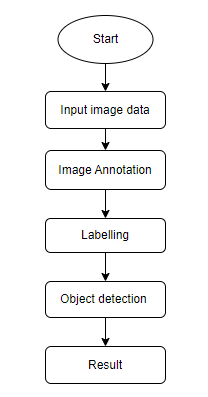
Block Diagram
Specifications
SOFTWARE REQUIREMENS
Operating System : Windows 7/8/10
Server side Script : HTML, CSS, Bootstrap & JS
Programming Language : Python
Libraries : Flask, Pandas, Torch, Torch-vision
IDE/Workbench : VSCode
Technology : Python 3.6+
Server Deployment : Xampp Server
Database : MySQL
HARDWARE REQUIREMENTS
Processor I3/Intel Processor
RAM 8GB (min)
Hard Disk 128 GB


 Paper Publishing

Request Call Back
Would you like to receive a free callback now?
Choose the best time for callback:
Leave your message and we will contact you as soon as possible

6-2-85/B, Old Maternity Hospital Road, Thyagaraja Nagar, Tirupati, Andhra Pradesh – 517501
+91 9030333433
+91 9393939065
0877-2261612

Disclaimer - Takeoff Edu Group Projects are not associated or affiliated with IEEE in any way. The IEEE Projects mentioned here are mentioned in the context of student projects, whose ideas are derived from IEEE publications, not projects of or by IEEE.

