Transferability Evaluation in WiFi Intrusion Detection Systems Through Machine Learning and Deep Learning Approaches
Objective
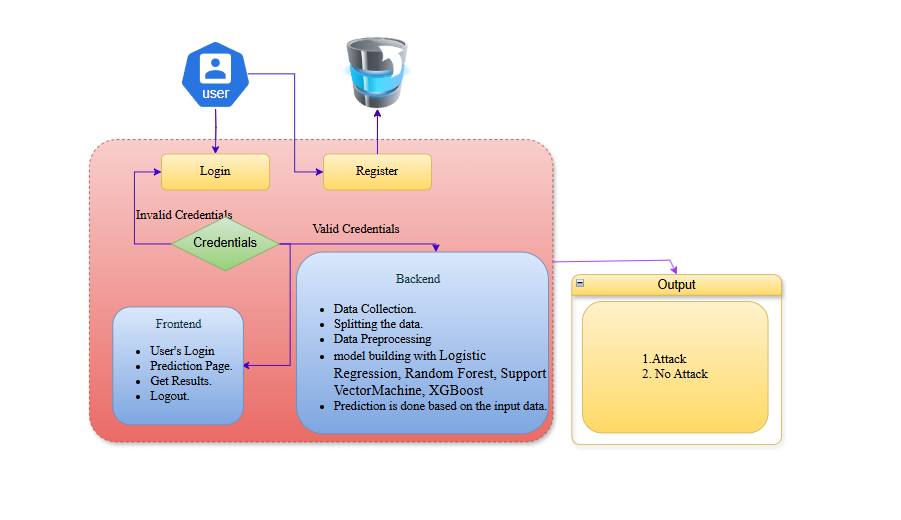
The objective of this project is to evaluate the transferability and performance of Wi-Fi Intrusion Detection Systems (WIDS) using Machine Learning (ML) and Deep Learning (DL) techniques. By implementing a variety of models such as Logistic Regression, Random Forest, Support Vector Machine (SVM), and XGBoost, the project aims to classify network traffic into two categories: "Attack" and "No Attack." The goal is to assess the effectiveness of each model in identifying intrusions across diverse network environments, improving detection accuracy, and ensuring that the models can be transferred and applied to various datasets with minimal performance degradation. This project intends to provide a robust and scalable solution for real-time Wi-Fi network security, offering valuable insights into improving intrusion detection across different network scenarios.
Abstract
This project focuses on evaluating the transferability of Wi-Fi Intrusion Detection Systems (WIDS) using both Machine Learning (ML) and Deep Learning (DL) approaches. The models employed in this study include Logistic Regression, Random Forest, Support Vector Machine (SVM), and XGBoost, which are applied to classify network traffic into two primary classes: "Attack" and "No Attack." Each model is trained and evaluated based on its ability to detect intrusions and its adaptability across various datasets, making the system more robust and transferable across different network environments. Logistic Regression and Random Forest are leveraged for their simplicity and efficiency, while SVM and XGBoost are chosen for their strong classification capabilities, particularly in handling complex and high-dimensional data. The models are developed using Python and popular libraries such as scikit-learn and XGBoost, with evaluation metrics including accuracy, precision, recall, and F1-score to assess the performance. This study highlights the potential of combining traditional ML techniques with modern DL approaches to create a more adaptive and reliable Wi-Fi Intrusion Detection System, capable of improving network security and reducing false positives.
Keywords: Wi-Fi Intrusion Detection, Machine Learning, Deep Learning, Logistic Regression, Random Forest, Support Vector Machine, XGBoost, Attack Detection, Network Security, Intrusion Detection Systems, Transferability, Classification.
NOTE: Without the concern of our team, please don't submit to the college. This Abstract varies based on student requirements.
Block Diagram
Specifications
SOFTWARE REQUIREMENS
Operating System : Windows 7/8/10
Server side Script : html,css,js
Programming Language : Python
Libraries : Django, Pandas, Torch, Keras, Sklearn, Numpy , Seaborn
IDE/Workbench : VSCode
Server Deployment : Xampp Server
Database : SQLite
HARDWARE REQUIREMENTS
Processor - I3/Intel Processor
RAM - 8GB (min)
Hard Disk - 128 GB
Key Board - Standard Windows Keyboard
Mouse - Two or Three Button Mouse
Monitor - Any


 Paper Publishing

Request Call Back
Would you like to receive a free callback now?
Choose the best time for callback:
Leave your message and we will contact you as soon as possible

6-2-85/B, Old Maternity Hospital Road, Thyagaraja Nagar, Tirupati, Andhra Pradesh – 517501
+91 9030333433
+91 9393939065
0877-2261612

Disclaimer - Takeoff Edu Group Projects are not associated or affiliated with IEEE in any way. The IEEE Projects mentioned here are mentioned in the context of student projects, whose ideas are derived from IEEE publications, not projects of or by IEEE.

