Torque Ripple Suppression For Open-end Winding Permanent-magnet Synchronous Machine Drives With Predictive Current Control
Also Available Domains DC - AC Converters
Abstract
In order to suppress the torque ripple of an open-end winding permanent-magnet synchronous machine (OEW-PMSM), a q-axis current injection method is typically employed but the disturbances caused by the third flux linkage parameter mismatch can augment the torque ripple. To solve this problem, firstly, a zero-sequence current (ZSC) and zero-sequence back-EMF observer (ZCBO) were proposed based on an adaptive sliding mode control, which was able to simultaneously estimate ZSC and zero-sequence back-EMF under varying conditions. Based on this ZCBO, the estimated ZSC and zero-sequence back-EMF could compensate for the one-step control delay and suppress the aforementioned disturbances. Secondly, although central hexagon modulation is employed in the predictive current control (PCC) scheme, zero-sequence voltage (ZSV) still exists in the zero-sequence path due to the dead time of the inverter, affecting the predictive accuracy of the ZCBO. To accurately establish the ZCBO, the ZSV caused by the dead time of the inverter was considered in the ZCBO. Finally, a comparative study of two types of methods was presented, and simulations established by MATLAB software.
NOTE: Without the concern of our team, please don't submit to the college. This Abstract varies based on student requirements.
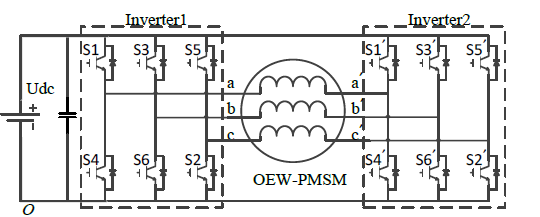
Block Diagram
Specifications
Software Configuration:
Operating System : Windows 7/8/10
Application Software : Matlab/Simulink
Hardware Configuration:
RAM : 8 GB / 4 GB (Min)
Processor : I3 / I5(Mostly prefer)
Learning Outcomes
- Introduction to Matlab/Simulink
- What is EISPACK & LINPACK
- How to start with MATLAB
- About Matlab language
- About tools & libraries
- Application of Matlab/Simulink
- About Matlab desktop
- Features of Matlab/Simulink
- Basics on Matlab/Simulink
- Introduction to controllers.
- Study of PWM techniques.
- Project Development Skills:
- Problem analyzing skills
- Problem solving skills
- Creativity and imaginary skills
- Programming skills
- Deployment
- Testing skills
- Debugging skills
- Project presentation skills
- Thesis writing skills


 Paper Publishing

Request Call Back
Would you like to receive a free callback now?
Choose the best time for callback:
Leave your message and we will contact you as soon as possible

6-2-85/B, Old Maternity Hospital Road, Thyagaraja Nagar, Tirupati, Andhra Pradesh – 517501
+91 9030333433
+91 9393939065
0877-2261612

Disclaimer - Takeoff Edu Group Projects are not associated or affiliated with IEEE in any way. The IEEE Projects mentioned here are mentioned in the context of student projects, whose ideas are derived from IEEE publications, not projects of or by IEEE.

