The Use of Machine Learning in Gut Microbiome Research A Scoping Review
Objective
This project aims to explore the relationship between the gut microbiome and Autism Spectrum Disorder (ASD) using machine learning techniques, focusing on identifying microbiome biomarkers for early ASD diagnosis. It also seeks to develop a user-friendly web interface for researchers and healthcare professionals to input data and receive predictions. By enhancing ASD detection methods with microbiome data, the project aims to improve diagnosis accuracy and support personalized treatments for better clinical outcomes.
Abstract
This project explores the use of machine learning techniques in gut microbiome research, with a focus on Autism Spectrum Disorder (ASD). The study utilizes the "Human Gut Microbiome with ASD" dataset from Kaggle to investigate the relationship between gut microbiome features and ASD. The target variable for the classification is created using the Mann-Whitney U Test, where the dataset is divided into two groups: Group A (representing individuals with autism) and Group B (representing individuals without autism). The Mann-Whitney U Test is used to identify statistically significant differences in microbiome features between the two groups, which serves as the basis for the target labels. Machine learning models are then applied to classify the microbiome data, aiming to identify biomarkers associated with ASD.
This research highlights the potential of leveraging microbiome analysis to advance the understanding of ASD and its diagnosis. By training models on features extracted from microbiome data, the project seeks to enhance the classification accuracy for identifying ASD in individuals based on microbial compositions. The outcomes of this study may pave the way for more personalized approaches to autism detection and intervention. The project utilizes a Flask-based web interface to allow users to input data and obtain classification results. The findings aim to demonstrate the practical use of machine learning in microbiome research, offering valuable insights into the role of the microbiome in neurological conditions.
Keywords: Mann-Whitney U Test , machine learning, gut microbiome, Autism Spectrum Disorder, classification, biomarkers, microbiome data, ASD, machine learning models, Flask, web interface.
NOTE: Without the concern of our team, please don't submit to the college. This Abstract varies based on student requirements.
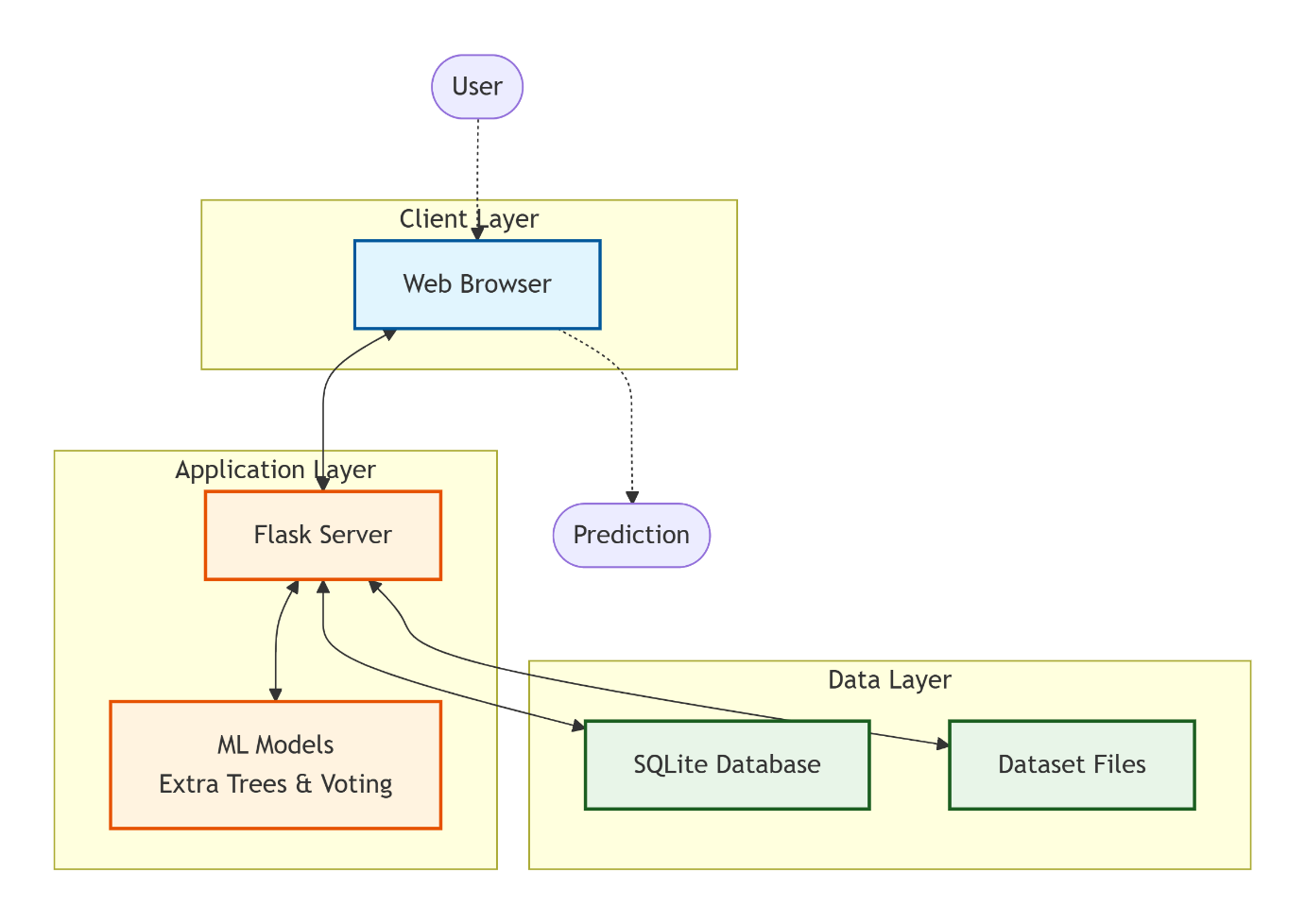
Block Diagram
Specifications
Hardware Requirements
• Processor - I5/Intel Processor
• RAM - 8GB (min)
• Hard Disk - 160 GB
• Key Board - Standard Windows Keyboard
• Mouse - Two or Three Button Mouse
• Monitor - Any
SOFTWARE REQUIREMENS
• Operating System : Windows 7/8/10
• Server side Script : HTML, CSS, Bootstrap & JS
• Programming Language : Python
• Libraries : Flask, Pandas, Mysql. connector, Os, Numpy, Scikit- learn, sklearn.ensemble, MLPRegressor, SVR
• IDE/Workbench : VS-Code
• Technology : Python 3.10+
• Server Deployment : Xampp Server
• Database : MySQL


 Paper Publishing

Request Call Back
Would you like to receive a free callback now?
Choose the best time for callback:
Leave your message and we will contact you as soon as possible

6-2-85/B, Old Maternity Hospital Road, Thyagaraja Nagar, Tirupati, Andhra Pradesh – 517501
+91 9030333433
+91 9393939065
0877-2261612

Disclaimer - Takeoff Edu Group Projects are not associated or affiliated with IEEE in any way. The IEEE Projects mentioned here are mentioned in the context of student projects, whose ideas are derived from IEEE publications, not projects of or by IEEE.

