Rumor Source Identification from Social Network
Objective
Design innovative data analysis and network-based techniques to identify the initial sources of rumors and misinformation within social media platforms and online communities. Validate and refine these methods through empirical studies and real-world datasets, ensuring their accuracy and scalability. Provide practical tools and insights to enhance information verification and trustworthiness in digital communication environments. Contribute to the broader goal of mitigating the harmful effects of false information, fostering responsible digital citizenship, and bolstering the credibility of online information sources for the benefit of individuals and society.
Abstract
In the realm of online information propagation, the rapid spread of rumors and false claims poses significant challenges to both individuals and society at large. This study presents an innovative approach for Rumor Source Identification from Social Networks. Leveraging advanced data analytics and network analysis techniques, we aim to accurately identify the original source of rumors, shedding light on the origins of misinformation. By examining the patterns and dynamics of information dissemination within social networks, our research contributes to the development of robust tools for early detection and mitigation of false information, ultimately bolstering the credibility and trustworthiness of online information sources.
Keywords: ML evaluation, ML techniques, etc.
NOTE: Without the concern of our team, please don't submit to the college. This Abstract varies based on student requirements.
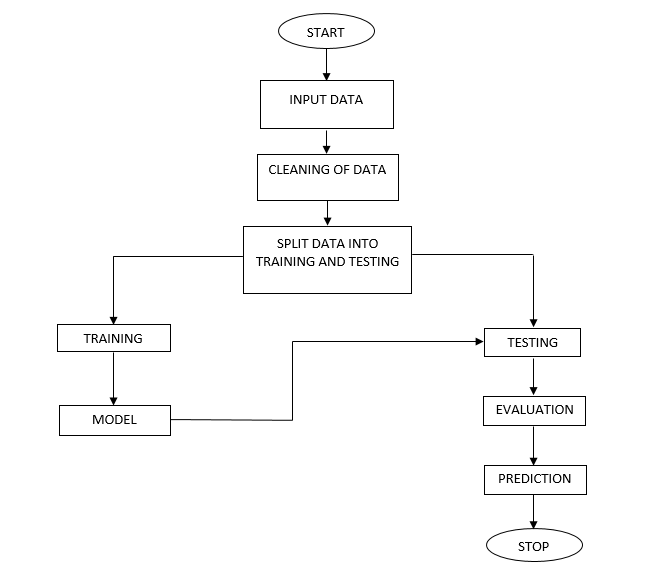
Block Diagram
Specifications
H/W CONFIGURATION:
Processor - I5/Intel Processor
Hard Disk - 160GB
Key Board - Standard Windows Keyboard
Mouse - Two or Three Button Mouse
Monitor - SVGA
RAM - 8GB
S/W CONFIGURATION:
• Operating System : Windows 7/8/10
• Server side Script : HTML, CSS, Bootstrap & JS
• Programming Language : Python
• Libraries : Flask, Pandas, Mysql.connector, Numpy
• IDE/Workbench : PyCharm /VS code
• Technology : Python 3.6+
• Server Deployment : Xampp Server

Demo Video


Request for Video
 Paper Publishing
Request Call Back
Would you like to receive a free callback now?
Choose the best time for callback:
Leave your message and we will contact you as soon as possible

6-2-85/B, Old Maternity Hospital Road, Thyagaraja Nagar, Tirupati, Andhra Pradesh – 517501
+91 9030333433
+91 9393939065
0877-2261612

Disclaimer - Takeoff Edu Group Projects are not associated or affiliated with IEEE in any way. The IEEE Projects mentioned here are mentioned in the context of student projects, whose ideas are derived from IEEE publications, not projects of or by IEEE.

