Robust Network Intrusion Detection System Based on Machine Learning with Early Classification
Objective
The main objective of a Robust Network Intrusion Detection System is to identify and defend against unauthorized or malicious activities within a computer network, ensuring the security and integrity of the network infrastructure and its associated resources by detecting and responding to potential threats in real-time. It aims to enhance network security, prevent data breaches, and minimize the impact of cyberattacks by continuously monitoring network traffic, analyzing patterns, and alerting administrators to potential security breaches or anomalies.
Abstract
Network Intrusion Detection Systems (NIDSs) using pattern matching have a fatal weakness in that they cannot detect new attacks because they only learn existing patterns and use them to detect those attacks. To solve this problem, a machine learning-based NIDS (ML-NIDS) that detects anomalies through ML algorithms by analyzing behaviors of protocols. However, the ML-NIDS learns the characteristics of attack traffic based on training data, so it, too, is inevitably vulnerable to attacks that have not been learned, just like pattern-matching machine learning. Therefore, in this study, by analyzing the characteristics of learning using representative features, we show that network intrusion outside the scope of the learned data in the feature space can bypass the ML-NIDS. To prevent this, designing the active session to be classified early, before it goes outside the detection range of the training dataset of the ML-NIDS, can effectively prevent bypassing the ML-NIDS. Various experiments confirmed that the proposed method can detect intrusion sessions early (before sessions terminate) significantly improving the robustness of the existing ML-NIDS. The proposed approach can provide more robust and more accurate classification with the same classification datasets compared to existing approaches, so we expect it will be used as one of feasible solutions to overcome weakness and limitation of existing ML-NIDSs.
Keywords: Decision Tree, Random Forest, XGBoost, AdaBoost, ANN, CNN.
NOTE: Without the concern of our team, please don't submit to the college. This Abstract varies based on student requirements.
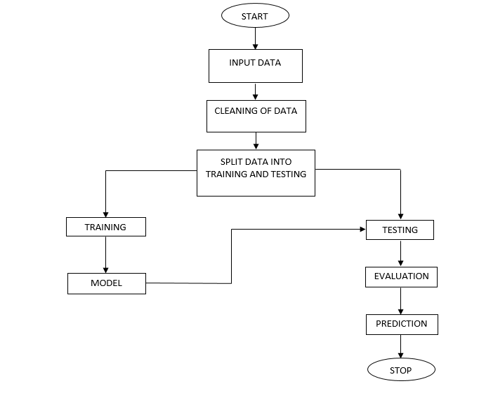
Block Diagram
Specifications
SOFTWARE FRONT END REQUIREMENTS
H/W CONFIGURATION:
Processor - I3/Intel Processor
Hard Disk - 160GB
Key Board - Standard Windows Keyboard
Mouse - Two or Three Button Mouse
Monitor - SVGA
RAM - 8GB
S/W CONFIGURATION:
Operating System : Windows 7/8/10
Server side Script : HTML, CSS, Bootstrap & JS
Programming Language : Python
Libraries : Flask, Pandas, Mysql.connector, Os, Smtplib, Numpy
IDE/Workbench : PyCharm
Technology : Python 3.6+
Server Deployment : Xampp Server


 Paper Publishing

Request Call Back
Would you like to receive a free callback now?
Choose the best time for callback:
Leave your message and we will contact you as soon as possible

6-2-85/B, Old Maternity Hospital Road, Thyagaraja Nagar, Tirupati, Andhra Pradesh – 517501
+91 9030333433
+91 9393939065
0877-2261612

Disclaimer - Takeoff Edu Group Projects are not associated or affiliated with IEEE in any way. The IEEE Projects mentioned here are mentioned in the context of student projects, whose ideas are derived from IEEE publications, not projects of or by IEEE.

