Revamping Verilog Semantics for Foundational Verification
Objective
The objective of this project is to revamp the semantics of Verilog to address challenges in modern verification processes. By refining the language's syntax and semantics, the project aims to improve its expressiveness and precision for complex digital system design. The goal is to enhance the verification capabilities, making it easier to validate the correctness of hardware descriptions. The project also seeks to introduce new methodologies for error detection, reducing verification time and effort. Ultimately, this will improve the reliability and efficiency of hardware designs using Verilog in foundational verification tasks.
Abstract
In formal hardware verification, particularly for Register-Transfer Level (RTL) designs in Verilog, model checking has been the predominant technique. However, it suffers from state explosion, limited expressive power, and a large trusted computing base (TCB). Deductive verification offers greater expressive power and enables foundational verification with a minimal TCB. Nevertheless, Verilog's standard semantics, characterized by its nondeterministic and global scheduling, pose significant challenges to its application. To address these challenges, we propose a new Verilog semantics designed to facilitate deductive verification. Our semantics is based on least fixpoints to enable cycle-level functional evaluation and modular reasoning. For foundational verification, we prove our semantics equivalent to the standard scheduling semantics for synthesizable designs. We demonstrate the benefits of our semantics with a modular verification of a pipelined RISC-V processor's functional correctness and progress guarantees. All our results are mechanized in Rocq
NOTE: Without the concern of our team, please don't submit to the college. This Abstract varies based on student requirements.
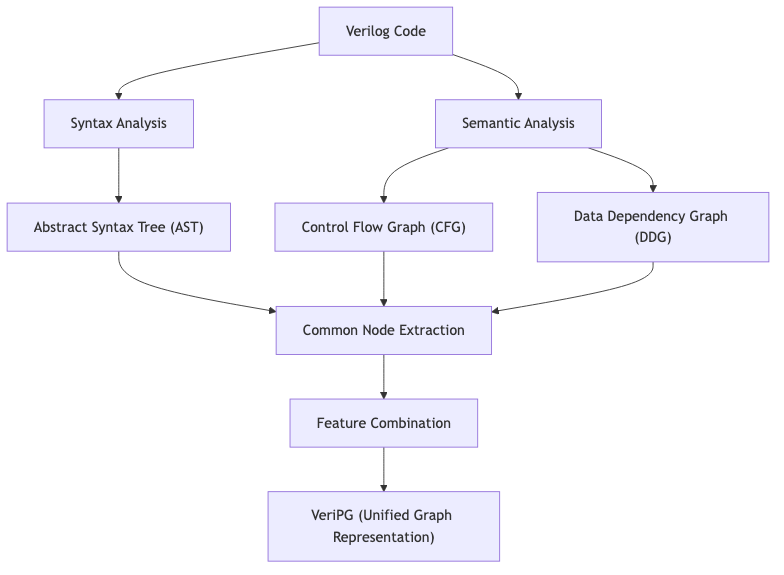
Block Diagram


 Paper Publishing

Request Call Back
Would you like to receive a free callback now?
Choose the best time for callback:
Leave your message and we will contact you as soon as possible

6-2-85/B, Old Maternity Hospital Road, Thyagaraja Nagar, Tirupati, Andhra Pradesh – 517501
+91 9030333433
+91 9393939065
0877-2261612

Disclaimer - Takeoff Edu Group Projects are not associated or affiliated with IEEE in any way. The IEEE Projects mentioned here are mentioned in the context of student projects, whose ideas are derived from IEEE publications, not projects of or by IEEE.

