Pulse Width Modulation (PWM) Speed Control of a DC Motor
Abstract
Pulse Width Modulation (PWM) is a commonly used technique for generally controlling DC power to an electrical device, made practical by modern electronic power switches. However it also finds its place in AC choppers. The average value of current supplied to the load is controlled by the switch position and duration of its state. If the On period of the switch is longer compared to its off period, the load receives comparatively higher power. Thus the PWM switching frequency has to be faster.
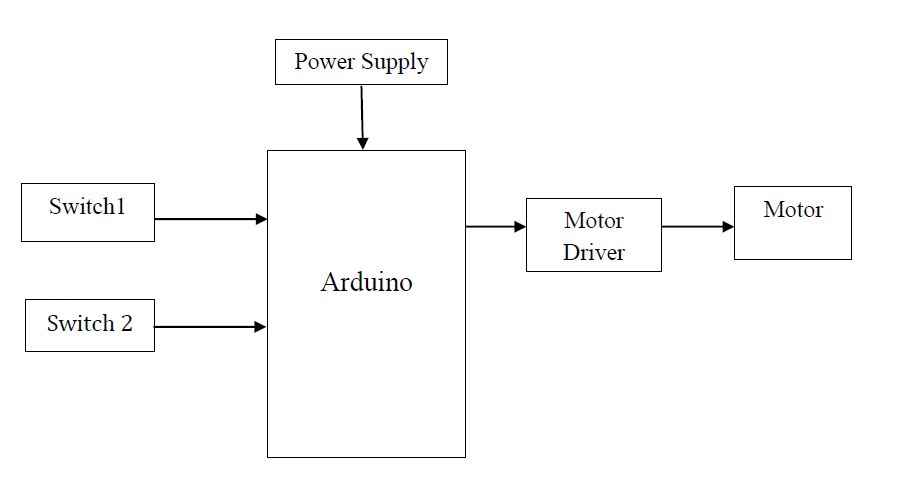
This Project is intended to control the speed of a DC motor utilizing PWM control with Arduino. The speed of the DC motor is specifically corresponding to the voltage connected over its terminals. Subsequently, if the voltage over the motor terminal is shifted, then the speed can likewise be changed. This project utilizes the above guideline to control the speed of the DC motor by fluctuating the duty cycle of the pulse connected to it (prevalently known as PWM control). This project utilizes two info catches interfaced to the microcontroller, which are utilized to control the speed of motor. A motor driver IC is interfaced to the microcontroller for getting PWM flags and conveying fancied yield for the speed control of little DC motor.
NOTE: Without the concern of our team, please don't submit to the college. This Abstract varies based on student requirements.
Block Diagram
Specifications


 Paper Publishing

Request Call Back
Would you like to receive a free callback now?
Choose the best time for callback:
Leave your message and we will contact you as soon as possible

6-2-85/B, Old Maternity Hospital Road, Thyagaraja Nagar, Tirupati, Andhra Pradesh – 517501
+91 9030333433
+91 9393939065
0877-2261612

Disclaimer - Takeoff Edu Group Projects are not associated or affiliated with IEEE in any way. The IEEE Projects mentioned here are mentioned in the context of student projects, whose ideas are derived from IEEE publications, not projects of or by IEEE.

