Protecting Analog Circuits Using Switch Mode Time Domain Locking
Objective
Lock analog circuit behavior by integrating a time-domain switching mechanism controlled by a key. Use random-key–based switching phases instead of conventional fixed-clock signals, ensuring that only with the correct key and correct phase alignment does the analog circuit operate as intended.
Abstract
Analog circuits remain susceptible to a wide range of supply chain threats, including piracy, overproduction, counterfeiting, and reverse engineering. In this work, we propose a Switch Mode Time Domain Locking (SMDL) scheme to enhance the security of analog circuits. The proposed approach embeds a locking mechanism into the circuit’s time-domain operation by utilizing random key–dependent switching phases in place of conventional fixed clocks. The switching phases are determined by a secret key of arbitrary length, and only a correct key (CK) with proper phase alignment enables circuit functionality.
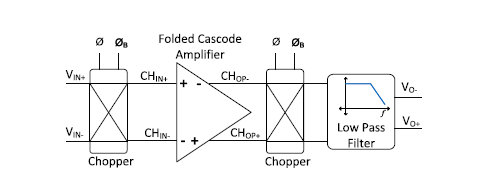
The SMDL technique is applicable to various switch-mode analog circuits, such as filters, amplifiers, and regulators. To demonstrate its effectiveness, we implement the scheme on a folded cascode amplifier (FCA) and a switched-capacitor bandgap reference (BGR) circuit. In the FCA implementation, a low-power biasing technique is incorporated to minimize power consumption while maintaining gain and stability. The implementation, carried out in 45-nm CMOS technology, shows that the use of an incorrect key (IK) introduces nearly 100% variation in circuit behavior, thereby ensuring a high level of security.
Index Terms— Analog hardware security, time-domain locking, low-power analog design, circuit obfuscation, bandgap reference (BGR).
NOTE: Without the concern of our team, please don't submit to the college. This Abstract varies based on student requirements.
Block Diagram
Specifications
Software Requirements:
· Tool: Cadence virtuoso
Hardware Requirements:
· Microsoft® Windows XP
· Intel® Pentium® 4 processor or Pentium 4 equivalent with SSE support
· 512 MB RAM
· 100 MB of available disk space
Learning Outcomes
- Introduction to Digital electronics
- Introduction to logic gates
- Importance of Transistors
- Types of adders
- NMOS/PMOS/CMOS Technologies
- How to design circuits using Transistor logic?
- CLA with adibiatic logic
- Applications in Real time.
- Importance of logic gates in memory.
- Cadence for design and simulation
·
Understanding of Threats:
Develop knowledge of supply chain vulnerabilities specific to analog circuits.
·
Mastery of SMDL Concept:
Gain expertise in how switch mode time-domain locking secures analog designs
using random key–driven switching phases.
·
Integration of Low-Power Techniques:
Learn how methods such as current-reuse biasing, SAPON, and LECTOR can reduce
power consumption in secured analog blocks.
·
Hands-On Implementation:
Acquire skills in applying SMDL to practical analog designs like folded cascode
amplifiers (FCA) and switched-capacitor bandgap reference (BGR) circuits.
·
Research and Innovation Capability:
Build the ability to propose and validate new hardware security techniques that
balance security, power, and performance for advanced
analog/mixed-signal systems.
- Solution providing for real time problems
- Project Development Skills:
- Problem Analysis Skills
- Problem Solving Skills
- Logical Skills
- Designing Skills
- Testing Skills
- Debugging Skills
- Presentation skills
- Thesis Writing Skills


 Paper Publishing

Request Call Back
Would you like to receive a free callback now?
Choose the best time for callback:
Leave your message and we will contact you as soon as possible

6-2-85/B, Old Maternity Hospital Road, Thyagaraja Nagar, Tirupati, Andhra Pradesh – 517501
+91 9030333433
+91 9393939065
0877-2261612

Disclaimer - Takeoff Edu Group Projects are not associated or affiliated with IEEE in any way. The IEEE Projects mentioned here are mentioned in the context of student projects, whose ideas are derived from IEEE publications, not projects of or by IEEE.

