Predicting Cyberbullying Types in Tweets Using Multi-Class and Binary Classification
Objective
The main objective of this project is to develop machine learning models that automatically detect and classify cyberbullying in tweets. By using multi-class and binary classification techniques, the system aims to identify harmful content accurately, promoting online safety and helping mitigate the negative impact of cyberbullying on social media platforms.
Abstract
In the digital era, the rise of social media platforms has brought about numerous benefits, but it has also contributed to the growing issue of cyberbullying. This project, titled "Predicting Cyberbullying Types in Tweets Using Multi-Class and Binary Classification," leverages machine learning techniques to tackle the issue of online harassment by developing automated systems for detecting and classifying cyberbullying in tweets. The project uses a publicly available dataset containing over 47,000 tweets, categorized into classes based on different types of cyberbullying: Age, Ethnicity, Gender, Religion, and Other. Additionally, a binary classification model is developed to flag harmful tweets. The models implemented include traditional machine learning algorithms such as SVM, Random Forest, XGBoost, and Gradient Boosting, alongside advanced deep learning techniques like BiLSTM, to achieve high accuracy in predicting cyberbullying instances. Preprocessing techniques such as TF-IDF are applied to convert textual data into usable features. The project aims to provide a web-based solution that can automatically classify tweets, helping to create a safer digital environment by identifying harmful content. The results of the classification models are evaluated using various performance metrics, including accuracy, precision, recall, and F1-score, ensuring a comprehensive understanding of the model's effectiveness. By offering automated classification of tweets, this project contributes to online safety and aims to mitigate the impact of cyberbullying across social media platforms.
Keywords: cyberbullying, classification, machine learning, tweets, prediction, SVM, Random Forest, XGBoost, BiLSTM, online safety.
NOTE: Without the concern of our team, please don't submit to the college. This Abstract varies based on student requirements.
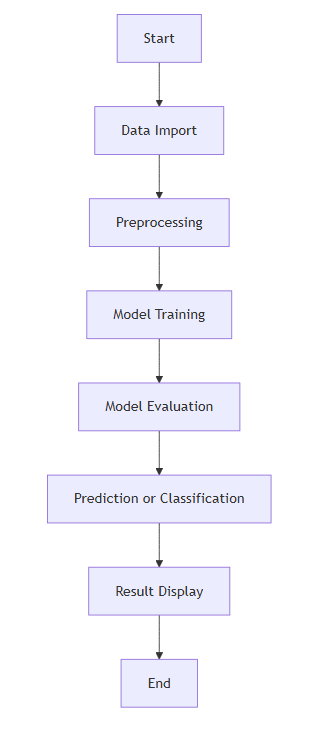
Block Diagram
Specifications
H/W CONFIGURATION:
Processor - I3/Intel Processor
Hard Disk - 160GB
Key Board - Standard Windows Keyboard
Mouse - Two or Three Button Mouse
Monitor - SVGA
RAM - 8GB
S/W CONFIGURATION:
• Operating System : Windows 7/8/10
• Server side Script : HTML, CSS, Bootstrap & JS
• Programming Language : Python
• Libraries : Flask, Pandas, MySQL. Connector, Scikit-Learn, pytorch
• IDE/Workbench : VS Code
• Technology : Python 3.8+
• Server Deployment : Xampp Server


 Paper Publishing

Request Call Back
Would you like to receive a free callback now?
Choose the best time for callback:
Leave your message and we will contact you as soon as possible

6-2-85/B, Old Maternity Hospital Road, Thyagaraja Nagar, Tirupati, Andhra Pradesh – 517501
+91 9030333433
+91 9393939065
0877-2261612

Disclaimer - Takeoff Edu Group Projects are not associated or affiliated with IEEE in any way. The IEEE Projects mentioned here are mentioned in the context of student projects, whose ideas are derived from IEEE publications, not projects of or by IEEE.

