Precision Clinical Medicine Through Machine Learning: Using High and Low Quantile Ranges of Vital Signs for Risk Stratification of ICU Patients
Objective
In this work, and using the same attributes, we attempt to predict the power related values like leakage etc., using several machine learning algorithms to assess design alternatives and their energy and area tradeoffs.
Abstract
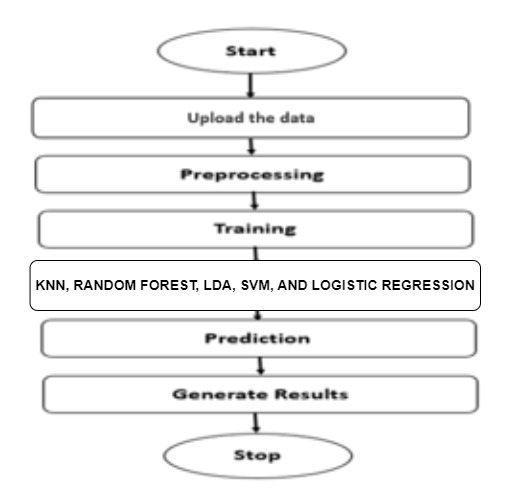
Remote patient monitoring in the intensive care unit (ICU) is a critical observation and assessment duty required for precision medicine. We recently developed a cloud-based intelligent remote patient monitoring (IRPM) framework in which we adhere to the state-of-the-art in risk stratification via machine learning-based prediction, but with minimal features that rely on vital signs, the most commonly used physiological variables obtained inside and outside hospitals. In this paper, we create three machine learning models for readmission, abnormality, and next-day vital sign readings to considerably improve the efficacy of the basic IRPM framework. We give a formal representation of a feature engineering technique and describe the creation and testing of three replicable machine learning prediction models. CU patient readmission, irregularity, and vital sign measures the next day We provided two solutions for data with unbalanced classes for the readmission model and applied five binary classification techniques to each approach. We used the same five algorithms to predict whether a patient will have abnormal health conditions in the abnormality model. Our findings show that by focusing on low and high quantile ranges of vital signs, we may still get an acceptable performance with these machine learning models. We discovered that using the most current vital sign values results in the lowest prediction error. Given the medical industry's large investment in patient monitoring devices, the developed models will be incorporated into an Intelligent ICU Patient Monitoring (IICUPM) module.
KEYWORDS: Machine Learning, Random Forest, SVM, KNN, LDA, Logistic Regression.
NOTE: Without the concern of our team, please don't submit to the college. This Abstract varies based on student requirements.
Block Diagram
Specifications
SOFTWARE FRONT END REQUIREMENTS
H/W Configuration:
Operating system: Windows 7 or 7+
RAM: 8 GB
Hard disc or SSD: More than 500 GB
Processor: Intel 3rd generation or high or Ryzen with 8 GB Ram
S/W Configuration:
Software’s: Python 3.6 or high version
IDE: PyCharm.
Framework: Flask, pandas, numpy and Scikit-Learn


 Paper Publishing

Request Call Back
Would you like to receive a free callback now?
Choose the best time for callback:
Leave your message and we will contact you as soon as possible

6-2-85/B, Old Maternity Hospital Road, Thyagaraja Nagar, Tirupati, Andhra Pradesh – 517501
+91 9030333433
+91 9393939065
0877-2261612

Disclaimer - Takeoff Edu Group Projects are not associated or affiliated with IEEE in any way. The IEEE Projects mentioned here are mentioned in the context of student projects, whose ideas are derived from IEEE publications, not projects of or by IEEE.

