Pain Perception Analysis CNN Based Recognition from Physiological Signals
Objective
The primary objective of this study is to employ Convolutional Neural Networks (CNNs) for classifying heart rate variability (HRV) data into distinct stress conditions—no stress, time pressure, and interruption. By leveraging CNNs' capabilities in pattern recognition within physiological signals, the study aims to elucidate how stress influences pain perception dynamics. Through rigorous data preprocessing, feature extraction, and model training, the objective is to develop a robust classification model capable of accurately distinguishing between different stress states based on HRV metrics. This research seeks to enhance understanding of stress-pain interactions and contribute to the development of personalized stress management strategies.
Abstract
This project focuses on the analysis of pain perception using Convolutional Neural Networks (CNNs) based on physiological signals derived from heart rate variability (HRV) data. HRV metrics provide valuable insights into the autonomic nervous system's modulation of heart rhythms, reflecting the balance between sympathetic and parasympathetic activities. These metrics are crucial for understanding stress levels and potential pain perception variations under different experimental conditions.The dataset used in this study comprises multiple HRV features extracted from electrocardiogram (ECG) signals, including measures such as mean RR intervals, standard deviations, heart rate variability components (VLF, LF, HF), and complexity measures like sample entropy and fractal dimension. Each feature offers a unique perspective on physiological responses influenced by stress and pain perception.
The CNN architecture employed in this project is trained to classify physiological responses into three distinct classes: no stress, time pressure, and interruption. These classes represent different experimental conditions under which the HRV data was recorded, aiming to differentiate stress-induced variations in pain perception.Key findings from this study highlight the efficacy of CNNs in accurately classifying stress-related physiological states based on HRV data. The classification model not only identifies patterns indicative of stress levels but also provides a robust framework for real-time assessment of pain perception under varying conditions. Such insights are pivotal for applications in healthcare, psychology, and human-computer interaction, offering potential avenues for developing personalized stress management and pain mitigation strategies.In conclusion, this project underscores the significance of HRV-based CNN analysis in understanding stress-induced pain perception dynamics, paving the way for future research into adaptive systems tailored to individual stress responses and pain management interventions.
Keywords: Pain recognition, Convolutional Neural Networks, physiological signals, objective assessment, electrocardiogram (ECG), electromyogram (EMG), clinical settings, early detection, intervention, healthcare outcomes.
NOTE: Without the concern of our team, please don't submit to the college. This Abstract varies based on student requirements.
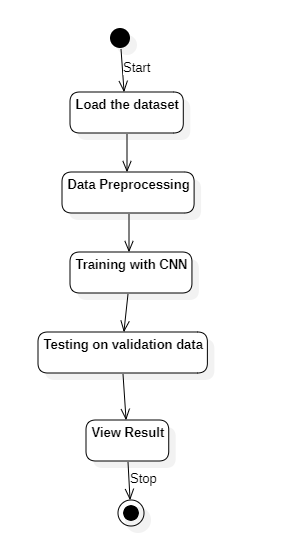
Block Diagram
Specifications
Hardware Requirements:
Operating system : Windows 7 or 7+
RAM : 8 GB
Hard disc or SSD : More than 500 GB
Processor : Intel 3rd generation or high or Ryzen with 8 GB Ram
Software Requirements:
Software’s : Python 3.10 or high version
IDE : Visual Studio Code.
Framework : Flask


 Paper Publishing

Request Call Back
Would you like to receive a free callback now?
Choose the best time for callback:
Leave your message and we will contact you as soon as possible

6-2-85/B, Old Maternity Hospital Road, Thyagaraja Nagar, Tirupati, Andhra Pradesh – 517501
+91 9030333433
+91 9393939065
0877-2261612

Disclaimer - Takeoff Edu Group Projects are not associated or affiliated with IEEE in any way. The IEEE Projects mentioned here are mentioned in the context of student projects, whose ideas are derived from IEEE publications, not projects of or by IEEE.

