Open-Set Recognition in Unknown DDoS Attacks Detection With Reciprocal Points Learning
Objective
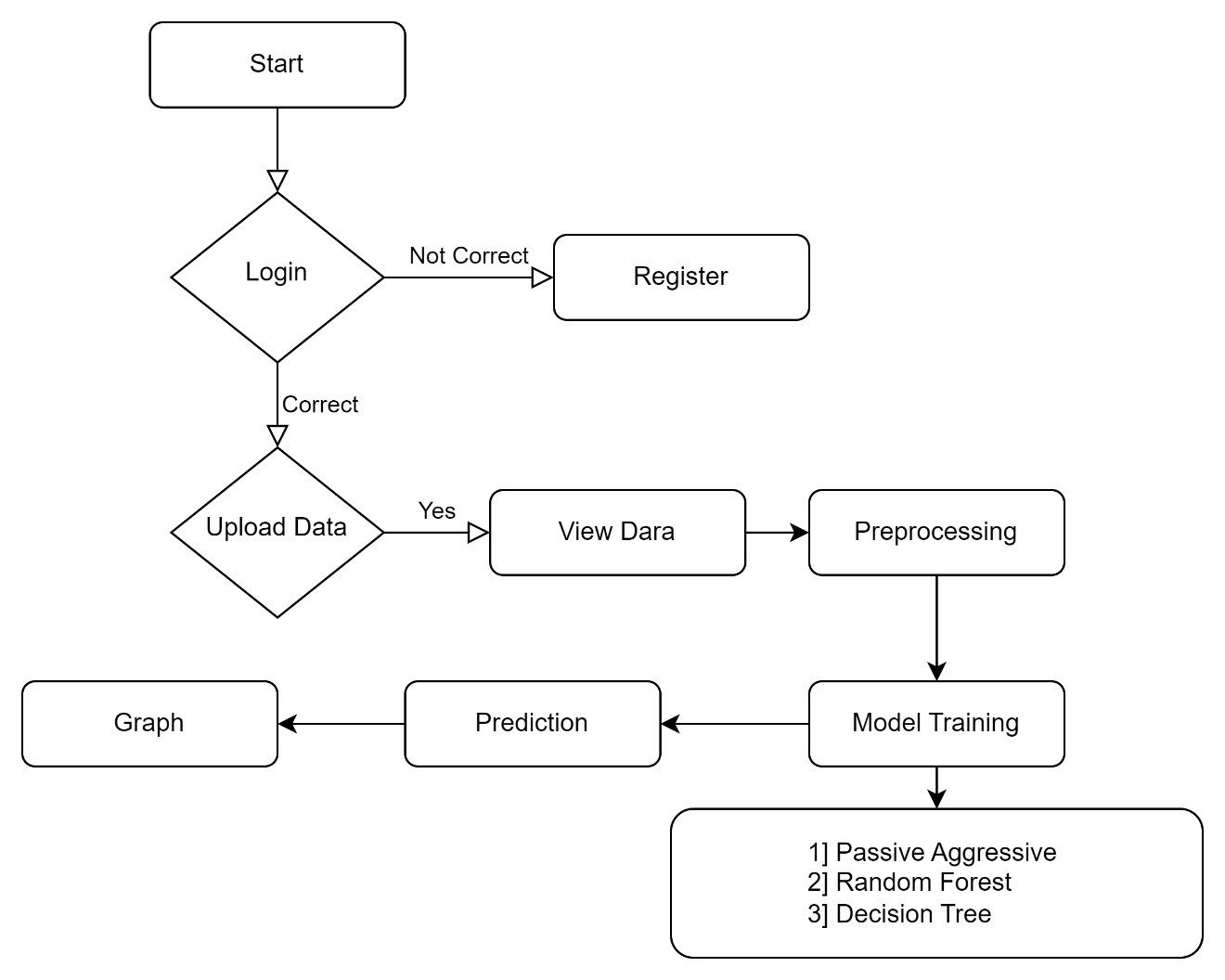
This project aims to develop an innovative approach, Reciprocal Points Learning, for Open-Set Recognition in detecting Distributed Denial of Service (DDoS) attacks. By integrating Passive Aggressive, Random Forest, and Decision Tree algorithms, the objective is to enhance the robustness of DDoS attack detection systems against both known and unknown attack patterns. Leveraging features extracted from network traffic data, including flow duration, packet characteristics, and statistical metrics, the framework seeks to differentiate normal network behavior from malicious activities effectively. The project aims to validate the efficacy of this approach through comprehensive experimental evaluation, contributing to proactive cybersecurity strategies in dynamic threat environments.
Abstract
In the realm of cybersecurity, the detection of Distributed Denial of Service (DDoS) attacks remains a critical challenge, exacerbated by the emergence of unknown attack patterns. This study proposes a novel approach termed Reciprocal Points Learning for Open-Set Recognition in DDoS attack detection. Leveraging Passive Aggressive, Random Forest, and Decision Tree algorithms, the methodology focuses on features extracted from network traffic data including flow duration, packet characteristics, and statistical flow metrics. The system aims to differentiate between normal network behavior and both known and unknown DDoS attacks, enhancing the robustness of detection mechanisms in dynamic and evolving threat landscapes. Experimental evaluation on a comprehensive dataset underscores the efficacy of the proposed framework in achieving high accuracy and reliability, thus contributing to the advancement of proactive cybersecurity strategies against sophisticated network attacks.
Keywords: Passive Aggressive, Random Forest and Decision Tree Classifier.
NOTE: Without the concern of our team, please don't submit to the college. This Abstract varies based on student requirements.
Block Diagram
Specifications
H/W SPECIFICATIONS:
· Processor : I5/Intel Processor
· RAM : 8GB (min)
· Hard Disk : 128 GB
· Key Board : Standard Windows Keyboard
· Mouse : Two or Three Button Mouse
· Monitor : Any
S/W SPECIFICATIONS:
• Operating System : Windows 7+
• Server-side Script : Python 3.6+
• IDE : PyCharm.
• Libraries Used : Pandas, Numpy, Matplotlib, OS.

Demo Video


Request for Video
 Paper Publishing
Request Call Back
Would you like to receive a free callback now?
Choose the best time for callback:
Leave your message and we will contact you as soon as possible

6-2-85/B, Old Maternity Hospital Road, Thyagaraja Nagar, Tirupati, Andhra Pradesh – 517501
+91 9030333433
+91 9393939065
0877-2261612

Disclaimer - Takeoff Edu Group Projects are not associated or affiliated with IEEE in any way. The IEEE Projects mentioned here are mentioned in the context of student projects, whose ideas are derived from IEEE publications, not projects of or by IEEE.

