Multi Stage Neural Network Based Ensemble Learning Approach for Wheat Leaf Disease Classification
Objective
This project aims to build and evaluate deep learning-based models for automated classification of wheat plant diseases using a publicly available Kaggle dataset. Various architectures are compared to identify the most accurate model, enabling early disease detection and supporting farmers with timely diagnosis and intervention in precision agriculture.
Abstract
Exponential growth of mobile advertising, fraudulent ad clicks have become a major concern, leading to substantial financial losses for advertisers. This project, Ad Click Fraud Detection Using Machine Learning and Deep Learning Algorithms, aims to develop an intelligent and scalable detection system capable of distinguishing between genuine and fraudulent clicks. The dataset contains crucial features such as IP address, application ID, device type, operating system version, publisher channel ID, click timestamp, and attribution time (if the app was downloaded post-click). The target variable is attributed indicates whether a click led to an actual app download. A wide range of models were implemented, including traditional Machine Learning algorithms like Logistic Regression, Decision Tree, Random Forest, K-Nearest Neighbors, Naive Bayes, SVM, Gradient Boosting, LightGBM, and XGBoost. Additionally, Deep Learning architectures such as Artificial Neural Networks (ANN), Convolutional Neural Networks (CNN), Deep Neural Networks (DNN), Recurrent Neural Networks (RNN), Long Short-Term Memory (LSTM), and Gated Recurrent Unit (GRU) were explored. A Stacking Classifier was used to combine model strengths and optimize performance. The backend integrates all models to compare results, while the Flask-based frontend allows users to input click features and receive real-time fraud detection outputs.
Keywords: Ad Click Fraud, Machine Learning, Deep Learning, Flask App, Stacking Classifier, LSTM, XGBoost, Click Prediction, Mobile Advertising, Classification.
NOTE: Without the concern of our team, please don't submit to the college. This Abstract varies based on student requirements.
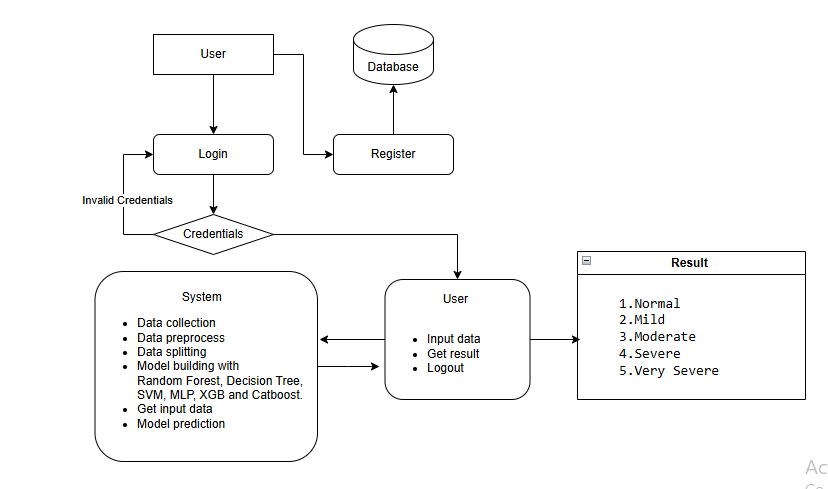
Block Diagram
Specifications
SOFTWARE REQUIREMENS
Operating System : Windows 7/8/10
Server side Script : HTML, CSS, Bootstrap & JS
Programming Language : Python
Libraries : Flask, Pandas, Torch, Keras, Sklearn, Numpy , Seaborn
IDE/Workbench : VSCode
Server Deployment : Xampp Server
Database : MySQL
HARDWARE REQUIREMENTS
Processor - I3/Intel Processor
RAM - 8GB (min)
Hard Disk - 128 GB
Key Board - Standard Windows Keyboard
Mouse - Two or Three Button Mouse
Monitor - Any

Demo Video


Request for Video
 Paper Publishing
Request Call Back
Would you like to receive a free callback now?
Choose the best time for callback:
Leave your message and we will contact you as soon as possible

6-2-85/B, Old Maternity Hospital Road, Thyagaraja Nagar, Tirupati, Andhra Pradesh – 517501
+91 9030333433
+91 9393939065
0877-2261612

Disclaimer - Takeoff Edu Group Projects are not associated or affiliated with IEEE in any way. The IEEE Projects mentioned here are mentioned in the context of student projects, whose ideas are derived from IEEE publications, not projects of or by IEEE.

