Multi-Class Adaptive Active Learning for Predicting Student Anxiety
Objective
The topic of predicting student anxiety using a multi-class adaptive active learning framework was chosen due to the increasing recognition of mental health's critical role in educational success and overall well-being.
Abstract
This research introduces a multi-class adaptive active learning framework to predict student anxiety, aiming to enhance early intervention and support mechanisms in educational environments. Traditional anxiety prediction models often fall short due to limited labeled data and static learning processes. Our approach leverages adaptive active learning to iteratively select the most informative data points for labeling, improving model accuracy and robustness. By incorporating multi-class classification, the model differentiates between various levels of anxiety, providing a nuanced understanding of student mental health. Experimental results demonstrate the effectiveness of the proposed method, showing significant improvements in prediction accuracy over baseline models. This study underscores the potential of adaptive active learning in educational data mining, offering a scalable solution for real-time anxiety prediction and contributing to more responsive and supportive educational systems.
Keywords: Adaptive Active Learning,Multi-Class Classification,Student Anxiety Prediction,Educational Data Mining,Machine Learning in Education,Mental Health Assessment,Real-Time Analytics
NOTE: Without the concern of our team, please don't submit to the college. This Abstract varies based on student requirements.
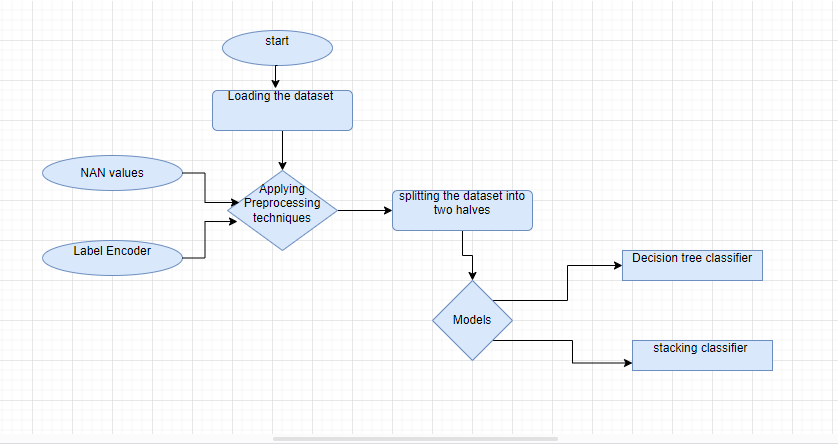
Block Diagram
Specifications
H/W CONFIGURATION:
Processor - I3/Intel Processor
Hard Disk - 160GB
Key Board - Standard Windows Keyboard
Mouse - Two or Three Button Mouse
Monitor - SVGA
RAM - 8GB
S/W CONFIGURATION:
• Operating System : Windows 7/8/10
• Server side Script : HTML, CSS, Bootstrap & JS
• Programming Language : Python
• Libraries : Flask, Pandas, Mysql.connector, Os, Scikit-learn, Numpy
• IDE/Workbench : PyCharm
• Technology : Python 3.6+
• Server Deployment : Xampp Server

Demo Video


Request for Video
 Paper Publishing
Request Call Back
Would you like to receive a free callback now?
Choose the best time for callback:
Leave your message and we will contact you as soon as possible

6-2-85/B, Old Maternity Hospital Road, Thyagaraja Nagar, Tirupati, Andhra Pradesh – 517501
+91 9030333433
+91 9393939065
0877-2261612

Disclaimer - Takeoff Edu Group Projects are not associated or affiliated with IEEE in any way. The IEEE Projects mentioned here are mentioned in the context of student projects, whose ideas are derived from IEEE publications, not projects of or by IEEE.

