MPD A Meteorological and Pollution Dataset A Comprehensive Study of Machine and Deep Learning Methods for Air Pollution Forecasting
Objective
To build a predictive model that classifies the air quality of Indian cities into three categories: Good, Moderate, and Poor based on pollutant concentration levels, using various supervised machine learning algorithms.
Abstract
Sleep disorders, including Sleep Apnea and Insomnia, significantly affect individuals' health and quality of life, necessitating accurate and accessible diagnostic methods. Traditional diagnostic tools, such as Polysomnography (PSG), are expensive, time-consuming, and limited in accessibility, often leading to delayed or missed diagnoses. This project aims to address these limitations by leveraging machine learning algorithms for the classification of sleep disorders using the Sleep Health and Lifestyle Dataset. The existing system utilizes traditional algorithms such as K-Nearest Neighbors (KNN), Support Vector Machine (SVM), Decision Tree, Random Forest, and Artificial Neural Network (ANN). However, these approaches face challenges like computational overhead, sensitivity to hyperparameters, and limited interpretability. To overcome these issues, the proposed system implements advanced ensemble learning techniques, including the Stacking Classifier and Voting Classifier, to improve accuracy, robustness, and scalability. The project comprises data preprocessing, feature engineering, and model training using health and lifestyle features such as sleep duration, quality of sleep, physical activity, and stress levels. The system also provides users with an intuitive interface to upload data, view predictions, and analyze results. Additionally, it visualizes the distribution of sleep disorder types to enhance diagnostic understanding. By combining the strengths of ensemble learning methods, this project seeks to deliver a cost-effective, user-friendly, and reliable diagnostic system, improving early detection and management of sleep disorders. This innovation contributes to healthcare accessibility, promoting better health outcomes and quality of life.
Keywords: Sleep Disorders, Sleep Apnea, Insomnia, Machine Learning, Ensemble Learning, Stacking Classifier, Voting Classifier.
NOTE: Without the concern of our team, please don't submit to the college. This Abstract varies based on student requirements.
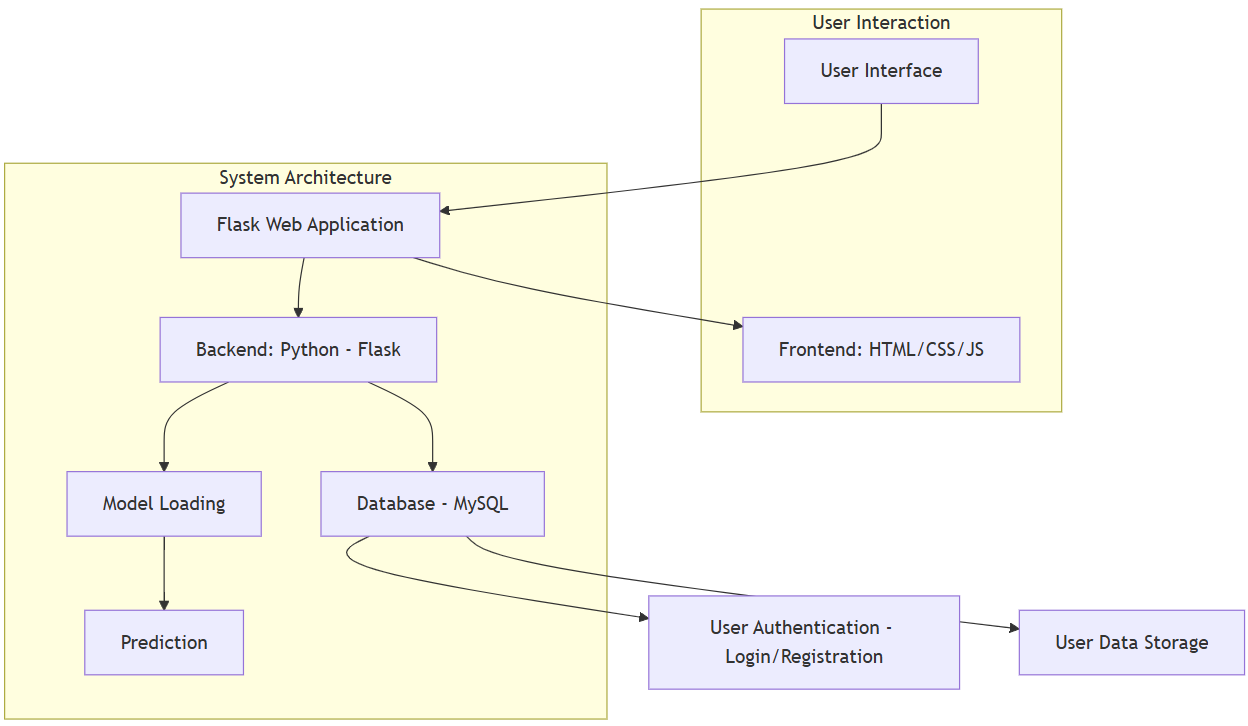
Block Diagram
Specifications
REQUIREMENT ANALYSIS
Hardware Requirements
Processor - I7/Intel Processor
Hard Disk - 160GB
Key Board - Standard Windows Keyboard
Mouse - Two or Three Button Mouse
Monitor - SVGA
RAM - 8GB
Software Requirements:
Operating System : Windows 11
Server side Script : HTML, CSS, Bootstrap & JS
Programming Language : Python
Libraries : Pandas, NumPy, Matplotlib, Seaborn, scikit-learn
IDE/Workbench : PyCharm
Technology : Python 3.6+
Server Deployment : Xampp Server
Database : MySQL


 Paper Publishing

Request Call Back
Would you like to receive a free callback now?
Choose the best time for callback:
Leave your message and we will contact you as soon as possible

6-2-85/B, Old Maternity Hospital Road, Thyagaraja Nagar, Tirupati, Andhra Pradesh – 517501
+91 9030333433
+91 9393939065
0877-2261612

Disclaimer - Takeoff Edu Group Projects are not associated or affiliated with IEEE in any way. The IEEE Projects mentioned here are mentioned in the context of student projects, whose ideas are derived from IEEE publications, not projects of or by IEEE.

