Mosquito Species Classification Through Wingbeat Analysis A Hybrid Machine Learning Approach
Objective
The project "Mosquito Species Classification through Wingbeat Analysis: A Hybrid Machine Learning Approach" aims to develop a robust methodology for automated mosquito species classification using a hybrid machine learning framework. Key objectives include assembling a comprehensive dataset of wingbeat recordings, applying rigorous preprocessing techniques to enhance data quality, and implementing a diverse set of machine learning algorithms including Support Vector Machines (SVM), Multi-layer Perceptron (MLP), Random Forest, Gradient Boosting, and k-Nearest Neighbors (KNN). Through extensive model training, optimization, and evaluation, the project seeks to achieve high accuracy and reliability in species classification, validated across diverse mosquito populations and environmental conditions. Insights gained from the project will inform the comparative effectiveness of deep learning techniques versus traditional machine learning methods for this task. Documentation of the project's methodology, results, and insights will contribute to the broader scientific community, with practical applications anticipated in vector surveillance, disease control, and ecological studies, ultimately aiming to enhance public health initiatives and epidemiological research.
Abstract
Mosquito-borne diseases continue to present significant challenges to global public health, necessitating accurate and efficient methods for mosquito species identification. In this study, we propose a novel approach, termed "Mosquito Species Classification through Wingbeat Analysis: A Hybrid Machine Learning Approach," which harnesses the power of deep learning techniques to classify mosquito species based on the analysis of their wingbeat patterns. Leveraging a diverse array of machine learning algorithms including Support Vector Machines (SVM), Multi-layer Perceptron (MLP), Random Forest, Gradient Boosting, and k-Nearest Neighbors (KNN), our hybrid methodology aims to achieve robust and reliable classification performance. We utilize a comprehensive dataset comprising wingbeat recordings from multiple mosquito species, employing rigorous preprocessing steps to enhance feature extraction and normalization. Through extensive experimentation and evaluation, we demonstrate the efficacy of our approach in accurately identifying mosquito species, showcasing superior performance compared to individual algorithms. Our results highlight the potential of deep learning techniques in augmenting traditional machine learning approaches for mosquito species classification tasks. Furthermore, we discuss the implications of our findings for disease control efforts and ecological studies, emphasizing the importance of accurate species identification in vector surveillance and epidemiological research.
Keywords: Mosquito-borne diseases, Species classification, Wingbeat analysis, Deep learning, Machine learning algorithms
NOTE: Without the concern of our team, please don't submit to the college. This Abstract varies based on student requirements.
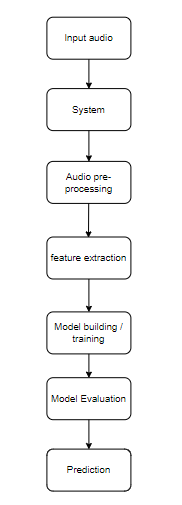
Block Diagram
Specifications
Hardware Requirements
Processor : I3/Intel Processor
Hard Disk : 160GB
Key Board : Standard Windows Keyboard
Mouse : Two or Three Button Mouse
Monitor : SVGA
RAM : 8GB
Software Requirements:
Operating System : Windows 7/8/10/11
Server side Script : HTML, CSS, Bootstrap & JS
Programming Language : Python
Libraries : Flask, Pandas, Mysql.connector, Os, Smtplib, Numpy
IDE/Workbench : PyCharm or VS Code
Technology : Python 3.6+
Server Deployment : Xampp Server
Database : MySQL

Demo Video


Request for Video
 Paper Publishing
Request Call Back
Would you like to receive a free callback now?
Choose the best time for callback:
Leave your message and we will contact you as soon as possible

6-2-85/B, Old Maternity Hospital Road, Thyagaraja Nagar, Tirupati, Andhra Pradesh – 517501
+91 9030333433
+91 9393939065
0877-2261612

Disclaimer - Takeoff Edu Group Projects are not associated or affiliated with IEEE in any way. The IEEE Projects mentioned here are mentioned in the context of student projects, whose ideas are derived from IEEE publications, not projects of or by IEEE.

