Migration of Deep Learning Models Across Ultrasound Scanners
Objective
This project evaluates deep learning models for breast cancer detection using ultrasound images from different scanners. It uses the Breast Ultrasound Images Dataset from Kaggle, testing models like Vision Transformer (ViT), Deit Transformer, CNN Ensemble (MobileNet + EfficientNets), and EfficientNet with adversarial learning to improve generalizability. A Flask-based web frontend is developed for image upload, registration, login, and prediction, ensuring only valid ultrasound images are processed. The system aims to address scanner variability and provide an accurate and reliable diagnostic tool for early breast cancer detection.
Abstract
The diagnostic accuracy of deep learning models in medical imaging heavily relies on the consistency and quality of input data. However, ultrasound images can vary significantly due to differences in scanner manufacturers, imaging protocols, and operator techniques, posing a challenge for model generalizability across domains. This project investigates the migration performance of multiple state-of-the-art deep learning architectures—DenseNet-201, ResNet-34, and MobileNetV3 enhanced with an Iterative Local Normalization Layer (IterLNL)—on breast ultrasound image classification. A robust ensemble model is also constructed to leverage complementary strengths of individual networks. Using the BUSI dataset, these models are evaluated on a stratified test set and assessed via classification metrics, confusion matrices, and accuracy comparisons. Results indicate that while individual models perform competitively, the ensemble approach consistently yields superior generalization performance. This study highlights the significance of model ensemble and domain-aware architectural adaptations for robust deployment across heterogeneous ultrasound systems. Our findings emphasize the need for transfer-aware deep learning pipelines to ensure reliability in real-world, scanner-diverse clinical environments.
Keywords: Breast Ultrasound Imaging, Deep Learning,Model Migration,Transfer Learning,DenseNet-201,ResNet-34,MobileNetV3,Iterative Local Normalization Layer (IterLNL),Ensemble Learning,Medical Image Classification,Generalization Across Devices,Multi-scanner Robustness,Diagnostic AI,Confusion Matrix Analysis
NOTE: Without the concern of our team, please don't submit to the college. This Abstract varies based on student requirements.
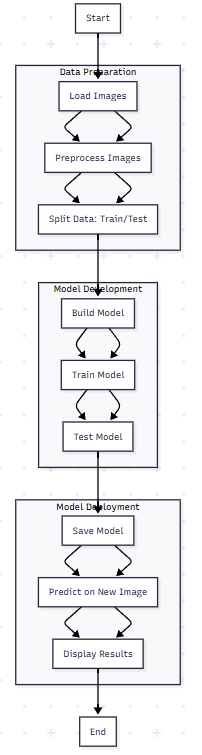
Block Diagram
Specifications
H/W CONFIGURATION:
Processor - I3/Intel Processor
Hard Disk - 160GB
Key Board - Standard Windows Keyboard
Mouse - Two or Three Button Mouse
Monitor - SVGA
RAM - 8GB
S/W CONFIGURATION:
• Operating System : Windows 7/8/10
• Server side Script : HTML, CSS, Bootstrap & JS
• Programming Language : Python
• Libraries : Flask, Pandas, Mysql.connector, Os, Scikit-learn, Numpy
• IDE/Workbench : PyCharm
• Technology : Python 3.6+
• Server Deployment : Xampp Server

Demo Video


Request for Video
 Paper Publishing
Request Call Back
Would you like to receive a free callback now?
Choose the best time for callback:
Leave your message and we will contact you as soon as possible

6-2-85/B, Old Maternity Hospital Road, Thyagaraja Nagar, Tirupati, Andhra Pradesh – 517501
+91 9030333433
+91 9393939065
0877-2261612

Disclaimer - Takeoff Edu Group Projects are not associated or affiliated with IEEE in any way. The IEEE Projects mentioned here are mentioned in the context of student projects, whose ideas are derived from IEEE publications, not projects of or by IEEE.

