Malnutrition Detection Using Deep Learning
Objective
This project uses deep learning, specifically CNNs, MobileNet, and VGG16, to classify children's facial or body images as healthy or malnourished.
Abstract
Malnutrition in children remains a pressing global concern, affecting physical growth, cognitive development, and overall well-being. Early detection is critical for timely interventions that can help mitigate irreversible health consequences. This project proposes a computer vision approach leveraging Deep Learning techniques to distinguish between healthy children and those experiencing malnutrition from image data. By employing Convolutional Neural Networks (CNN), MobileNet, and VGG16 architectures, our system automatically classifies pediatric facial or bodily images into two categories—healthy versus malnourished. The dataset, sourced from Kaggle, comprises diverse images that capture various nutritional statuses across different regions and ethnicities. The primary objective is to accurately identify malnutrition signs in children based on physical features, enabling healthcare professionals and organizations to focus on those at the highest risk. This methodology integrates data preprocessing, feature extraction, model training, and validation steps to ensure robust predictive performance. The system’s effectiveness can potentially accelerate field screenings, empower telemedicine applications, and bolster policy decisions aimed at curtailing child malnutrition. Moreover, the research explores model optimization techniques and highlights the scalability of this classification approach for broader public health initiatives.
Keywords: Malnutrition Detection, Deep Learning, CNN, MobileNet, VGG16, Pediatric Health, Image Classification, Nutrition, Healthcare, Kaggle
NOTE: Without the concern of our team, please don't submit to the college. This Abstract varies based on student requirements.
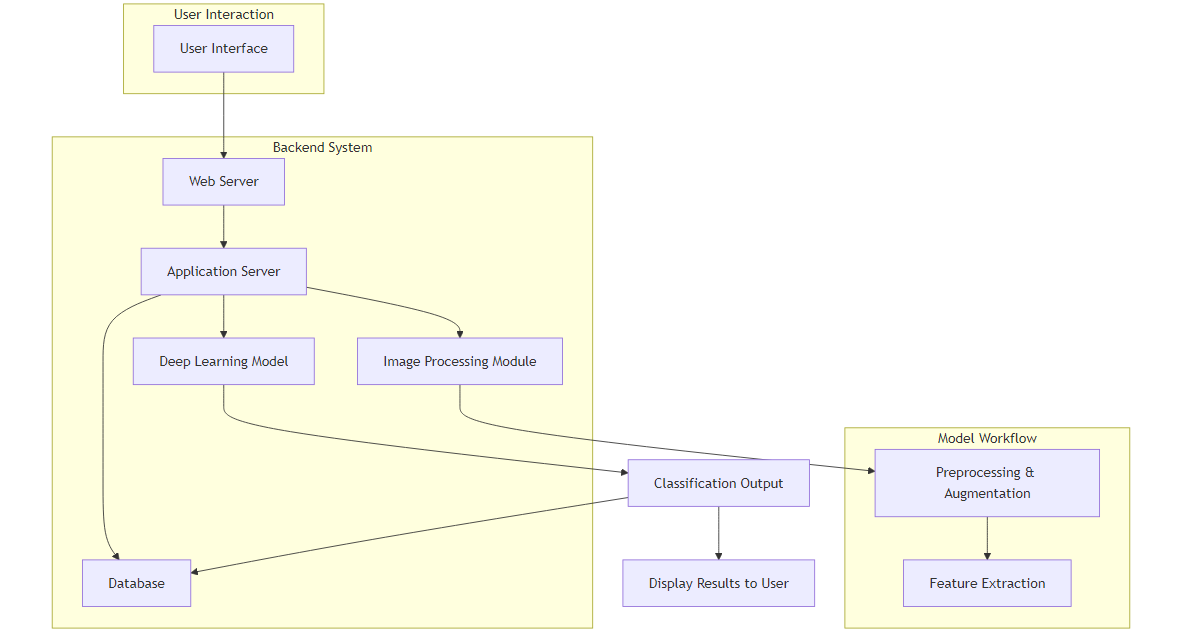
Block Diagram
Specifications
5.2 Hardware Requirements
Processor - I3/Intel Processor
Hard Disk - 160GB
Key Board - Standard Windows Keyboard
Mouse - Two or Three Button Mouse
Monitor - SVGA
RAM - 8GB
5.3 Software Requirements
• Operating System : Windows 7/8/10
• Programming Language : Python
• Libraries : Pandas, Numpy, scikit-learn.
• IDE/Workbench : Visual Studio Code.

Demo Video


Request for Video
 Paper Publishing
Request Call Back
Would you like to receive a free callback now?
Choose the best time for callback:
Leave your message and we will contact you as soon as possible

6-2-85/B, Old Maternity Hospital Road, Thyagaraja Nagar, Tirupati, Andhra Pradesh – 517501
+91 9030333433
+91 9393939065
0877-2261612

Disclaimer - Takeoff Edu Group Projects are not associated or affiliated with IEEE in any way. The IEEE Projects mentioned here are mentioned in the context of student projects, whose ideas are derived from IEEE publications, not projects of or by IEEE.

