Machine Learning Based Spam Comments Detection on YouTube
Objective
The main objective of "Machine Learning Based Spam Comments Detection on YouTube" is to develop a predictive model using machine learning techniques to identify and classify comments as spam or non-spam on YouTube. By training the model on a labeled dataset of comments, the aim is to accurately predict whether a given comment is spam or not, thereby enhancing the overall user experience, reducing spam content and maintaining the platform's integrity.
Abstract
The rise of spam comments on platforms like YouTube has become a significant concern, as they not only hinder genuine user engagement but also pose serious risks to users' safety and privacy. Machine Learning (ML) offers a powerful solution to combat spam comments by automating the process of detecting and preventing them. With the ability to analyze vast amounts of data and patterns, ML algorithms can effectively distinguish between legitimate comments and those that are spam. One of the commonly employed approaches in ML for spam comment detection is the Naive Bayes classification algorithm. Naive Bayes is a probabilistic algorithm that calculates the likelihood of a comment being spam based on its characteristics and the occurrence of specific keywords or phrases that are typical of spam content. By training the algorithm on a labeled dataset of spam and non-spam comments, it can learn to recognize patterns and generalize its understanding to new, unseen comments. Achieving a detection accuracy of 92.78% is indeed promising, but researchers and developers continue to explore other ML techniques and combinations to further improve the accuracy and robustness of spam comment detection systems. Ensemble methods, deep learning, and natural language processing (NLP) techniques are among the advanced ML approaches gaining attention in this domain. One crucial aspect of an effective spam detection system is its adaptability and responsiveness to emerging spam tactics.
Keywords: ML evaluation, ML techniques , Naïve bayes , decision tree , MLP classifier etc.,.
NOTE: Without the concern of our team, please don't submit to the college. This Abstract varies based on student requirements.
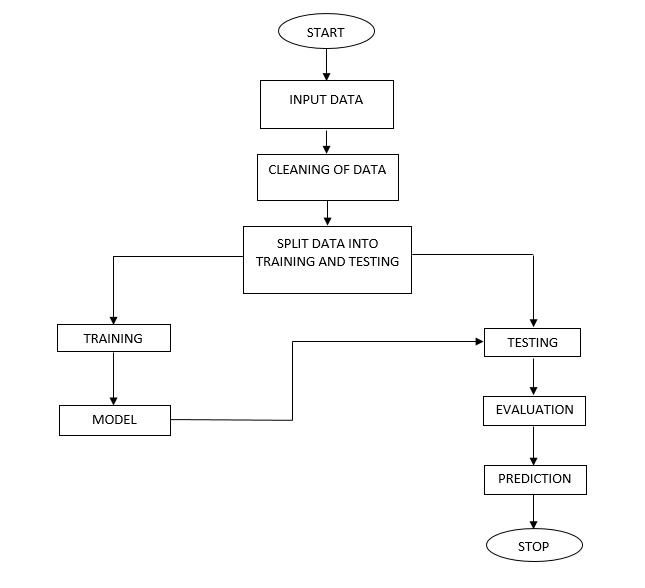
Block Diagram
Specifications
H/W CONFIGURATION:
Processor - I3/Intel Processor
Hard Disk - 160GB
Key Board - Standard Windows Keyboard
Mouse - Two or Three Button Mouse
Monitor - SVGA
RAM - 8GB
S/W CONFIGURATION:
• Operating System : Windows 7/8/10
• Server side Script : HTML, CSS, Bootstrap & JS
• Programming Language : Python
• Libraries : Flask, Pandas, Mysql.connector, Numpy
• IDE/Workbench : PyCharm
• Technology : Python 3.6+
• Server Deployment : Xampp Server


 Paper Publishing

Request Call Back
Would you like to receive a free callback now?
Choose the best time for callback:
Leave your message and we will contact you as soon as possible

6-2-85/B, Old Maternity Hospital Road, Thyagaraja Nagar, Tirupati, Andhra Pradesh – 517501
+91 9030333433
+91 9393939065
0877-2261612

Disclaimer - Takeoff Edu Group Projects are not associated or affiliated with IEEE in any way. The IEEE Projects mentioned here are mentioned in the context of student projects, whose ideas are derived from IEEE publications, not projects of or by IEEE.

