Logistic Regression-Driven Real-Time Cyberattack Identification Using Blockchain for Enhanced Data Security
Objective
This project presents a cyberattack detection framework combining logistic regression with blockchain technology. Machine learning models classify network traffic to identify cyber threats, while blockchain ensures secure, tamper-proof data storage and auditability. The solution enhances cybersecurity, data integrity, and trust, making it suitable for enterprise-level network security applications.
Abstract
The increasing sophistication of cyber-attacks on critical defense infrastructures requires advanced, adaptive security frameworks that can detect and respond to emerging threats. This project focuses on developing a cybersecurity framework that leverages machine learning (ML) and blockchain technology to protect intranet systems from behavior-based attacks. Using the "Hydras" dataset from Kaggle, which contains network traffic data for detecting malicious behavior, this framework applies several machine learning algorithms—Logistic Regression (LR), Naïve Bayes (NB), K-Nearest Neighbors (KNN), Support Vector Machine (SVM), Random Forest (RF), and Gradient Boosting (GB). These algorithms are evaluated with K-fold cross-validation to predict whether a given network activity represents a security breach or benign behavior. By integrating AI-driven attack detection, the system can swiftly classify and alert administrators to potential intrusions, improving response times and minimizing damage. In addition to AI-based threat detection, blockchain technology is utilized for secure user authentication during login processes. This integration ensures that user data remains secure and tamper-resistant, preventing unauthorized access and enhancing overall system integrity. The backend is developed using Python, while the frontend is built with HTML, CSS, and JavaScript to provide an intuitive user interface. This adaptive cybersecurity framework aims to bolster the defense of critical infrastructure by combining AI's predictive power with blockchain's immutable security, creating a robust solution for mitigating both known and unknown cyber threats.
Keywords: Cybersecurity, AI, Blockchain, Machine Learning, Behavior-Based Attacks, Intrusion Detection, Critical Infrastructure, Data Security, Hydras Dataset, K-fold Cross Validation, Logistic Regression, Naïve Bayes, K-Nearest Neighbors, Support Vector Machine, Random Forest, Gradient Boosting, Python, HTML, CSS, JavaScript.
NOTE: Without the concern of our team, please don't submit to the college. This Abstract varies based on student requirements.
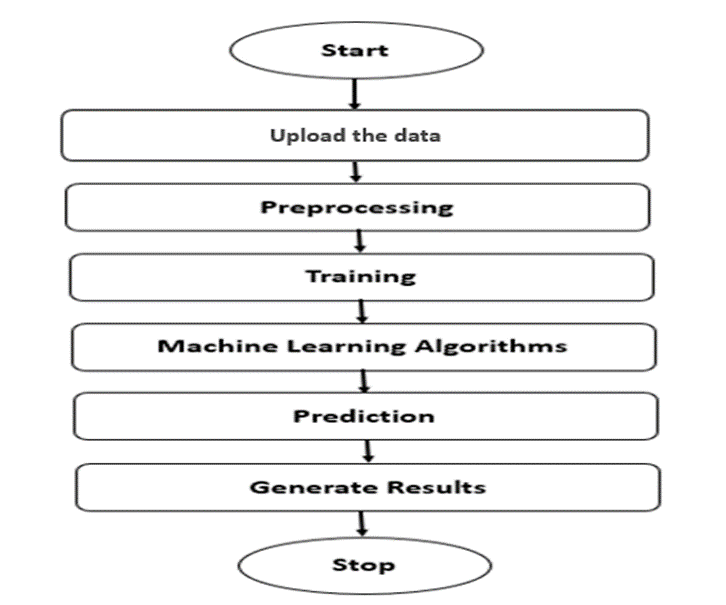
Block Diagram
Specifications
Hardware:
Operating system : Windows 7 or 7+
RAM : 8 GB
Hard disc or SSD : More than 500 GB
Processor : Intel 3rd generation or high or Ryzen with 8 GB Ram
Software:
Software’s : Python 3.6 or high version
IDE : PyCharm.
Framework : Flask


 Paper Publishing

Request Call Back
Would you like to receive a free callback now?
Choose the best time for callback:
Leave your message and we will contact you as soon as possible

6-2-85/B, Old Maternity Hospital Road, Thyagaraja Nagar, Tirupati, Andhra Pradesh – 517501
+91 9030333433
+91 9393939065
0877-2261612

Disclaimer - Takeoff Edu Group Projects are not associated or affiliated with IEEE in any way. The IEEE Projects mentioned here are mentioned in the context of student projects, whose ideas are derived from IEEE publications, not projects of or by IEEE.

