Higher Order Sliding Mode Observer Based Fast Composite Back stepping Control for HESS in DC Micro grids
Also Available Domains Microgrids|
Objective
The main objective of this research is to develop a robust and efficient control strategy for Hybrid Energy Storage Systems (HESS) in DC micro grids using a Higher-Order Sliding Mode Observer (HOSMO) integrated with a fast composite back stepping control method. This approach aims to improve system stability by minimizing voltage fluctuations and steady-state errors.
Abstract
Hybrid energy storage system (HESS) is effective to compensate for fluctuation power in renewables and fast fluctuation loads in DC micro grids. To regulate DC bus voltage, a power management strategy is an essential issue. In the meantime, the increasing integration of constant power loads (CPLs) in DC micro grids brings great challenges to stable operation due to their negative incremental impedance. In this paper, a fast composite back stepping control (FBC) method is proposed for the HESS to achieve faster dynamics, smaller voltage variations, and large signal stabilization. In the FBC method, a higher order sliding mode observer (HOSMO) is adopted to estimate the coupled disturbances. Furthermore, the FBC method is integrated with the droop control; so that the FBC-based decentralized power allocation (FBC-DPA) strategy for HESS in DC micro grids is developed. The proposed FBC method is designed based on the Lyapunov function to ensure its stability. Moreover, the design guidelines are provided to facilitate the application of the proposed method. Both simulation and experimental studies under different operating scenarios show that the proposed method achieves faster voltage recovery and smaller voltage variations than the conventional back stepping control method.
Keywords: Back stepping control, higher order sliding mode observer, hybrid energy storage system, dc micro grid.
NOTE: Without the concern of our team, please don't submit to the college. This Abstract varies based on student requirements.
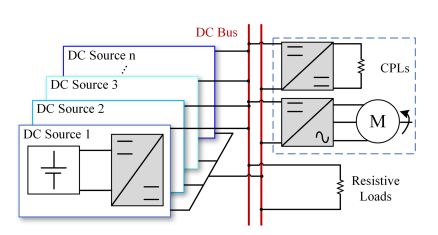
Block Diagram
Specifications
Software Configuration:
Operating System : Windows 7/8/10
Application Software: Matlab/Simulink
Hardware Configuration:
RAM : 8 GB / 4 GB (Min)
Processor : I3 / I5 (Mostly prefer)
Learning Outcomes
· Introduction to Matlab/Simulink
· What is EISPACK & LINPACK
· How to start with MATLAB
· About Matlab language
· About tools & libraries
· Application of Matlab/Simulink
· About Matlab desktop
· Features of Matlab/Simulink
· Basics on Matlab/Simulink
· Introduction to DC MICRO GRID
· Design of HESS
· Design of HOSOM
· Introduction to Battery
· Introduction to Super Capacitor
· Introduction to pulse width modulation
· Project Development Skills:
o Problem analyzing skills
o Problem solving skills
o Creativity and imaginary skills
o Programming skills
o Deployment
o Testing skills
o Debugging skills
o Project presentation skills
o Thesis writing skills
Demo Video


Request for Video
 Paper Publishing
Request Call Back
Would you like to receive a free callback now?
Choose the best time for callback:
Leave your message and we will contact you as soon as possible

6-2-85/B, Old Maternity Hospital Road, Thyagaraja Nagar, Tirupati, Andhra Pradesh – 517501
+91 9030333433
+91 9393939065
0877-2261612

Disclaimer - Takeoff Edu Group Projects are not associated or affiliated with IEEE in any way. The IEEE Projects mentioned here are mentioned in the context of student projects, whose ideas are derived from IEEE publications, not projects of or by IEEE.

