High Performance VLSI Architecture for Real-Time Video Edge Detection
Objective
In the domain of video processing, edge detection plays a pivotal role in applications such as object recognition, scene understanding, and video surveillance. Real-time video data processing requires efficient hardware architectures capable of handling the computational demands of edge detection algorithms while ensuring low power consumption. This paper introduces a novel VLSI (Very-Large-Scale Integration) architecture designed for real-time video edge detection
Abstract
In the domain of video processing, edge detection plays a pivotal role in applications such as object recognition, scene understanding, and video surveillance. Real-time video data processing requires efficient hardware architectures capable of handling the computational demands of edge detection algorithms while ensuring low power consumption. This paper introduces a novel VLSI (Very-Large-Scale Integration) architecture designed for real-time video edge detection. The proposed architecture aims to strike a balance between high-performance edge detection and resource-efficient implementation. It utilizes parallel processing and optimized data flow to improve computational speed. Additionally, special attention is given to memory management and data buffering to ensure smooth video stream processing. The architecture is based on Canny edge detection algorithms and is implemented on Artix 7 and Spartan 3E FPGAs. The proposed architecture is also implemented on GPP to validate the performance of the VLSI architecture.
Keywords: Image, Blur, Noise, Restoration, Edge Detection, Canny Detector, Features of image
NOTE: Without the concern of our team, please don't submit to the college. This Abstract varies based on student requirements.
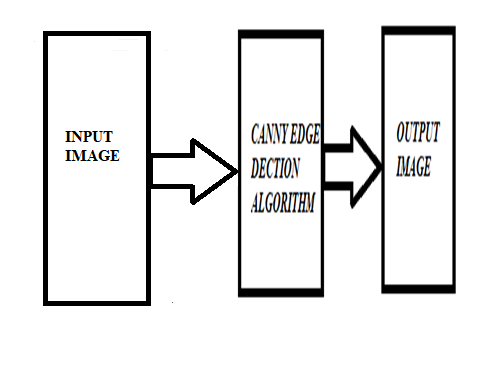
Block Diagram
Specifications
xilinx vivado
matlab
Learning Outcomes
· Basics of Digital Electronics.
· Introduction to Verilog Coding.
· Xilinx Vivado for design and simulation.
· Learn how to extract parameters.
· Understanding of Finite State Machines (FSM).
· Knowledge of Cellular Automata (CA).
· Experience with UART and Putty.
· Application of IP Protection Techniques.
· Development of Real-World Skills.


 Paper Publishing

Request Call Back
Would you like to receive a free callback now?
Choose the best time for callback:
Leave your message and we will contact you as soon as possible

6-2-85/B, Old Maternity Hospital Road, Thyagaraja Nagar, Tirupati, Andhra Pradesh – 517501
+91 9030333433
+91 9393939065
0877-2261612

Disclaimer - Takeoff Edu Group Projects are not associated or affiliated with IEEE in any way. The IEEE Projects mentioned here are mentioned in the context of student projects, whose ideas are derived from IEEE publications, not projects of or by IEEE.

