Hands-Free PC Control Using Eye Movements and Blink Sensor with Raspberry Pi
Project Code :TEMBMA3646
Objective
This project develops a hands-free PC control system using eye movements and a blink sensor with Raspberry Pi, enabling users to interact with their computers through eye gestures for improved accessibility.
Abstract
The
Hands-Free PC Control Using Eye Movements and Blink Sensor with Raspberry Pi
introduces an innovative system that allows users to control a PC using eye
movements and blink detection, making it a useful assistive technology for
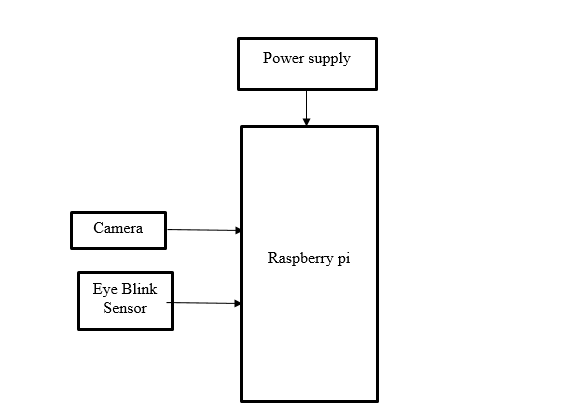
individuals with mobility impairments. The system utilizes an eye blink sensor
to register blinks as clicks and a USB webcam to track eye movements, enabling
cursor navigation. The Raspberry Pi processes the data from the webcam,
interpreting the user's eye position to move the cursor across the screen.
Looking in different directions moves the cursor accordingly, while a blink
serves as a click action. This approach provides a hands-free interface for
controlling a computer, enhancing accessibility for users with limited physical
ability. The system combines eye tracking, blink detection, and real-time image
processing, offering an intuitive, efficient, and innovative way to interact
with digital devices.
NOTE: Without the concern of our team, please don't submit to the college. This Abstract varies based on student requirements.
Block Diagram
Specifications
- Eye Blink Sensor
- Raspberry Pi Model B+
- USB Web Camera
- Connectors
- Micro SD Card
Learning Outcomes
- Understanding Raspberry Pi pin diagrams and architecture
- Installing and configuring Raspberry Pi OS
- Setting up and installing Raspberry Pi peripherals
- Introduction to Raspberry Pi software tools
- Basic coding with Raspberry Pi
- Working with USB cameras and image processing
- Interfacing sensors with Raspberry Pi
- Designing accessible systems using eye movement and blink detection
- Understanding power supply and peripheral connections for Raspberry Pi
- About Project Development Life Cycle:
- Planning and Requirement Gathering (software’s, Tools, Hardware components, etc.,)
- Schematic preparation
- Code development and debugging
- Hardware development and debugging
- Development of the Project and Output testing
- Practical exposure to:
- Hardware and software tools.
- Solution providing for real time problems.
- Working with team/ individual.
- Work on Creative ideas.
- Project development Skills
- Problem analyzing skills
- Problem solving skills
- Creativity and imaginary skills
- Programming skills
- Deployment
- Testing skills
- Debugging skills
- Project presentation skills


Related Topics
 Paper Publishing

Request Call Back
Would you like to receive a free callback now?
Choose the best time for callback:
Leave your message and we will contact you as soon as possible

6-2-85/B, Old Maternity Hospital Road, Thyagaraja Nagar, Tirupati, Andhra Pradesh – 517501
+91 9030333433
+91 9393939065
0877-2261612

Disclaimer - Takeoff Edu Group Projects are not associated or affiliated with IEEE in any way. The IEEE Projects mentioned here are mentioned in the context of student projects, whose ideas are derived from IEEE publications, not projects of or by IEEE.

